


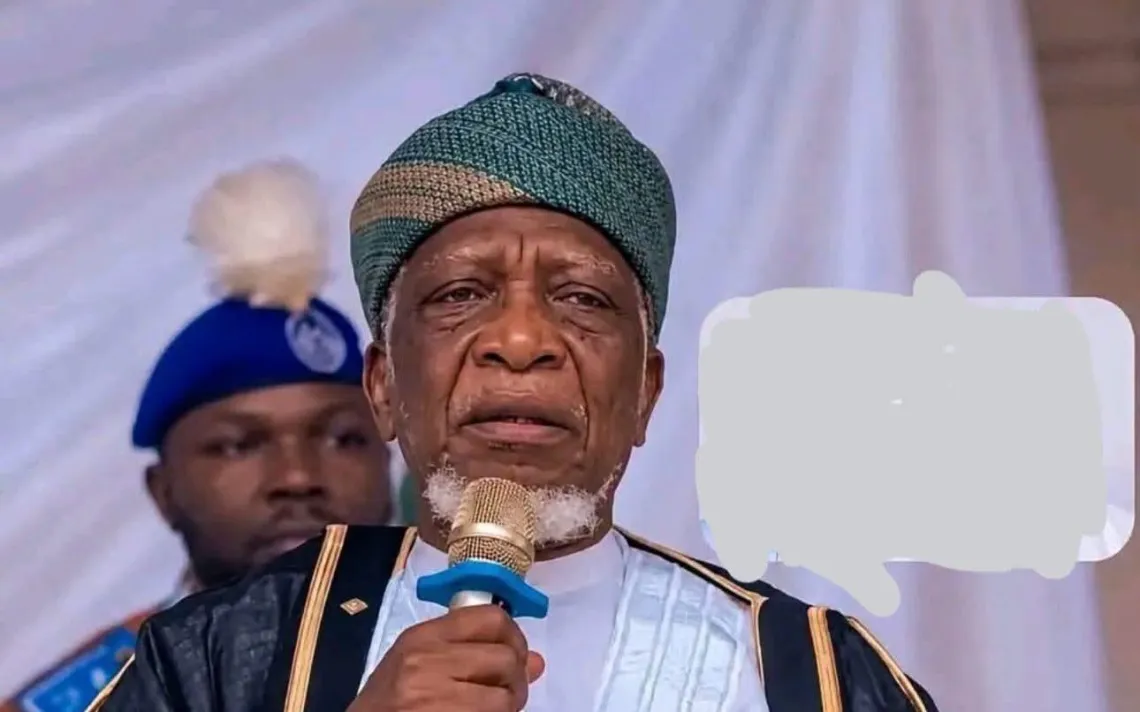
Islamic cleric Sani Jingir has defended his recent call for Muslims to support a Muslim-Muslim political ticket in Nigeria, insisting that he has no regrets over the controversial remarks.
Jingir came under criticism after urging Muslims at a mass wedding organised by the Kano State Government for 1,500 couples to use their numerical strength to influence the country’s political direction.
Speaking during the event last week, the cleric argued that Muslims constitute a majority of Nigeria’s population and pointed to the 2023 presidential election as evidence of the political strength of Muslim voters.
His comments generated widespread reactions, with critics accusing him of promoting religious politics in a country with a significant Christian population.
However, in an interview with BBC Hausa on Tuesday, Jingir stood by his position and rejected calls for an apology. I have absolutely no regrets. I stand firmly by my words and will never apologize. I will continue to advocate for a Muslim-Muslim ticket,” he said.
Jingir explained that his position was based on his religious convictions and should not be interpreted as an endorsement of President Bola Tinubu or former President Muhammadu Buhari.
According to him, his political advocacy is aimed at encouraging Muslims to participate actively in Nigeria’s political process in accordance with their beliefs.
I am not campaigning for Bola Tinubu, I am campaigning for my religion,” he said.
The cleric maintained that his advocacy for Muslim-Muslim leadership was strictly motivated by his understanding of Islam and not by personal political interests.
He also described the pulpit as a sacred platform for educating Muslims and said he had a responsibility to communicate what he believes to be the truth to his congregation.
Jingir further said he regularly encourages members of his congregation to participate in politics, which he described as a religious responsibility.
He urged Muslims to make political decisions based on their convictions rather than allowing politicians to influence their choices with financial incentives.
Jingir said he was not surprised by the criticism generated by his comments, adding that he had mentally prepared himself for opposition.
He insisted that public criticism would not make him abandon his position. If you know you are speaking the truth, you must never allow public criticism to discourage you,” he said.
The cleric also stressed that he was not forcing anyone to vote for a particular candidate or political party.
According to him, Nigerians remain free to vote according to their individual choices, while he would continue to support what aligns with his religious convictions. My words carry no harm.
I explicitly stated that people are free to vote for whoever they want, while I will personally do what aligns with my beliefs.
Jingir also claimed that his position had received significant support from members of the Muslim community.
He said many Muslims shared his view that religious beliefs should play a role in political participation.
The cleric pointed to his recent appearance in Kano, saying the response from the audience demonstrated the level of support for his position.
I swear that I have received immense support from the Muslim community. A vast majority of Muslims agree with this stance, he said.
Jingir’s comments have nevertheless reignited debate over the role of religion in Nigeria’s politics, particularly as political parties and potential candidates begin positioning themselves ahead of the 2027 general elections.
The debate over a Muslim-Muslim ticket became particularly prominent during the 2023 presidential election when Tinubu, a Muslim, selected Kashim Shettima, also a Muslim, as his running mate.


