


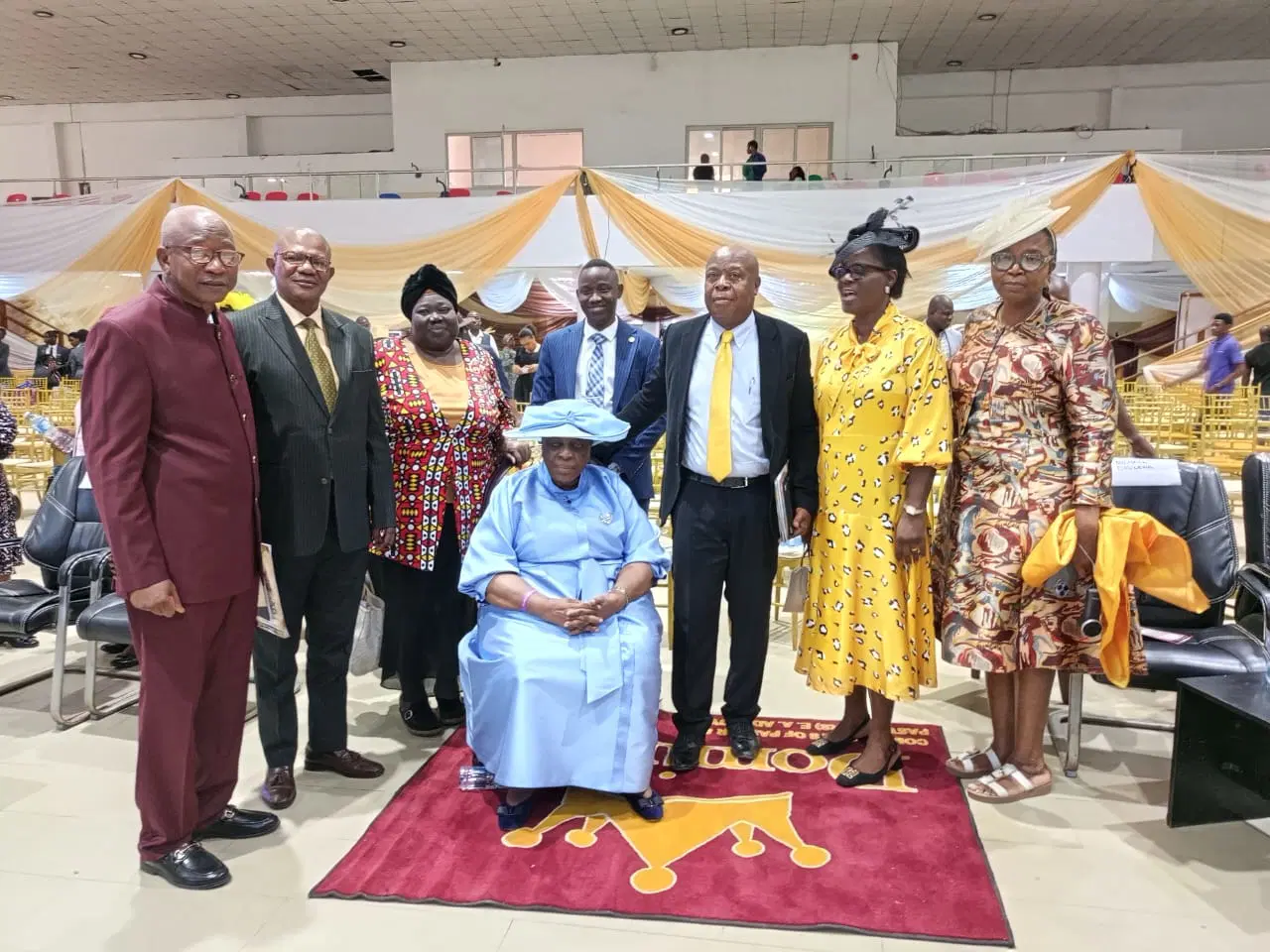
The wife of the General Overseer of the Redeemed Christian Church of God (RCCG), Pastor Foluke Adeboye, has called on parents, churches, governments and other stakeholders to take greater responsibility for the proper upbringing and education of children, declaring that every child has a unique destiny and the potential to achieve greatness.
Adeboye stressed that no child should be considered useless or abandoned, insisting that Nigeria’s future depends largely on how the younger generation is nurtured, educated and equipped with godly values.
She made the remarks while delivering her welcome address, titled “The Mandate of Kingdom Education in National Transformation,” at the annual summit of Christ The Redeemer’s School Management (CRSM), a ministry of the RCCG, held at Redemption City of God along the Lagos-Ibadan Expressway.
The summit was organised under the theme, “Revisiting Kingdom Education: The Role of Stakeholders,” bringing together education stakeholders to examine the responsibilities of parents, teachers, religious institutions and government in building a value-driven educational system.
Pastor Adeboye emphasised that effective Christian education must begin at home, noting that parents have a fundamental responsibility to instil discipline, godliness, respect and good character in their children.
She urged parents to work closely with teachers rather than leave the entire responsibility of educating and disciplining their children to schools.
According to her, children must be taught to respect their teachers, obey instructions and develop a strong relationship with God.
She also cautioned parents against excessively pampering their children, particularly during school holidays, stressing that proper discipline and consistent moral guidance are necessary for their development.
Every child must fear God because the fear of God is the beginning of wisdom. We see many of these children that look down on their teachers. If parents discharge their duties effectively, it will make the teacher’s work easier. Meditate on God’s word day and night,” she said.
Adeboye further encouraged parents not to shy away from correcting their children, explaining that responsible parenting and effective discipline would contribute significantly to building a better society.
She maintained that Nigeria could achieve meaningful national development if families, schools, religious institutions and other stakeholders worked together to raise responsible citizens.
“If only everyone of us can come together, do the right things, raise our children rightly, the success of Nigeria is in our hands,” she added.
The RCCG leader’s wife also called on churches to teach sound biblical doctrines and ensure that children receive proper spiritual guidance.
She urged children to respect and obey their parents while charging leaders across different sectors to discharge their responsibilities with diligence, integrity and sound judgment.
Adeboye warned that irresponsible leadership and failure to provide proper guidance could create an environment where corruption, criminality and other social vices thrive.
On the government’s responsibility, she called for improved educational infrastructure, particularly in rural communities where many pupils continue to face inadequate learning facilities.
She expressed concern that some children in rural schools still sit on classroom floors because of insufficient chairs and other basic facilities.
According to her, missionary and evangelism activities have helped improve some of the schools, highlighting the need for more deliberate interventions to address the educational challenges confronting underserved communities.
Adeboye insisted that children from rural communities should not be overlooked because of their backgrounds, explaining that they equally possess great potential and destinies to fulfil.
“So many things are wrong and these children from the village have great destiny to fulfil. God is counting on them. They brought David from the bush to be a king of Israel. No child is a useless child; God ordained every child to be great. I believe by the time I leave, I must have made substantial impact over the education in this nation,” she said.
In her keynote address, former Minister of Education, Dr Oby Ezekwesili, expressed concern over the challenges confronting Nigeria’s education sector, particularly the large population of out-of-school children.
She challenged professionals and other influential members of society to become actively involved in addressing national problems, arguing that individuals who remain indifferent to the challenges facing their communities cannot contribute meaningfully to societal transformation.
Ezekwesili also urged Christians to demonstrate the values they profess, reminding them of their responsibility to serve as the light of the world.
She explained that nation-building requires children to develop three essential qualities: character, competence and capacity.
According to her, these attributes are critical to preparing young people for responsible citizenship and enabling them to make meaningful contributions to national development.
The former minister called on Christian schools to prioritise diligence, courage, compassion and stewardship as fundamental values in their educational systems.
She described this approach as character-based education, stressing that academic excellence alone is insufficient without strong moral foundations.
Participants at the summit also emphasised the importance of ensuring that Kingdom Education produces ethical, responsible and productive citizens who actively contribute to society rather than remain passive observers.
The panelists maintained that school activities, including classroom instruction and curriculum delivery, should be guided by a biblical worldview.
They argued that Christian schools must equip students with a clear understanding of their identity, strengthen their knowledge of their faith and prepare them to withstand negative social influences.
The discussions further highlighted the need for stronger collaboration among parents, teachers, religious institutions, policymakers and other stakeholders to improve educational standards and promote responsible citizenship.
The summit’s central message was that education must go beyond academic qualifications to include moral development, spiritual growth, discipline and the acquisition of practical skills.
With Nigeria facing persistent educational challenges, including inadequate infrastructure, unequal access to quality learning and a growing number of out-of-school children, speakers stressed that investing in the younger generation remains essential to the country’s future.
Pastor Foluke Adeboye’s declaration that no child is useless reinforced the need to recognise the potential of every child, irrespective of family background, economic circumstances or geographical location.
The summit ultimately called for a collective commitment to raising a generation equipped with the knowledge, character, values and competence required to contribute meaningfully to national transformation.