


The International Monetary Fund has downgraded its global growth projections, citing escalating geopolitical tensions in the Middle East and disruptions to critical energy supply routes as major threats to economic stability.
In its latest World Economic Outlook update, the IMF warned that the global economy is once again facing significant headwinds, with the outbreak of conflict in late February 2026 raising fresh concerns about energy security, inflation, and trade flows.
Once again, the global economy is threatened with being thrown off course this time by the outbreak of war in the Middle East,” the Fund said.
At the centre of the current crisis is the disruption to oil and gas supplies linked to the partial blockage of the Strait of Hormuz a vital maritime corridor through which a significant share of the world’s crude oil exports passes.
The tensions, particularly involving ran, have triggered supply shortages, increased shipping risks, and pushed energy prices higher, creating ripple effects across global markets.
The IMF noted that unlike previous economic shocks driven by trade tensions including tariff policies under former U.S. President Donald Trump the current crisis is rooted in physical supply constraints, making it more difficult to contain.
Rising energy prices have already begun to affect manufacturing costs, transportation, and food prices globally, increasing pressure on both advanced and emerging economies.
Reflecting these developments, the IMF now projects global economic growth at 3.1 percent in 2026, down from its earlier forecast of 3.3 percent. Growth is expected to marginally improve to 3.2 percent in 2027.
However, these figures remain below the long-term average of 3.7 percent recorded between 2000 and 2019, signaling what the Fund describes as a “structurally weaker growth trajectory.
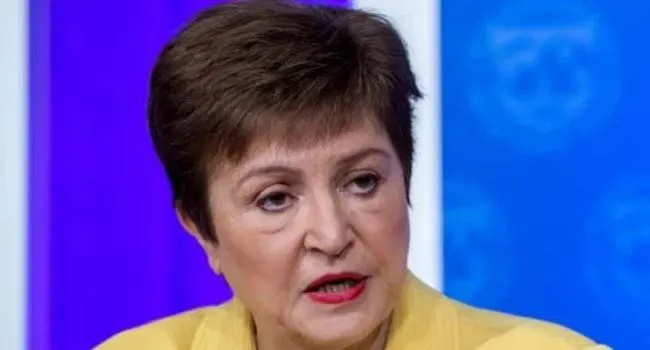
Kristalina Georgieva, Managing Director of the IMF, warned that even under the most optimistic scenario, the global economy is unlikely to quickly regain its pre-crisis momentum.
Even in a best-case scenario, there will be no rapid return to previous growth levels,” she said, noting that medium-term expansion is expected to stabilise at a lower baseline.
Beyond growth concerns, the IMF flagged renewed inflationary pressures as a key risk stemming from the conflict.
Energy-driven price increases are already feeding into broader inflation trends, particularly in major economies such as the United States and the eurozone, where expectations for near-term inflation have risen.
The Fund projects global headline inflation to reach 4.4 percent in 2026 before easing to 3.7 percent in 2027.
Georgieva, however, offered cautious reassurance, noting that long-term inflation expectations remain stable a critical factor in preventing runaway price increases.
Fortunately, longer-run expectations have not budged this is very good and very important, she said.
For emerging markets, including Nigeria, the evolving crisis presents a mixed outlook.
On one hand, higher crude oil prices could boost export revenues for oil-producing countries like Nigeria. On the other hand, increased volatility, higher import costs, and tighter global financial conditions could offset these gains.
Rising energy prices may also translate into higher domestic fuel costs, increased inflation, and additional pressure on exchange rates, particularly for countries dependent on imports of refined petroleum products.
In Nigeria’s case, where economic stability is closely tied to oil revenues and foreign exchange inflows, prolonged disruptions could complicate fiscal planning and monetary policy decisions.
The IMF emphasised that its projections are based on the assumption that the Middle East conflict remains contained and that supply disruptions begin to ease by mid-2026.
However, a prolonged or escalating conflict could lead to further downgrades, deeper market instability, and sharper inflation spikes.
The Fund urged policymakers globally to remain vigilant, strengthen economic buffers, and coordinate responses to mitigate the impact of the crisis.
As geopolitical risks continue to mount, the IMF’s latest outlook underscores a growing reality: the global economy is entering a period of heightened uncertainty, where shocks whether from conflict, trade, or climate could increasingly define the pace and stability of growth.