


Brazil is home to one of the largest and most diverse Indigenous populations in the world, with more than 280 officially recognised Indigenous communities spread across the country’s vast forests, rivers and rural territories.
From the heart of the Amazon rainforest to remote villages hidden deep within protected reserves, Brazil’s Indigenous peoples continue to preserve centuries-old traditions, languages, spiritual beliefs and cultural practices despite growing threats from modernisation, deforestation and land disputes.
For thousands of years before the arrival of European colonisers, Indigenous tribes inhabited the region now known as Brazil, developing sophisticated social systems, farming techniques, traditional medicine and spiritual customs closely tied to nature.
Today, these Indigenous communities remain an important part of Brazil’s national identity and cultural heritage.
Brazil’s Indigenous population is made up of hundreds of ethnic groups, each with its own language, customs, traditions and way of life.
Some of the best-known Indigenous groups include the Yanomami, Guarani, Tikuna, Kayapo, Xavante, Ashaninka and Munduruku peoples.
Many tribes live in the Amazon region, which contains one of the world’s largest concentrations of Indigenous communities and uncontacted peoples.
According to official estimates, Brazil’s Indigenous population exceeds one million people, with many communities maintaining strong cultural identities despite centuries of outside influence.
Several Indigenous groups continue to speak native languages passed down through generations, while others combine traditional lifestyles with aspects of modern Brazilian society.
Culture plays a central role in Indigenous communities across Brazil.
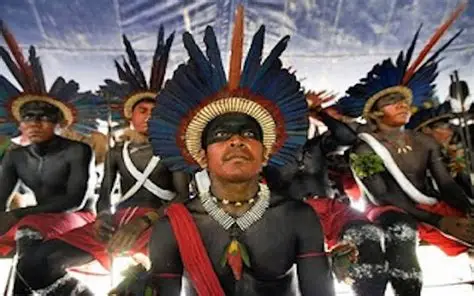
Traditional ceremonies, dances, storytelling, music and body painting remain important expressions of identity and spirituality among many tribes.
Feathers, beads, handmade ornaments and natural dyes are often used during festivals and rituals to symbolise ancestry, status and spiritual beliefs.
Many Indigenous communities rely on hunting, fishing, farming and gathering as part of their traditional way of life.
Cassava, maize, bananas and medicinal plants are commonly cultivated within village communities.
In several tribes, elders are respected as custodians of history, oral traditions and ancestral wisdom.
Traditional houses are often built using natural materials such as wood, palm leaves and bamboo, reflecting the close relationship Indigenous peoples maintain with the environment.
Brazil’s Indigenous communities speak more than 270 different languages, making the country one of the most linguistically diverse nations in the world.
While Portuguese is Brazil’s official language, many Indigenous groups continue to preserve their native dialects through storytelling, songs and education within their communities.
However, experts warn that several Indigenous languages are endangered due to urbanisation, migration and cultural assimilation.
Efforts are now being made by activists, researchers and Indigenous leaders to document and protect these languages for future generations.
Language preservation is considered essential to safeguarding Indigenous identity and cultural heritage.
Spirituality remains deeply connected to nature in many Indigenous societies across Brazil.
Forests, rivers, mountains and animals are often viewed as sacred elements connected to ancestral spirits and traditional beliefs.
Many communities practice rituals involving chants, dances and sacred ceremonies designed to maintain harmony between humans and nature.
Traditional healers and spiritual leaders also play significant roles within Indigenous villages, using herbal medicine and ancient knowledge to treat illnesses and guide community decisions.
Some tribes have integrated aspects of Christianity into their beliefs following missionary influence, while others continue to follow entirely traditional spiritual systems.
Despite their cultural importance, Indigenous communities in Brazil continue to face major social, environmental and political challenges.
Illegal mining, logging, deforestation and land encroachment have threatened several Indigenous territories, especially within the Amazon rainforest.
Human rights organisations have repeatedly raised concerns over violence against Indigenous leaders defending ancestral lands from exploitation.
Climate change and environmental destruction also threaten the natural ecosystems many Indigenous communities depend upon for survival.
In recent years, Indigenous activists have intensified campaigns demanding stronger government protection, healthcare, education and recognition of territorial rights.
Large protests and international advocacy efforts have drawn global attention to the struggles faced by Brazil’s Indigenous peoples.
Although many Indigenous groups preserve traditional lifestyles, others actively participate in modern Brazilian society through politics, education, arts and environmental activism.
Several Indigenous leaders have gained international recognition for defending Indigenous rights and environmental conservation.
Indigenous fashion, music, crafts and artwork have also become increasingly celebrated both within Brazil and globally.
Cultural festivals showcasing Indigenous dances, clothing and rituals attract tourists and researchers interested in learning about Brazil’s ancient heritage.
Experts say Indigenous knowledge of forests, biodiversity and sustainable living could play a vital role in global environmental protection efforts.
As Brazil continues to develop economically and socially, many activists believe preserving Indigenous cultures and traditions is essential for protecting the country’s historical identity and environmental future.
Efforts by Indigenous organisations, non-governmental groups and international agencies continue to focus on protecting native lands, preserving languages and promoting cultural education.
For many Indigenous communities, the struggle is not only about survival but also about ensuring that future generations continue to inherit the traditions, beliefs and ancestral knowledge passed down for centuries.
Brazil’s Indigenous peoples remain symbols of resilience, cultural pride and deep spiritual connection to nature — preserving one of the richest Indigenous heritages anywhere in the world.


