


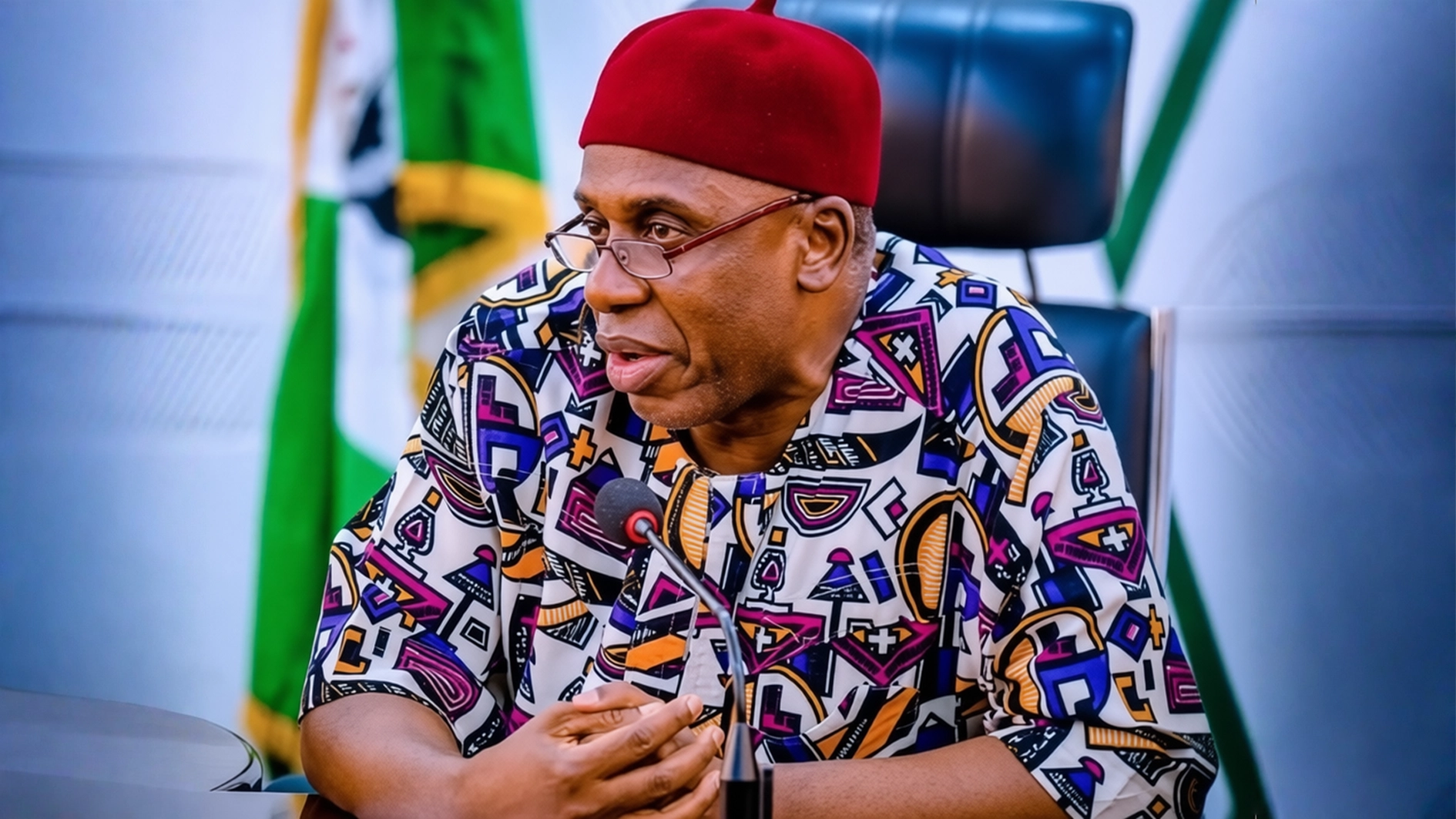
Former Rivers State Governor Rotimi Amaechi has explained why he chose not to support President Bola Tinubu, saying his decision was largely influenced by concerns about insecurity, the protection of lives and property, and the Federal Government’s handling of political dissent.
Amaechi made the remarks during an interview with African Independent Television (AIT), where he also discussed his approach to insecurity during his time as governor of Rivers State.
The former governor said tackling insecurity requires more than military and police operations, arguing that creating jobs and expanding economic opportunities could help reduce the conditions that push some people towards banditry and terrorism.
You need to create jobs to take away these people from each other, Amaechi said.
According to him, providing people with legitimate means of earning a living could reduce the attraction of criminal activities, while a stronger security system would also be needed to protect communities.
Amaechi said his experience as Rivers State governor shaped his views on the responsibility of government to protect citizens.
He recalled taking action over security concerns because, in his account, he believed the government at the time was not doing enough to protect residents.
Because I needed to save the lives of my people. For every day somebody was killed, I was crying. I needed to solve that. I had a responsibility,” he said.
He argued that the protection of lives and property is a constitutional responsibility of the President and questioned the Federal Government’s handling of the country’s security challenges.
Amaechi also criticised the Tinubu administration over what he described as its approach to insecurity and political opposition.
He alleged that the government had focused excessively on the arrest of political opponents and protesters instead of addressing the underlying security problems confronting the country.
He referred to reported arrests connected to an ADC meeting in Port Harcourt, as well as arrests of protesters in Borno and Kaduna.
Amaechi also criticised politicians who, according to him, speak strongly about democratic principles while in opposition but adopt different positions after gaining political power.
He drew a comparison between the current administration and the military government of the late General Sani Abacha, saying he believed some of the actions of the present government were worse.
Those remarks represent Amaechi’s assessment of the administration and were not presented in the report as an independent finding.
Amaechi, who is now the African Democratic Congress vice-presidential candidate to Atiku Abubakar for the 2027 presidential election, said he deliberately decided not to join the Tinubu administration.
He said he had an opportunity to support Tinubu but chose not to do so because of his concerns about the direction of the government.
I chose not to be part of government, Amaechi said.
He also recalled a conversation with Tinubu in which he told the President directly that he would not support him.
I told Tinubu when he came to me… I said, I won’t support you. I had the choice to say I will support you, he said.
Amaechi’s comments come as political parties and opposition groups continue to position themselves ahead of Nigeria’s 2027 general elections.
His decision to align with the ADC and serve as Atiku Abubakar’s running mate places him within one of the political groupings seeking to challenge the ruling administration in the next presidential contest.
For now, Amaechi’s explanation centres on his stated concerns over security, governance and the treatment of political opposition, while the Tinubu administration has its own record and positions on those issues.