


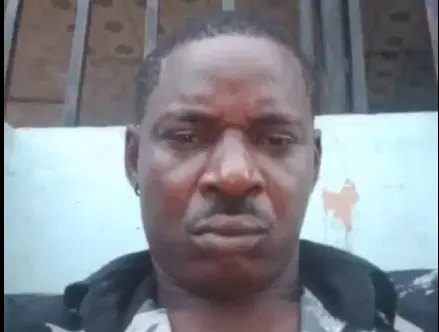
A Nigerian police officer, Newton Isokpehi, has publicly apologised after sparking outrage online with a viral video in which he threatened to shoot anyone caught filming him while on duty.
The officer, whose comments triggered widespread criticism across social media platforms, said his controversial remarks were made out of anger and frustration arising from the difficult conditions faced by security personnel.
In a video shared on his TikTok page on Thursday, Isokpehi pleaded with Nigerians and popular rights activist Harrison Gwamnishu to forgive him for the statements that generated nationwide backlash.
“Please forgive me. If I offended you as a brother, forgive me. That statement was just out of annoyance because of the things that are happening. These things are painful,” he said.
The officer explained that his comments were not intended as a direct threat to civilians and insisted that Nigerians are legally allowed to record police officers performing their duties.
Speaking in Pidgin English, Isokpehi clarified that his frustration was directed at what he described as increasing hostility and provocation against officers during operations.
Actually, you can video us. You are allowed to video a policeman. But it’s not right for just anybody to come from anywhere and start videoing officers on duty. They have taken it too far, he stated.
The controversy began after a video surfaced online showing the officer threatening to clear everybody down, including bystanders around anyone filming him during operations. The clip quickly spread across X, Instagram, and TikTok, drawing condemnation from Nigerians who accused the officer of abuse of power and intimidation.
Human rights advocates and social media users subsequently called on the Nigeria Police Force to investigate the incident and discipline the officer.
In his emotional appeal, Isokpehi attempted to defend his character and years of service in the police force. He revealed that he is from Edo State and was raised in a police barracks in Kaduna, describing himself as a committed officer who has dedicated much of his life to serving Nigeria.
Anywhere people ask about me, people will testify to my character. I have worked in the Mobile Police for 12 years. I have worked for my fatherland with all my heart,” he said.
The officer also displayed multiple gunshot wounds on his body, claiming they were sustained during dangerous security operations carried out in service to the country.
Look at my body, these are all bullets. These are all gunshot wounds. See my chest, bullet has eaten into it. Out of 17 of us, only two survived that operation,” he revealed.
According to him, the emotional and physical toll of police work contributed to his outburst.
We have suffered in this work. So it was out of annoyance. We don’t even like complaining,he added.
Isokpehi further attempted to retract his earlier comments, insisting that he had no intention of harming innocent Nigerians.
“How can I be saying I will kill my own people? We don’t do that. I spoke out of annoyance. That one was just verbal talk, he stated.
Directly addressing Gwamnishu and the Nigerian public, the officer admitted that the backlash from the viral video had become overwhelming.
Harrison, forgive me. I beg the whole of Nigeria, please forgive me. This one has reached too far. If you want to know me, come and meet me one-on-one. You will know me personally. I will not run. I will not surrender, he said.
The officer concluded his apology by expressing hope that welfare conditions for police personnel would improve under the current Inspector General of Police.
We have decided that we will die for our fatherland. One day, things will surely get better by the grace of God. One love to the world, he added.
The incident has once again reignited conversations about police accountability, citizens’ rights to document law enforcement activities, and the welfare challenges faced by Nigerian security personnel.
As of the time of filing this report, the Nigeria Police Force had not issued an official statement regarding the officer’s apology or whether disciplinary action would be taken over the viral threat video.


