


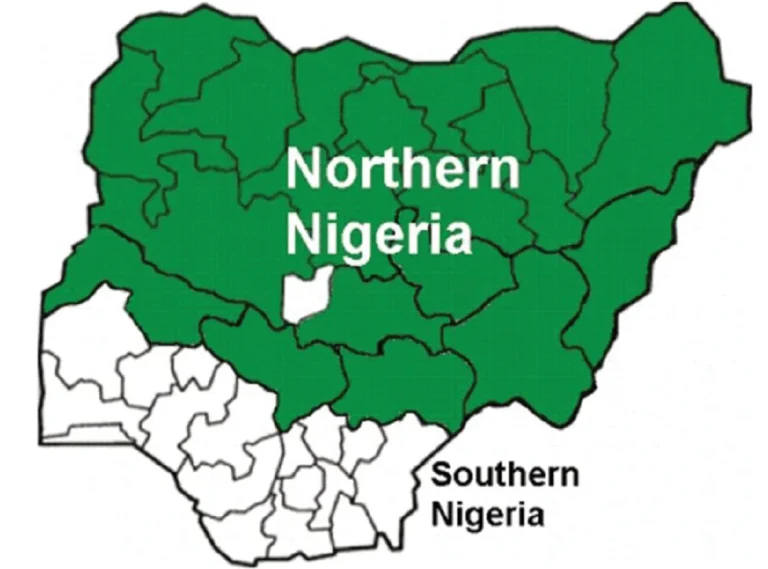
Kidnapping in Northern Nigeria has evolved into a lucrative criminal economy, forcing families to sell farms, borrow money, raise community contributions and surrender valuable property in desperate attempts to secure the release of loved ones.
For many families across Northern Nigeria, the nightmare does not end when a relative is abducted. Instead, the kidnapping triggers a second struggle, one that involves negotiations, fundraising, borrowing, selling assets and, in some cases, providing kidnappers with motorcycles, food, fuel and communication materials.
The abducted person becomes a source of revenue for the criminal group, while the family is pushed into a desperate race to raise whatever is demanded for survival.
Across states including Zamfara, Kebbi, Sokoto, Kwara, Kaduna and Borno, accounts from victims, relatives and community members reveal how ransom demands have become deeply connected to the wider kidnapping crisis.
In some cases, families pay millions of naira and secure the release of their relatives. In others, ransom payments are followed by fresh demands. Some victims are killed despite payments, while others are rescued through security operations before any ransom is handed over.
The result is an underground economy built around human captivity, fear and desperation.
Recent research by SBM Intelligence provides an indication of the scale of the crisis.
The organization reported that 7,825 people were abducted across Nigeria between July 2025 and June 2026, with 7,334 victims recorded across the three northern geopolitical zones.
The research also estimated that about N7.78 billion was actually paid as ransom during the period.
The figures point to a disturbing reality: kidnapping is no longer simply a security challenge. It has developed into an economic enterprise capable of transferring enormous amounts of money and other resources from vulnerable communities to armed criminal groups.
The abduction of Justice Faruk Hassan Bunza, a High Court judge in Kebbi State, illustrates how ransom negotiations operate.
Bunza was abducted from his residence along Zogirma Road in Bunza Local Government Area on July 26, shortly after returning from Sokoto.
According to accounts from his family, the kidnappers initially demanded N200 million but later reduced the demand to N50 million following negotiations.
The judge was released on August 3 after spending about nine days in captivity.
A family member said the N50 million ransom was paid, alongside soft drinks and biscuits.
The police, however, maintained that it did not support ransom payments.
After his release, Bunza reportedly disclosed that he had been held at Dutsen Bandan, a hill behind the NYSC permanent orientation camp in Dakin Gari, Suru Local Government Area.
He also reportedly encountered other abductees at the hideout.
His experience demonstrates how the ransom process can resemble a commercial negotiation: the kidnappers make a demand, the family negotiates, the amount is adjusted and payment is eventually made.
In Zamfara State, the ransom economy has extended beyond cash payments.
Bashar Sani, a senior administrator at the College of Education, Maru, was abducted alongside his wife and other women. His family reportedly paid N20 million, three motorcycles and N150,000 worth of recharge cards in an attempt to secure his release.
But the payment did not save him. Sani reportedly spent 42 days in captivity before he was killed. His case exposes one of the most disturbing realities of Nigeria’s kidnapping crisis: paying ransom does not guarantee that a hostage will survive.
Another Zamfara victim, Musa Usman, was abducted while travelling to Sokoto for business. His family reportedly paid N7 million, after which the abductors demanded three motorcycles before releasing him.
For other victims, the ransom demands have forced families into prolonged negotiations.
Aminu Sarki, from Jangeme in Gusau Local Government Area of Zamfara State, was reportedly abducted from his farm in August.
The kidnappers allegedly demanded N10 million and held him in the forest for about three weeks after his family failed to raise the full amount.
Sarki was eventually released after his family raised N3 million.
Recounting his ordeal, he explained that the abductors arrived at his farm on motorcycles and took him into the forest, where he was held alongside other captives.
The case demonstrates how ransom amounts are sometimes reduced after lengthy negotiations, depending on the victim’s perceived ability to pay.
Another victim, Mohammed Bala, was reportedly abducted from Damba Housing Estate in Gusau.
His abductors accused him of withholding his retirement benefit and allegedly threatened to take him into the forest unless money was produced. His family eventually mobilised millions of naira for his release.
The economic consequences of kidnapping often continue long after a victim has returned home.
In Kwara State, three siblings abducted in August 2025 reportedly spent about two months in captivity.
Their father negotiated with the kidnappers after an initial demand of N15 million per victim was reportedly reduced to N5 million each.
The family allegedly sold farmland and other property to raise the money.
But the ordeal did not end there.
The kidnappers reportedly seized the father and demanded another N10 million.
For farming families and small business owners, selling land and property to pay ransom can create a second form of insecurity.
The family may succeed in securing the freedom of a loved one, but lose the assets needed to generate income and sustain itself.
In this way, ransom payments can deepen poverty while simultaneously providing financial incentives for kidnappers.
The burden is no longer restricted to individual families.
In some communities, relatives, traditional leaders, residents, friends and members of the diaspora have been forced to contribute money to secure the release of abducted persons.
In Awun community in the Oro-Ago district of Kwara State, residents and indigenes reportedly raised about N60 million to secure the release of three children aged between four and 15 who had spent roughly four months in captivity.
Contributions reportedly came from community members living within and outside the state, including those abroad.
The kidnappers also allegedly demanded food and other supplies.
At Owa-Onire, residents reportedly said more than N50 million had been paid in different kidnapping incidents.
The daughter of the monarch was reportedly released after about two months following payment of ransom, while engineers working on road projects were also abducted and later released after their employers allegedly paid.
The consequences extend far beyond ransom payments.
Farmers abandon their farms because they fear abduction. Traders stop travelling to vulnerable communities. Construction workers become targets. Businesses close, while residents relocate to safer areas.
A ransom payment may save one person today, but the money received by criminal groups can potentially provide them with the resources to acquire motorcycles, fuel, food, communication devices and other supplies needed to carry out another kidnapping.
The criminal enterprise therefore feeds on the economic vulnerability it creates.
The issue becomes even more complicated when government authorities refuse to negotiate with kidnappers.
In Zamfara, about 50 farmers from Magamin Diddi in Maradun Local Government Area reportedly entered the forest in an attempt to negotiate with bandits but remained in captivity after the state government declined to negotiate.
For governments and security agencies, ransom payments can strengthen criminal organisations and encourage further kidnappings.
For families, however, the calculation is completely different.
They are not thinking about the long-term financing of criminality. They are thinking about the immediate survival of a mother, father, child, husband, wife or sibling.
That is the difficult dilemma at the centre of Nigeria’s ransom economy.
One of the most disturbing cases involved worshippers abducted during an ECWA church service at Omugo in the Oro-Ago district of Kwara State.
Eight worshippers were reportedly abducted during the incident in March, with the kidnappers initially demanding N1 billion.
Pastor Sunday Omole, whose wife was among those taken, reportedly said the community eventually provided N20 million, along with five bags of rice, petrol, red oil, seasoning and other supplies.
Rather than release the victims, the abductors allegedly demanded another N300 million.
By June, five of the eight worshippers had reportedly been killed while another escaped.
The incident demonstrates how ransom payments can sometimes lead to further demands rather than an end to captivity.
The abduction of the Oniwo of Afin, Oba Simeon Olanipekun, and his son, Olaolu, further illustrates the uncertainty surrounding ransom payments.
The monarch and his son were abducted from their palace in December 2025.
Family sources reportedly said N20 million was paid for the son’s release after about two weeks.
The monarch remained in captivity, after which another N12 million and two power banks were allegedly delivered.
The family reportedly put the total ransom at N32 million.
However, the Kwara State Police Command disputed the ransom claim and said the monarch was rescued through sustained joint security operations.
The conflicting accounts highlight the difficulty of documenting ransom payments in Nigeria, as families often keep negotiations secret while security agencies are reluctant to confirm payments.
Not every kidnapping case ends with ransom payment.
In Omu-Aran, Kwara State, security personnel and community members reportedly tracked a victim while negotiations with kidnappers were ongoing.
Security forces eventually closed in on the abductors, forcing them to abandon the victim.
The hostage was rescued without any ransom being publicly acknowledged.
A similar intelligence-led operation reportedly took place in Woro, Kaiama Local Government Area, where a large number of victims were recovered after spending months in captivity.
In August, 163 victims were reportedly recovered and taken to Ilorin for medical attention.
Survivors described severe hunger, deprivation and deaths in captivity, while medical personnel reportedly assisted pregnant women who were forced to deliver babies in the forest under extremely difficult conditions.
Such operations demonstrate the importance of intelligence gathering, community cooperation and rapid security intervention in breaking the kidnapping business model.
In Borno State, mass abductions have demonstrated how the criminal economy can operate on an even larger scale.
About 360 of the 416 residents of Ngoshe in Gwoza Local Government Area, mostly women and children, were reportedly abducted on March 4, 2026.
The victims spent about three months in captivity before their release in June following military operations, according to the Army.
Some survivors reportedly recalled seeing bags being transported into the terrorists’ enclave shortly before their release.
One survivor said she could not confirm whether the bags contained money but recalled seeing several motorcycles transporting the bags into the area where the captives were being held.
The account illustrates the secrecy and uncertainty surrounding negotiations and releases involving armed groups.
In Sokoto State, the former chairman of Gudu Local Government Area, Bello Wakili Bachaka, reportedly told a judicial commission of inquiry how he sold a monetised official vehicle to raise more than N4 million after bandits abducted his wife and two children.
The money was reportedly used to secure their release.
Another case involved a widow whose family reportedly paid N5 million after her husband was abducted.
The man was later abducted again by another armed group, which demanded additional money.
When his family could not meet the new demand, he was reportedly killed.
The cases reveal the devastating cycle created when families pay once and are later targeted again because kidnappers believe they have access to money.
Kano provides an example of how rapid intervention can deny kidnappers the opportunity to establish a ransom negotiation.
When Sarkin Noman Kano, Alhaji Yusuf Nadabo Chiromawa, was abducted in Chiromawa, Garun Mallam Local Government Area, security personnel and community members reportedly launched a pursuit.
The attackers eventually abandoned the victim, who was rescued the same day.
The case underscores the importance of speed in hostage situations.
The longer a victim remains in captivity, the greater the opportunity for abductors to establish contact with relatives, make ransom demands and negotiate payment.
The economic damage caused by kidnapping and banditry is not limited to ransom.
In Naridon, Kauru Local Government Area of Kaduna State, a July attack reportedly left at least 30 residents dead, while others were injured or missing.
Five children from one family were reportedly killed, with only one surviving but critically injured.
Homes, shops and other property were also destroyed.
A community leader described the devastating impact of the attack, while residents reportedly complained that poor road infrastructure delayed security intervention.
The Kaduna case demonstrates another side of the insecurity economy: communities can lose their productive capacity even when no ransom is paid.
Farmers abandon their land, businesses close and families relocate, creating conditions that further weaken local economies.
The cases examined across Northern Nigeria reveal that the kidnapping economy operates through a wider network.
Families, relatives, community leaders, employers, intermediaries and diaspora groups can all become unwilling participants in ransom negotiations.
And ransom itself is no longer limited to cash.
Motorcycles provide mobility. Recharge cards facilitate communication. Food sustains camps. Fuel supports transportation.
Every resource surrendered to an armed group can potentially strengthen its capacity to carry out another operation.
This creates a troubling cycle in which the ransom used to save one victim can become part of the resources used to abduct another.
The central challenge for governments and security agencies is how to protect victims without creating incentives for further abductions.
Security agencies have repeatedly warned against ransom payments because the proceeds can strengthen criminal organisations.
But for families faced with a direct threat to the life of a loved one, the decision is rarely about national security policy.
It is about survival.
When a kidnapper demands money and threatens to kill a hostage, families are forced to calculate the value of everything they own against the life of one person.
That is what makes the kidnapping crisis more than a security problem.
It is an economic system built around fear, captivity and desperation.
Breaking that system will require more than military operations alone. It will also require stronger intelligence networks, effective policing, rapid-response capabilities, financial tracking, protection for rural communities, better roads and communications infrastructure, and measures to prevent criminal groups from converting ransom proceeds into weapons, logistics and further criminal capacity.
Until the profitability of kidnapping is disrupted, the cost will continue to be paid by vulnerable families.
And that cost goes far beyond the ransom itself.
It includes farms sold, homes abandoned, businesses destroyed, savings exhausted, children displaced and communities pushed deeper into poverty.
The ransom economy is therefore not simply transferring money to kidnappers. It is steadily draining wealth from some of Nigeria’s most vulnerable communities and turning human captivity into a source of criminal profit.