


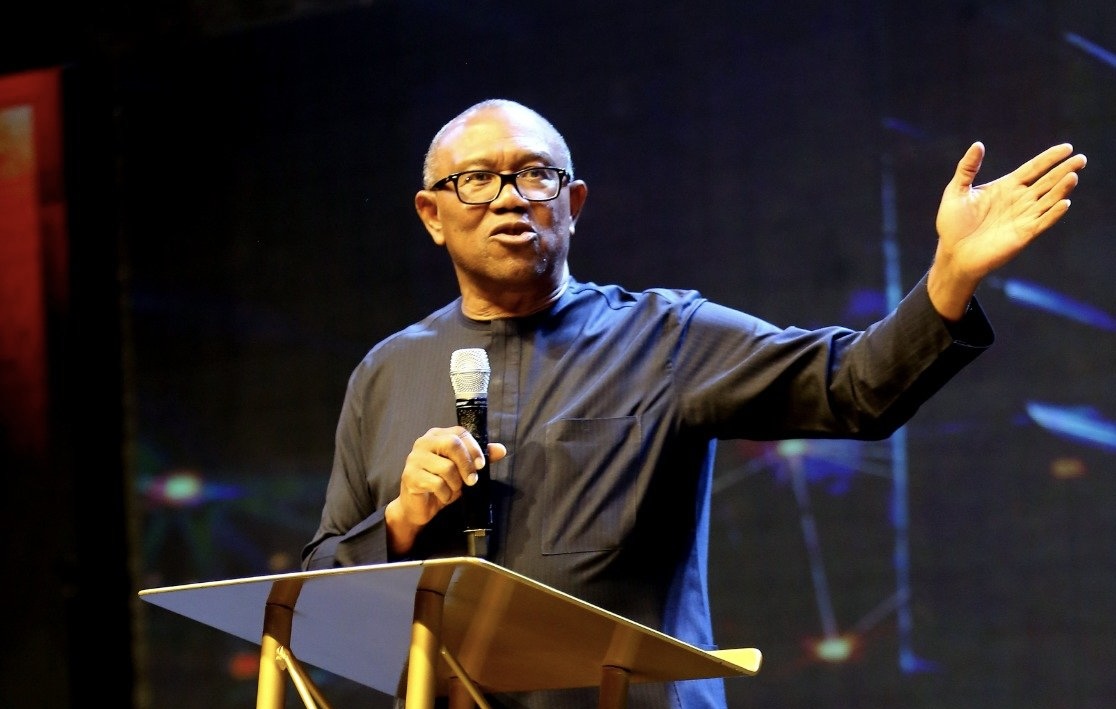
Peter Obi, presidential candidate of the Nigeria Democratic Congress (NDC), has said he would make the fight against corruption a priority if elected president in the 2027 general election.
Obi made the statement during an interview with the BBC African Service, where he was asked about his anti-corruption promise and whether he could deliver on it if given the opportunity to lead Nigeria.
The former Anambra State governor drew a distinction between his proposed approach and that of former President Muhammadu Buhari, who came to power in 2015 on a strong anti-corruption platform.
According to Obi, Buhari’s administration failed to sufficiently address corruption because, in his view, the former president was not fully in control of the government.
He was not in charge. The difference is this: I will be in charge,Obi said.
Obi said his approach to fighting corruption would begin with personal conduct at the highest level of government.
He argued that a president must first ensure that neither he nor members of his immediate family are involved in corrupt practices before expecting government institutions and officials to operate differently.
“If you are not stealing, if you are not involved, your wife and family are not involved, you reduce it by 50 percent, he said.
The NDC candidate has previously said that reducing corruption and government waste would be central to his administration if elected in 2027
The presidential candidate also addressed the debate over whether opposition parties should unite behind a single candidate ahead of the 2027 election.
Obi argued that opposition parties should focus less on persuading one candidate to withdraw in favour of another and instead concentrate on mobilising additional voters.
He pointed to voter registration figures in Sokoto as an example, saying the opposition should be working towards bringing millions of additional Nigerians into the electoral process.
“In the last elections, Sokoto had over 2 million registered voters. Opposition should be talking about how do we get additional 25 million people to come in and vote. We don’t need to step down,” he said.
His comments come amid continuing discussions among opposition figures about cooperation ahead of the 2027 presidential election. Obi and other opposition leaders had previously participated in coalition discussions before he emerged as the NDC presidential candidate.
Obi also reiterated his position on petrol subsidy, insisting that his views on the issue have not fundamentally changed.
He said the central problem with the subsidy system was corruption and mismanagement, rather than the principle of providing support to consumers.
“I have not changed on fuel subsidy. What has changed is that whenever I talk about methodology, people say, ‘Oh, he has changed.’ From day one that I talked about subsidy, I talked about corruption. Corruption is the problem of subsidy,” Obi said.
Asked directly whether he would restore the subsidy if elected president, he answered in the affirmative but said his administration would seek to eliminate the corruption he associates with the policy.
“Yes, but not with the corruption associated with it. That’s why I said I will remove the corruption and retain the subsidy,” he said.
Obi had previously argued that removing the subsidy should not mean allowing the resources generated from the policy change to be mismanaged. In August, he said the removal itself was necessary but criticised the handling of the resulting revenue.
Obi’s latest comments come as presidential contenders and opposition parties increasingly set out their economic and governance positions ahead of the 2027 election.
The debate over corruption, petrol subsidy, government spending and opposition unity is expected to remain prominent as political parties prepare for the campaign period.
For Obi, however, the central message remains that tackling corruption must begin with leadership and personal accountability at the highest level of government.