


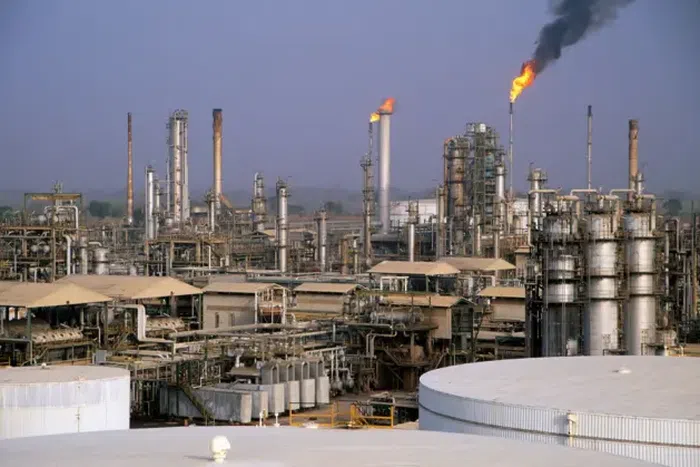
Nigeria’s long-running refinery crisis has become more than an industrial problem. It is now a test of the country’s commitment to petroleum-sector reform, commercial accountability and responsible management of public assets.
After decades of government spending, rehabilitation contracts and highly publicised commissioning ceremonies, the state-owned refineries in Port Harcourt, Warri and Kaduna have struggled to deliver sustained commercial refining. At the same time, the rise of the Dangote Petroleum Refinery and a growing number of modular refineries has demonstrated that large-scale refining can be viable in Nigeria when capital, management, infrastructure and commercial incentives are properly aligned.
The contrast raises an uncomfortable question: if private investors can build and operate modern refining capacity in Nigeria, why have government-owned plants remained trapped in a cycle of rehabilitation, shutdowns and fresh expenditure?
The answer is not simply that the refineries are old. Age can be overcome with competent management, timely maintenance, reliable crude supply and disciplined investment. The deeper problem has been a combination of political interference, weak accountability, inadequate maintenance, opaque contracting, infrastructure failures, subsidy distortions and an operating culture in which losses were repeatedly absorbed by the public.
For a major crude-producing country that has spent years importing refined petroleum products, the consequences have been enormous.
Nigeria’s government refineries were established as strategic national infrastructure. The Port Harcourt, Warri and Kaduna plants were expected to process domestic crude, guarantee fuel availability, support industrialisation and reduce dependence on imported petroleum products.
Instead, the refineries became associated with low capacity utilisation, repeated shutdowns and expensive rehabilitation programmes.
Successive administrations approved turnaround maintenance and rehabilitation projects involving substantial public expenditure. Various government and legislative reviews have raised questions about the scale of spending on the facilities and whether taxpayers received value for money.
The precise figures cited in different reviews vary, but the broader concern remains the same: enormous sums have been committed to refinery rehabilitation without producing the sustained, profitable operations expected from assets of such strategic importance.
The Port Harcourt refinery rehabilitation, for instance, attracted a contract estimated at about $1.5 billion. Further commitments were made toward the rehabilitation of the Warri and Kaduna refineries.
Yet the pattern has repeatedly been similar: rehabilitation announcements, completion claims, commissioning ceremonies, intermittent operations and subsequent shutdowns.
For Nigerians, the cycle has become painfully familiar.
A refinery is declared ready. Officials celebrate. Expectations rise. Operations resume, sometimes briefly. Then production falls, the facility shuts down and another rehabilitation plan emerges.
This is not a sustainable energy policy.
The Petroleum Industry Act (PIA) 2021 was supposed to provide a new direction for Nigeria’s petroleum industry.
One of its major institutional changes was the transformation of the Nigerian National Petroleum Corporation into NNPC Limited, a commercial entity expected to operate according to business principles rather than function primarily as an extension of government bureaucracy.
That distinction is critical.
If NNPC Limited is genuinely a commercial company, its assets should be judged according to performance, profitability, efficiency and return on investment.
Loss-making refineries cannot remain protected indefinitely simply because they are government-owned.
The PIA also established clearer separation between commercial operations and regulatory responsibilities. NNPC Limited is expected to operate commercially, while the Nigerian Midstream and Downstream Petroleum Regulatory Authority (NMDPRA) is responsible for regulating significant aspects of the downstream petroleum industry.
The principle should therefore be straightforward: the operator operates, the regulator regulates and government, as shareholder, demands value.
The continued problems surrounding the government refineries raise questions about whether the spirit of the PIA is being fully implemented.
Changing an institution’s legal structure does not automatically change its culture. Commercialisation must be reflected in measurable performance, transparent accounts, professional management and consequences for persistent failure.
Several factors explain the prolonged weakness of the state-owned plants.
Public ownership became intertwined with political considerations.
Management decisions were frequently influenced by government priorities, fuel pricing policies and broader political concerns rather than purely commercial calculations.
State ownership itself is not necessarily the problem. Around the world, governments own commercially successful energy companies. The problem arises when ownership is combined with weak accountability and an unwillingness to allow commercial consequences for poor performance.
A refinery cannot remain profitable if maintenance is treated as an occasional emergency rather than a continuous operational requirement.
Nigeria’s experience has often been characterised by major turnaround projects after prolonged periods of deterioration.
This approach is expensive and inefficient.
Modern refineries require preventive maintenance, reliable spare parts, technical expertise and continuous monitoring. Waiting until a plant is severely degraded before committing billions to rehabilitation creates enormous costs and operational uncertainty.
Nigeria’s former petrol subsidy regime also distorted the economics of the downstream petroleum sector.
For years, government-controlled prices shielded consumers from the full market cost of petrol while creating significant fiscal pressures.
A refinery operating within such an environment faced an uncertain commercial outlook, particularly when imported products could enter the market under government-controlled pricing arrangements.
The removal of the petrol subsidy has fundamentally changed the market. It has created stronger incentives for domestic refining, but it has also exposed the inefficiencies accumulated by the old system.
A functioning refinery requires more than a repaired processing unit.
It needs reliable crude supply, pipelines, electricity, water, storage facilities, transportation infrastructure and dependable systems for evacuating finished products.
Nigeria has struggled with pipeline vandalism, crude theft, insecurity and ageing infrastructure.
Consequently, even when a refinery is technically capable of operating, unreliable crude supply or poor logistics can undermine sustained production.
Another major problem is the lack of consistent public disclosure surrounding refinery rehabilitation.
Citizens deserve to know how much has been spent on each refinery, who received the contracts, what work was completed, what capacity was restored and how much fuel was subsequently produced.
Without such information, public confidence inevitably suffers.
Independent technical audits, published expenditure records, performance benchmarks and enforceable contractual obligations should be standard requirements for any future public investment in the facilities.
The Dangote Petroleum Refinery has fundamentally altered Nigeria’s refining debate.
Located in the Lekki Free Zone in Lagos, the refinery has a designed capacity of about 650,000 barrels per day and is widely regarded as the world’s largest single-train refinery.
Its emergence has challenged the long-standing assumption that Nigeria must depend heavily on imported refined petroleum products.
The refinery began producing diesel and aviation fuel in 2024 and subsequently commenced petrol production.
Its progress has demonstrated that refining can be commercially viable in Nigeria when there is sufficient capital, modern technology, integrated infrastructure and strong project management.
The significance goes beyond the Dangote facility itself.
A functioning domestic refinery can reduce pressure on Nigeria’s foreign exchange reserves, create employment, strengthen logistics and manufacturing, support petrochemical industries and improve the country’s position in regional energy markets.
The refinery has also demonstrated that Nigeria can potentially move from being primarily an exporter of crude oil and importer of refined products to becoming a regional supplier of refined petroleum products.
That represents a major shift.
The success of Dangote Refinery should not lead Nigeria into another form of market concentration.
The objective should be a competitive refining industry containing large private refineries, modular plants, viable NNPC assets and legitimate importers where necessary.
Competition is important because consumers ultimately benefit when refiners compete on price, quality, reliability and efficiency.
The NMDPRA therefore has a crucial responsibility.
Regulators must ensure that crude supply arrangements, product distribution, pricing, depot access and other market rules are transparent and non-discriminatory.
Nigeria must avoid replacing a dysfunctional state monopoly with an unchecked private-sector monopoly.
Nigeria’s smaller modular refineries also deserve attention.
They may not possess the enormous capacity of the Dangote refinery, but they can play an important role in developing regional refining capacity.
Their advantages include smaller capital requirements, proximity to crude-producing areas and the potential to supply nearby markets.
Several modular refinery projects have been licensed in Nigeria, although only a limited number have achieved consistent commercial operations.
Government policy should therefore focus on solving the problems that prevent viable modular refineries from scaling up.
These include access to crude, financing, infrastructure, security, licensing and environmental compliance.
The objective should not be indiscriminate government subsidies but the creation of a predictable environment in which efficient operators can succeed.
The government now faces a choice.
It can continue spending public money on repeated rehabilitation programmes without sufficiently demonstrating commercial returns, or it can make difficult decisions about the future ownership and operation of the refineries.
First, open-ended rehabilitation spending should stop.
No additional major capital commitment should be approved without an independent technical audit, a transparent cost-benefit analysis, defined performance targets and enforceable completion milestones.
Second, government should publish a comprehensive refinery expenditure record.
Each refinery should have a publicly accessible record showing contracts, contractors, approved costs, payments, technical milestones, operating capacity and production results.
Third, viable refineries should be concessioned or privatised where appropriate.
If competent private operators can demonstrate that they can run the plants more efficiently, government should be prepared to transfer operational control through transparent and competitive processes.
Fourth, non-viable assets should be repurposed.
A facility that cannot economically operate as a refinery could potentially be converted into a storage terminal, petrochemical support facility, logistics hub, training centre or another commercially useful industrial asset.
Keeping an uneconomic facility alive purely for political symbolism is not sound economic policy.
Fifth, NNPC Limited must be held to commercial standards.
If the company retains refinery assets, it should publish refinery-level financial and operational information, including capacity utilisation, operating costs, revenues, margins and audited results.
Commercialisation must mean more than putting “Limited” at the end of an old name.
Sixth, the downstream regulator must protect competition.
As domestic refining expands, the NMDPRA should ensure transparent market rules, fair access to infrastructure, product-quality enforcement and measures against anti-competitive practices.
Seventh, Nigeria must invest in the infrastructure supporting refineries.
Pipelines, depots, ports, storage facilities, power infrastructure and product evacuation systems are essential to building a reliable refining ecosystem.
Finally, accountability must become central to refinery policy.
Where contracts fail, government should pursue appropriate remedies. Where public funds are mismanaged, those responsible should face consequences. Where an asset is no longer commercially viable, the government should be willing to admit it and pursue a better alternative.
Nigeria’s refinery crisis ultimately reflects a governance problem as much as an engineering problem.
The country has crude oil, technical professionals, a large domestic market and substantial investment opportunities.
What has been missing is consistent commercial discipline.
The rise of Dangote Refinery and the emergence of modular refineries have shown that domestic refining is possible. They have also removed one of the strongest arguments for maintaining the old system indefinitely.
The government-owned refineries should therefore no longer be judged by ceremonies, smoke from their stacks or declarations of mechanical completion.
They should be judged by measurable output, profitability, reliability, transparency and value to Nigerians.
President Bola Tinubu captured this principle when he warned that the presence of flame and smoke from a refinery does not necessarily mean the facility is working effectively until it is profitable and delivering the value for which it was built.
That should become the benchmark for Nigeria’s entire refining policy.
The next refinery announcement should not simply be another promise of rehabilitation.
It should come with evidence: audited expenditure, reliable production, commercial viability, transparent management and measurable benefits to consumers.
Nigeria cannot afford to keep turning refinery rehabilitation into a recurring expenditure programme.
The country needs a refining sector that works—not one that merely looks busy.