


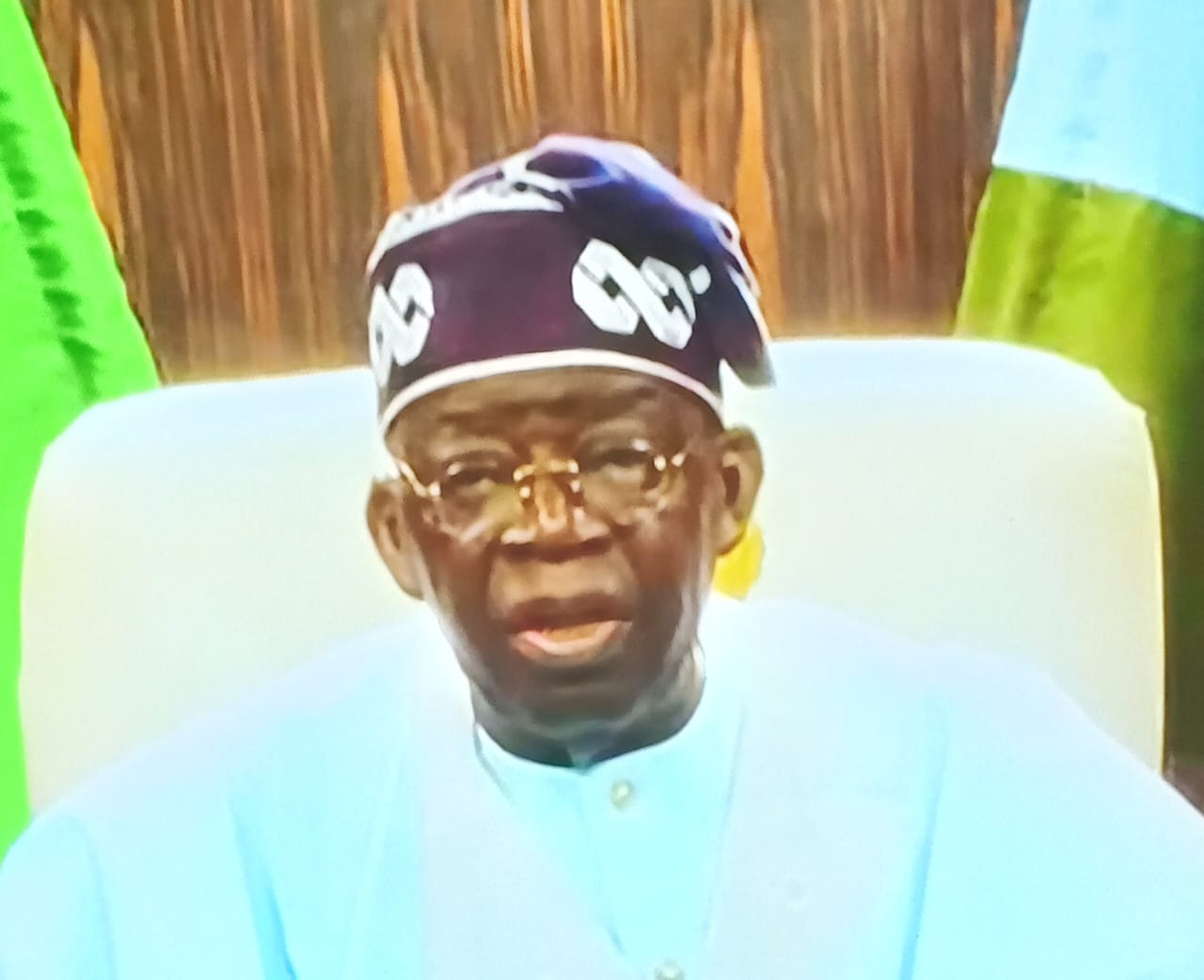
LAGOS: President Bola Ahmed Tinubu has declared that Nigeria is entering a new era of prosperity, economic opportunity and national renewal as the country marks its 66th Independence Anniversary.
In his Independence Day address on Thursday, October 1, 2026, the President reflected on Nigeria’s 66-year journey as an independent nation while acknowledging the economic, security and social challenges confronting citizens.
Tinubu urged Nigerians to remain united, resilient and committed to building a stronger and more prosperous country, saying the nation’s future depends on its ability to turn its enormous human and natural resources into sustainable development.
The President recalled the historic moment when Nigeria gained independence from British colonial rule, declaring: “It is sixty-six years since we won today. Our flag was raised for the first time over a free and sovereign nation.”
Nigeria has travelled through six decades of political transitions, economic difficulties, insecurity, social tensions and periods of uncertainty. Yet, according to Tinubu, the country has continued to survive and move forward because of the resilience and determination of its people.
The President’s message centred on economic reforms, job creation, industrialisation, agriculture, infrastructure, national security, democratic development and the need for Nigerians to maintain faith in the country.
His address also presented the government’s reforms as part of a broader effort to move Nigeria from economic instability towards sustained growth and what he described as a new chapter of prosperity. The emphasis on reform, economic stability and prosperity is consistent with themes in the President’s previous 2026 statements on the economy.
Nigeria’s Journey From Independence to 66
Reflecting on Nigeria’s history, Tinubu said the country’s story is ultimately the story of its people and their ability to overcome adversity.
Since independence in 1960, Nigeria has experienced military rule, democratic transitions, civil conflict, economic crises, insecurity and political uncertainty. Despite these difficulties, the country has remained together as a sovereign nation.
The President said Nigeria’s diversity should be regarded as a source of strength rather than division.
With hundreds of ethnic groups, languages, cultures and traditions, Nigeria remains one of Africa’s most diverse countries. Tinubu said that diversity, combined with the country’s large population and economic potential, provides a foundation for a stronger future.
He also pointed to Nigeria’s large domestic market, entrepreneurial population and growing digital economy as important opportunities that can support long-term development.
However, he acknowledged that achieving that potential would require effective institutions, investment in human capital, infrastructure, security and an economic environment capable of supporting businesses and creating jobs.
Tinubu Defends Economic Reforms
A major part of the President’s Independence Day message focused on the economic reforms introduced by his administration.
Tinubu said his government inherited significant economic difficulties and decided to confront structural problems through reforms rather than continue postponing them.
He acknowledged that some of those reforms have placed pressure on households, particularly through increased living costs and reduced purchasing power.
The President nevertheless maintained that the government’s objective is to create a more productive economy capable of attracting investment, expanding businesses, generating employment and improving living standards.
He said Nigeria could no longer sustain an economic system in which government expenditure consistently exceeded available resources.
According to Tinubu, strengthening public revenue, encouraging private-sector investment, improving infrastructure and expanding productive activities are necessary to build an economy that can support Nigeria’s growing population.
The President has similarly argued in earlier 2026 statements that the reforms were introduced because of structural economic problems facing the country, while acknowledging that Nigerians continue to experience hardship.
Cost of Living Remains a Major Concern
The cost of living remains one of the most pressing issues confronting Nigerian households.
Food, transportation, housing and other essential expenses have placed significant pressure on families, with many citizens continuing to demand faster improvements in their living conditions.
Tinubu acknowledged these difficulties while saying the government was working to reduce economic pressure and create the conditions for stronger production.
The President argued that inflation and poverty cannot be permanently addressed through temporary interventions alone.
He said Nigeria must increase domestic production, strengthen agriculture, improve transportation networks, expand manufacturing and create opportunities that allow citizens to earn sustainable incomes.
The administration’s position is that greater production will eventually strengthen supply, reduce dependence on imports and help create a more stable economic environment.
Creating Jobs for Young Nigerians
Tinubu also highlighted Nigeria’s youthful population as one of the country’s greatest economic assets.
The President said his administration wants to transform Nigeria’s large youth population from a demographic challenge into an economic advantage by expanding opportunities in employment, entrepreneurship and skills development.
Young Nigerians have demonstrated significant talent in technology, entertainment, sports, creative industries, entrepreneurship and other emerging sectors.
The challenge, Tinubu said, is to create an economic environment in which those talents can develop into sustainable careers and businesses.
He argued that Nigeria must move beyond a system in which young people primarily depend on government employment.
Instead, the country needs an economy where young entrepreneurs can establish businesses, employ other Nigerians, compete internationally and contribute to national growth.
Government programmes aimed at supporting young people therefore form part of the administration’s wider economic strategy.
Industrialisation as a Path to Growth
Industrialisation was another major theme of the President’s address.
For decades, Nigeria has depended heavily on crude oil revenues despite its significant agricultural, mineral and human resources.
Tinubu said the country must increasingly produce what it consumes while developing the capacity to manufacture goods for both domestic and international markets.
A stronger manufacturing sector, he argued, would create jobs, strengthen local supply chains, reduce dependence on imports and provide Nigerian businesses with opportunities to participate more effectively in international trade.
Industrial expansion would also help create demand for local raw materials and encourage investment across several sectors of the economy.
For Nigeria to achieve sustained growth, the President said productive sectors must increasingly complement the country’s traditional dependence on oil.
Agriculture Takes Centre Stage
Agriculture remains another critical component of Nigeria’s economic future.
Millions of Nigerians depend directly or indirectly on agriculture, while food security has become an increasingly important national issue.
Tinubu said his administration was committed to transforming agriculture from largely subsistence production into a modern, commercially viable sector.
Such a transformation, he said, requires improved access to finance, modern farming equipment, irrigation, storage facilities, transportation and reliable markets.
Nigeria has substantial agricultural potential, but unlocking that potential requires investment throughout the entire value chain.
The government therefore wants farmers, processors, investors and financial institutions to participate in a more integrated agricultural economy.
Greater agricultural production, according to the President’s vision, would not only improve food availability but also create employment and strengthen rural economies.
Revenue and Economic Sustainability
Tinubu also placed emphasis on government revenue and fiscal sustainability.
Nigeria’s public finances have for years faced pressure from limited revenue relative to the country’s population and development requirements.
The President said government must strengthen revenue mobilisation while ensuring that public resources are used responsibly.
A sustainable revenue base, he argued, is necessary for financing infrastructure, education, healthcare, security and other essential public services.
At the same time, he acknowledged the need to avoid excessive taxation that could discourage investment and economic activity.
The goal, according to the President, should be a fairer and more efficient system that encourages businesses to grow while enabling government to meet its responsibilities.
‘Nigeria Has Passed Through Its Own Red Sea’
In describing Nigeria’s long and difficult journey, Tinubu invoked the imagery of the biblical Red Sea.
The President suggested that Nigeria has passed through its own “Red Sea”, confronting difficult periods while continuing its journey towards a better future.
The metaphor formed part of the broader message of resilience running through the Independence Day address.
Nigeria has experienced political instability, military rule, civil conflict, economic crises, insecurity and social tensions. Yet the country has remained intact.
Tinubu said that survival demonstrates the strength and determination of Nigerians and reflects the enduring nature of the Nigerian project.
For the President, the difficulties of the present should not prevent Nigerians from recognising the opportunities that remain ahead.
The Promise of Nigeria
At 66, Nigeria remains a country of enormous diversity and potential.
The country’s population, natural resources, geographic position and entrepreneurial energy give it significant economic advantages.
Tinubu said these advantages must be converted into opportunities that improve the lives of ordinary citizens.
Nigeria’s expanding digital economy and entrepreneurial sector have created new opportunities for young people, while its large consumer market continues to attract interest from businesses and investors.
However, the President acknowledged that economic potential alone is not enough.
Nigeria must strengthen institutions, improve infrastructure, invest in education and human capital, maintain security and create a stable environment for investment.
The challenge is therefore not simply to identify Nigeria’s resources but to build systems capable of turning those resources into broad-based prosperity.
Infrastructure and National Development
Infrastructure also featured prominently in the President’s vision for Nigeria.
Roads, railways, electricity, ports, water systems and digital infrastructure are essential to economic activity and national development.
Tinubu said his administration would continue to prioritise infrastructure projects capable of connecting communities, reducing transportation costs and improving access to markets.
Better infrastructure would make it easier for farmers to move their produce, enable manufacturers to access markets and allow businesses to expand their operations.
Infrastructure investment can also create jobs while laying the foundation for long-term economic productivity.
The President’s broader 2026 policy statements have similarly placed infrastructure, electricity and productive investment within the government’s economic transformation agenda.
Security and National Unity
Tinubu also reaffirmed his administration’s commitment to national security.
He said security agencies would continue efforts against terrorism, banditry, kidnapping and other forms of criminality.
The President appealed to Nigerians to support security agencies and reject activities capable of threatening the unity and stability of the country.
He stressed that maintaining security is not solely the responsibility of government.
Citizens, communities, traditional institutions, religious organisations and other stakeholders all have roles to play in protecting communities and promoting peace.
The government has repeatedly linked security with economic development, arguing that businesses and communities cannot prosper in an environment dominated by violence and insecurity.
Nigeria’s Democratic Journey
The 66th Independence Anniversary also provided an opportunity to reflect on Nigeria’s democratic development.
Since the return to civilian rule in 1999, the country has experienced successive elected governments and peaceful transfers of power.
Tinubu said democracy must continue to mature through stronger institutions, respect for the rule of law and responsible participation by citizens.
He urged Nigerians to remain committed to democratic principles and the constitutional framework governing the country.
The President has similarly described Nigeria’s uninterrupted civilian rule since 1999 as an important achievement while calling for continued efforts to strengthen democratic institutions.
A Call for Patriotism
Tinubu called on Nigerians to place national interest above narrow divisions.
He said building Nigeria cannot be the responsibility of government alone.
Businesses, professionals, young people, religious organisations, traditional leaders, civil society groups and ordinary citizens all have important roles to play in national development.
According to the President, patriotism should go beyond the celebration of Independence Day.
It should also be reflected in everyday conduct, including obeying the law, protecting public property, paying legitimate taxes, supporting communities and contributing positively to society.
The President said Nigerians must take ownership of the country’s future rather than leaving the responsibility entirely to government.
Looking Beyond the Challenges
As Nigeria marks 66 years of independence, Tinubu urged citizens to look towards the future with courage and determination.
He acknowledged the sacrifices made by previous generations and called on the present generation to preserve and strengthen the national inheritance.
Nigeria possesses enormous natural resources, a large population, a strategic geographical position and a highly talented citizenry.
The challenge, he said, is to translate those advantages into prosperity that reaches millions of Nigerians.
Tinubu expressed confidence that the country can overcome its present difficulties and emerge stronger.
He maintained that the reforms being implemented are intended to create a more productive economy capable of generating opportunities and improving living standards.
Sixty-Six Years of Nationhood
Nigeria’s 66th Independence Anniversary is therefore both a celebration and a moment for reflection.
It marks the freedom achieved in 1960 and provides an opportunity to consider the responsibilities that come with nationhood.
Nigeria has travelled a long road since the Union Jack was lowered and the Nigerian flag was raised as the symbol of an independent nation.
That journey has included achievements and disappointments, progress and setbacks, unity and division.
Yet Nigeria has endured.
The President urged Nigerians not to lose faith in the country or overlook the possibilities within it.
He called for greater cooperation among citizens and a renewed commitment to building the Nigeria they want to see.
The Road Ahead
Despite the government’s optimism, significant challenges remain.
Economic hardship, inflation, unemployment, poverty, insecurity and infrastructure deficits continue to affect millions of Nigerians.
Addressing these problems will require sustained action rather than short-term interventions.
Government will need to continue explaining its policies, responding to citizens’ concerns and ensuring that economic reforms produce tangible improvements in people’s lives.
The private sector will also have an important role in investing, expanding businesses and creating employment.
Young Nigerians will need support to acquire relevant skills and build sustainable businesses, while educational institutions must prepare students for an economy that is rapidly changing.
Communities, meanwhile, must continue to promote peace, cooperation and social cohesion.
A New Chapter for Nigeria
Tinubu’s 66th Independence Day message ultimately presented a vision of Nigeria moving from economic difficulty towards renewed prosperity.
The President described the current period as part of a broader national transformation and maintained that the sacrifices associated with reform are intended to produce stronger long-term foundations for the country.
His message was also a call for patience, unity and continued national commitment.
At 66, Nigeria possesses the resources, population and human talent to become a stronger economic force, but converting potential into prosperity will depend on the effectiveness of institutions, the quality of governance, private investment, human capital development and sustained national effort.
The country’s challenges remain substantial, but so are its opportunities.
As the Nigerian flag flies across the country on another Independence Day, the anniversary provides an opportunity to remember the journey from colonial rule to sovereignty, assess the realities of the present and consider the future Nigerians want to build.
Nigeria is 66.
The challenges are real, but so too are the opportunities.
The task before the nation is to transform its vast potential into prosperity that reaches ordinary Nigerians.
That, ultimately, is the promise of Nigeria: a nation of extraordinary people, immense resources and an enduring capacity to overcome adversity.
As the country celebrates another year of independence, President Tinubu called on Nigerians to remain united, hopeful and committed to the national project.
The journey continues.
And in the President’s vision, Nigeria’s next chapter should be defined by prosperity, opportunity, stability and renewed confidence in the future.


