


……..Two-Day Summit Ends with Renewed Commitment to Investment, Infrastructure Development, Renewable Energy and Youth Innovation
The Lagos Energy Summit 2.0 has ended with a renewed commitment by the Lagos State Government and key stakeholders in the energy sector to translate ongoing electricity reforms into tangible results through strategic investments, improved infrastructure, effective market coordination and sustainable energy solutions.
In an address delivered by the Secretary to the State Government, Barr. ’Bimbola Salu-Hundeyin, Governor Babajide Olusola Sanwo-Olu challenged stakeholders to move beyond discussions and develop practical, bankable investment proposals capable of addressing the electricity needs of Lagos State.
The Governor emphasised that dependable electricity remains fundamental to economic growth, industrialisation, job creation and improved living standards, noting that the success of ongoing electricity reforms must ultimately be measured by the quality, reliability and affordability of electricity delivered to residents, businesses and industries.
The two-day summit, organised by the Lagos State Ministry of Energy and Mineral Resources, provided a strategic platform for government officials, regulators, investors, energy experts, private sector operators, development partners and young innovators to examine practical solutions to the state’s electricity challenges and advance its ambition of building a reliable, inclusive and sustainable energy market.
Reflecting on the key discussions and outcomes of the summit, the Honourable Commissioner for Energy and Mineral Resources, Mr. Biodun Ogunleye, highlighted the importance of moving from conversations and ambitious targets to practical actions, stressing that the central issues remain the infrastructure required to deliver reliable electricity, the financing of critical projects and the responsibilities of stakeholders in achieving results.
Building on the first day’s examination of Lagos State’s seven-point energy agenda, the second day focused on critical issues across the electricity value chain, including generation, transmission and distribution infrastructure, metering, financing, renewable energy, market sustainability and accountability for service delivery.
In her presentation, the Permanent Secretary, Ministry of Energy and Mineral Resources, Engr. (Mrs.) Ibilola Kasunmu, emphasised the importance of an integrated electricity value chain, noting that increased power generation must be supported by efficient transmission and distribution networks, adequate metering and sustainable payment systems.
She explained that the availability of electricity alone was insufficient without the infrastructure and operational arrangements required to ensure that power reaches consumers reliably and supports productive economic activities. Her remarks reinforced the need for coordinated planning and investment across the various segments of the electricity market to deliver meaningful improvements to households, businesses and industries.
The keynote presentations further expanded discussions on the need for a coordinated approach to energy development. Akinwole Omoboriowo emphasised that the true measure of electricity development should not be limited to the volume of power generated but should also consider how much electricity is successfully delivered and productively utilised by consumers.
Similarly, Dayo Williams examined the interdependence of gas, electricity, transportation and data infrastructure, highlighting the need for coordinated investments across these critical sectors to build a sustainable, resilient and competitive energy ecosystem.
The first plenary session brought the consumer perspective into sharper focus, with discussions centred on willingness to pay for electricity, the financial burden of combining grid electricity with alternative power sources, project preparation and the need to improve public understanding of alternative energy solutions.
Participants stressed the importance of aligning electricity tariffs with service quality and consumers’ ability to pay, noting that sustainable market arrangements must balance the interests of investors, operators and electricity consumers. The session also highlighted the importance of early-stage project development, proper planning and increased public awareness in encouraging investment and accelerating the adoption of alternative energy solutions.
The summit also featured parallel technical sessions, providing opportunities for stakeholders to examine specific challenges and opportunities across different segments of the energy value chain.
During the session on energy sufficiency, the Chief Executive Officer of the Lagos State Electricity Regulatory Commission (LASERC), Barr. Mrs. Temitope George, highlighted Lagos State’s ambition of achieving power for all by 2030.
She emphasised the importance of accountability in the electricity market, particularly the need to ensure that service providers and investors fulfil their respective obligations and investment commitments. Discussions among the panellists focused on strengthening electricity networks, expanding infrastructure capacity and improving coordination in supply planning as essential requirements for achieving a more reliable electricity market.
At the renewable energy session, Mrs. Adebola Ibiyode emphasised the importance of delivering measurable value through renewable energy investments, with particular attention to affordability, accessibility and long-term maintenance.
Panellists examined financing and payment models, mini-grid development, land accessibility and opportunities to diversify renewable energy sources beyond solar power. The discussions reinforced the need for renewable energy solutions that are environmentally sustainable, commercially viable and responsive to the needs of communities and businesses.
Another technical session, led by Dr. Taiwo Oladimeji-Yisa, examined the relationship between reliable electricity supply, effective market operations and sustainable revenue collection.
Contributions from Chizoba Onoh of the International Finance Corporation (IFC) and Temitope Olagbami of the Africa Finance Corporation (AFC) highlighted the importance of credible market data, predictable revenue streams, stable regulatory frameworks and clear risk allocation in attracting private sector investments.
The session emphasised that a functional electricity market depends on a sustainable payment cycle that supports operators, encourages investment and ultimately translates into improved service delivery for consumers.
The oil and gas session, featuring Dr. Ayodele Oni and Mr. Olafisayo Duduyemi, representing Kehinde Alabi, examined the respective roles of government and private enterprise in unlocking Lagos State’s energy potential.
The speakers advocated stronger government support through effective planning, streamlined approval processes and the provision of enabling infrastructure. They also emphasised the importance of private sector leadership in driving commercial activities, mobilising investments and developing opportunities across the energy value chain.
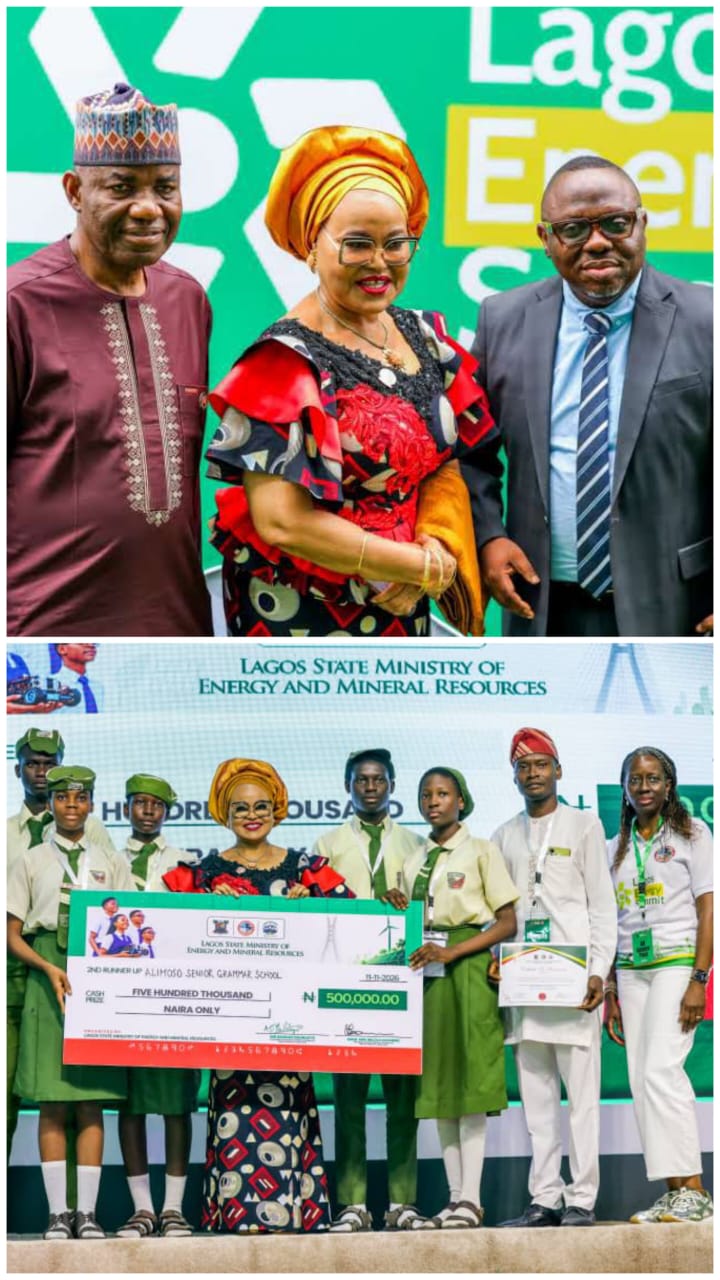
One of the major highlights of the closing day was the recognition of outstanding students who participated in the Schools Innovation Challenge, an initiative designed to stimulate creativity, encourage innovation and promote early engagement with energy solutions among young people.
The winning schools were announced as follows:
- Okesuna Senior High School – First Position.
- Agbede Senior Grammar School – Second Position.
- Alimoso Senior Grammar School – Third Position.
- Kosofe Senior College – Fourth Position.
- Odo Obara Senior High School – Fifth Position.
While announcing the awards, the Honourable Commissioner, referencing the goodwill commitment of the Secretary to the State Government, announced a cash award of ₦50,000 for participating schools in recognition of their involvement in the innovation initiative.
He also expressed the intention to create opportunities for persons living with disabilities to participate in the next edition of the challenge, further demonstrating the importance of inclusiveness and equal opportunities in Lagos State’s energy development agenda.
As the summit drew to a close, discussions also emphasised the importance of youth empowerment, renewable energy education, skills development and stronger collaboration among government institutions, educational establishments, private sector operators and development partners.
The Honourable Commissioner further indicated plans to convene a partnership engagement in December, providing another opportunity for stakeholders to consolidate the ideas, recommendations and commitments generated during the summit and identify practical areas for collaboration.
The Lagos Energy Summit 2.0 concluded with a clear message: achieving a reliable, affordable and sustainable electricity market requires more than ambitious targets. It demands well-prepared projects, strategic financing, efficient infrastructure, clear institutional responsibilities, effective regulation, consumer protection and measurable accountability.
The two-day engagement reaffirmed the Lagos State Government’s commitment to creating an enabling environment for investment, strengthening the electricity market and expanding access to reliable electricity for residents, businesses and industries.
The Ministry of Energy and Mineral Resources expressed its appreciation to the speakers, panellists, development partners, private sector participants, regulators, exhibitors, participating students and members of the organising team whose contributions, expertise and commitment made the Lagos Energy Summit 2.0 a success.
Adetola Idowu (Mrs)
Director Public Affairs


