


A dramatic crowd reaction at an Item Day celebration in Abia has exposed a growing divide between influential South-East politicians backing President Tinubu’s re-election and grassroots supporters chanting solidarity for Peter Obi.
ABIA: A growing political divide appears to be emerging in the South-East ahead of the 2027 presidential election, as the political calculations of influential leaders in the region increasingly contrast with the apparent preferences of sections of the electorate.
The development came into focus during the 2026 Item Day celebration at the School of Health, Aba, Abia State, where Deputy Speaker of the House of Representatives, Benjamin Kalu, faced an unexpected reaction while campaigning for President Bola Tinubu’s re-election.
Kalu, who represents Bende Federal Constituency and is a prominent supporter of the President, had used the gathering to appeal to the people to support Tinubu for another term.
However, instead of the enthusiastic response he appeared to expect, the crowd repeatedly chanted “Obi kererenke”, a popular solidarity slogan associated with former Anambra State Governor and Nigeria Democratic Congress (NDC) presidential candidate, Peter Obi.
Dressed in traditional Igbo attire, comprising an isiagu outfit and a red cap, Kalu mounted the stage and urged attendees to support Tinubu in 2027, describing the President as the best candidate for Nigeria.
He also assured the gathering that Abia State would benefit more from the Federal Government if Tinubu secured another presidential mandate.
But his appeal was met with loud chants of support for Obi, which reportedly drowned out his voice despite the use of a microphone.
Attempts to calm the crowd did little to change the atmosphere. Even an assurance about a proposed federal university for Item and the intervention of a performing artiste who introduced the Tinubu campaign song, “On Your Mandate We Shall Stand”, failed to redirect the audience’s enthusiasm.
The chants continued, leaving the Deputy Speaker visibly surprised. At one point, he reportedly questioned whether those in attendance were genuinely from Item.
Kalu eventually abandoned the political appeal as the crowd maintained its position. A video of the incident subsequently circulated on social media, triggering discussions about the relationship between political office holders and the people they represent.
The incident has drawn attention to the changing political landscape in the South-East, where several influential politicians and political office holders have aligned themselves with Tinubu’s administration and re-election ambition.
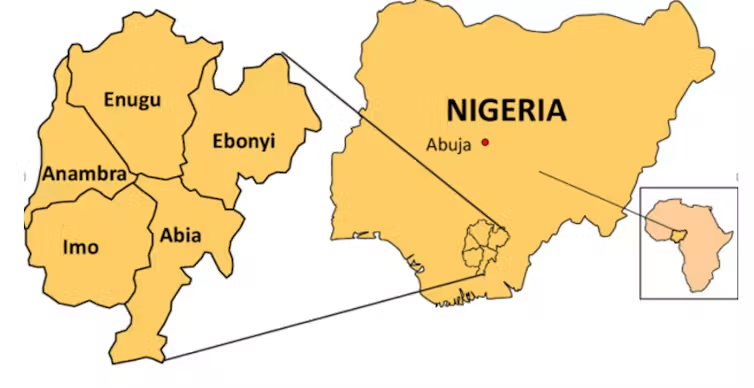
The All Progressives Congress (APC) currently controls Imo, Enugu and Ebonyi states, following Enugu Governor Peter Mbah’s defection to the ruling party. Anambra is governed by the All Progressives Grand Alliance (APGA), which has formally endorsed Tinubu.
In Abia, Governor Alex Otti, who shared a political platform with Obi during the 2023 election, has also avoided openly positioning himself against Tinubu’s re-election bid and has not publicly campaigned for Obi.
Despite these political alignments, the reaction at Item Day suggests that the influence of political leaders at the top may not automatically translate into electoral support among ordinary voters.
Obi’s continued popularity among sections of the South-East electorate is linked to several factors, including his reputation for financial prudence, perceived administrative discipline, personal integrity and promise of a different approach to governance.
For many of his supporters, his political message represents an alternative to the established political order.
However, whether this enthusiasm will translate into electoral victory in 2027 remains uncertain. Public demonstrations of support and campaign rallies do not necessarily determine voting outcomes, but they can provide indications of voter sentiment.
Another sensitive issue shaping political attitudes in the region is the continued detention of Indigenous People of Biafra (IPOB) leader, Nnamdi Kanu.
The issue remains emotionally charged across parts of the South-East, with many residents questioning the Federal Government’s handling of his case and continuing to call for his release.
Although Kanu’s arrest and rendition occurred before Tinubu assumed office, his conviction and subsequent legal proceedings under the current administration have kept the matter within the region’s political conversation.
For voters who consider the case a major concern, assurances by political leaders that the APC-led Federal Government has the interests of the South-East at heart may not be sufficient to change their perceptions.
Infrastructure development and economic inclusion also remain important considerations in the region’s relationship with the Federal Government.
The prolonged absence of regular train services along the Eastern railway corridor since 2015 has continued to generate concern, particularly among residents who believe the region has not received infrastructure investment comparable to other parts of the country.
The removal of sections of the old railway tracks in anticipation of rehabilitation and replacement has further heightened expectations for the delivery of promised improvements.
Beyond infrastructure, the question of political representation at the national level remains significant.
Nearly six decades after the Nigerian Civil War, the South-East has yet to produce a democratically elected president. For many people in the region, this remains a symbol of their perceived exclusion from the highest level of national leadership.
While political office holders may view alignment with the Federal Government as a practical way of securing influence and development opportunities, ordinary voters may place greater emphasis on fairness, recognition, infrastructure and a sense of belonging.
The Item Day incident may not represent the position of every voter in the South-East, and the reaction of a crowd at a cultural gathering cannot be treated as a substitute for the outcome of an election.
Nevertheless, it raises an important question for political parties and their candidates: can influential politicians persuade their constituents to support a presidential candidate when sections of the grassroots appear more enthusiastic about another contender?
The 2027 election could become a major test of the APC’s political strength in the region and the ability of its supporters to convert elite endorsements into votes.
For Obi and the NDC, sustained grassroots enthusiasm could offer a political advantage, but the challenge will be to translate public support into effective party organisation, voter mobilisation and votes at the ballot box.
Ultimately, political endorsements, campaign songs, high-profile defections and alliances will not independently determine the outcome of the presidential election. The decision rests with eligible Nigerians who will cast their ballots.
The message from the Item Day gathering is therefore significant: political influence at the top does not necessarily guarantee control over the choices of voters at the grassroots.


