


The government of Germany has reaffirmed its support for Nigeria in addressing insecurity, while calling for urgent protection and humanitarian assistance for residents of affected communities in Benue State.
This comes after survivors of the 2025 massacre in Yelwata community appealed fo
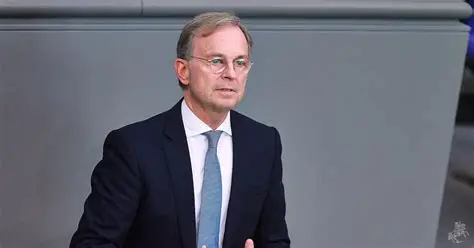
Germany’s Federal Government Commissioner for Freedom of Religion or Belief, Thomas Rachel, made the call during a press briefing in Abuja following a fact-finding visit to impacted areas, including internally displaced persons (IDP) camps.
Rachel described his visit to Yelwata as deeply emotional, recalling the June 2025 attack in which over 200 residents were killed.The people asked for safety, support, and a chance to return to their ancestral homes, he said.
The attack, which occurred in Guma Local Government Area near Makurdi, displaced thousands and destroyed homes in what has become one of the deadliest incidents in the region.
The incident reflects a broader wave of violence affecting parts of Nigeria, particularly the Middle Belt and North-East regions. According to Rachel, both Christians and Muslims are victims of extremist attacks.
You see that Christians and Muslims have a common enemy. These are the terrorists,” he said, expressing solidarity with Nigeria.
During his visit, he met with victims, religious leaders, and community representatives, noting widespread uncertainty and fear among displaced populations.
Rachel also raised concerns about alleged human rights violations linked to the enforcement of blasphemy laws in some northern states, warning that such practices could undermine freedom of religion and belief.
He referenced global human rights principles, emphasizing that religious freedom is essential to peace, dignity, and national stability.
Highlighting the complexity of Nigeria’s security challenges, Rachel pointed to terrorism and farmer-herder conflicts as major drivers of violence.
He specifically mentioned the activities of extremist groups such as Boko Haram and Islamic State West Africa Province, as well as clashes between farmers and herders in the Middle Belt.
While ruling out direct military intervention, Rachel said Germany would continue to provide advisory and training support through its armed forces, the Bundeswehr, alongside broader peacebuilding initiatives.
He noted that Germany is working with organisations such as the Centre for Humanitarian Dialogue to support mediation and conflict resolution efforts.
Nigeria is a strong country. We will not act militarily, but we will support through cooperation and dialogue, he said.
Rachel stressed that lasting peace in Nigeria depends on unity across religious and ethnic lines, urging efforts to promote tolerance and prevent the misuse of religion to justify violence.
As long as people live in fear, it remains a challenge for the entire country and its government, he added.
Germany reiterated its commitment to strengthening political, economic, and humanitarian ties with Nigeria, describing the country as a key partner in Africa.