


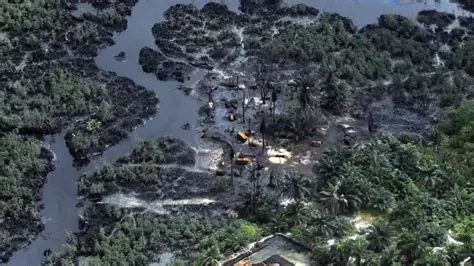
The Federal Government has called for climate justice and comprehensive reparations for communities in Nigeria’s oil-producing Niger Delta, declaring that decades of crude oil exploration have left the region grappling with environmental devastation, climate-related disasters, and the destruction of traditional livelihoods.
The call was made by the Minister of Regional Development, Engr. Abubakar Momoh, during the Niger Delta Climate Change Conference 2026 held in Port Harcourt.
Speaking on the conference theme, Unite for Justice: Niger Delta Communities Rise for Climate Action and Reparations, the minister described the Niger Delta as the backbone of Nigeria’s economy but lamented that the region has paid a heavy ecological price for decades of petroleum extraction.
According to Momoh, while the Niger Delta has generated enormous wealth for Nigeria through oil production, it has suffered widespread environmental damage from oil spills, gas flaring, and ecosystem destruction.
The Niger Delta has served as the engine room of Nigeria’s economic prosperity, yet it has been treated as a sacrifice zone,” the minister said.
He noted that polluted rivers, destroyed farmlands, and degraded ecosystems have severely affected farming and fishing communities whose livelihoods depend on the environment.
Momoh stressed that although the Niger Delta contributes only a tiny percentage of global greenhouse gas emissions, the region continues to suffer some of the worst impacts of climate change.
He identified recurring floods, coastal erosion, rising sea levels, and land degradation as major threats facing communities across the region.
“The Niger Delta contributes only a fraction of global carbon emissions, yet it bears a disproportionate share of the consequences of global warming,” he stated.
Represented at the conference by his Senior Technical Assistant, Frederick Odika, the minister said climate justice must go beyond environmental clean-up projects and energy transition policies.
Momoh argued that multinational oil companies and international stakeholders that have generated billions of dollars from crude oil extraction in the Niger Delta owe the region an ecological debt.
According to him, these corporations should finance the full restoration of polluted environments and provide adequate compensation to affected communities before abandoning ageing oil facilities.
“The multinational corporations and international stakeholders who extracted billions in profits from our soil owe an ecological debt to our people, he said.
He insisted that environmental restoration should include the rehabilitation of polluted lands, contaminated groundwater, and damaged ecosystems.
The minister maintained that climate reparations should directly benefit communities that have suffered the greatest environmental and economic losses.
He explained that compensation should not be limited to financial payments but must also include healthcare interventions, sustainable livelihoods, environmental restoration, and the creation of green jobs.
According to him, communities must also be empowered to drive Nigeria’s transition to renewable energy through locally owned and managed clean energy projects.
It is time for a transition to renewable energy systems that are owned, managed, and driven by the communities themselves, he said.
Momoh also advocated a return to traditional agricultural practices as part of efforts to improve food security and reduce dependence on fossil fuels.
He said strengthening local farming systems would help communities build resilience against the growing impacts of climate change.
We must revive our traditional knowledge and embrace a sustainable agro-economy that guarantees food security despite climate challenges, he noted.
Describing the situation in the Niger Delta as a clear case of environmental injustice, the minister said local residents continue to bear the greatest burden of a climate crisis they played little role in creating.
He described the destruction of the region’s environment as ecocide and stressed that frontline communities deserve justice, dignity, and lasting support.
Momoh assured participants that the Federal Government would strengthen the enforcement of environmental regulations, hold polluting companies accountable, and ensure that host communities play a central role in climate policy development.
He urged stakeholders at the conference to remain committed to building a resilient, environmentally sustainable, and economically prosperous Niger Delta.
“Our struggle is not merely for survival; it is a fight for justice, dignity, and meaningful reparations. Together, we can build a resilient, just, and sustainable Niger Delta,” the minister concluded.