


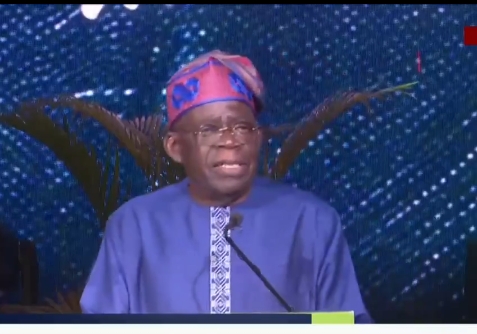
ABUJA: President Bola Ahmed Tinubu has ruled out a return to Nigeria’s former petrol subsidy regime, using a biblical and Quranic reference to Moses’ departure from Egypt to defend his administration’s decision to remove the subsidy.
Tinubu said Nigeria could not return to the previous system after the government had already embarked on economic reforms, suggesting that reversing the policy would undermine the direction of the changes introduced under his administration.
“I remember my scripture studies, both in the Bible and in the Holy Quran. When Moses and Musa left Egypt, they faced a challenge, and the Red Sea parted and gave way. You cannot ask Moses to go back to Egypt,” the President said.
The analogy reflects Tinubu’s continued defence of the fuel subsidy removal, one of the most consequential economic decisions taken since he assumed office in May 2023.
Read Also:
- Atiku’s Fuel Subsidy Plan Will Make Petrol Affordable — Okonkwo
- Petrol Discount: NDC Accuses Tinubu Government of Deceit, Calls 30-Day Offer ‘Backdoor Subsidy’
- PETROL DISCOUNT, PRODUCTION SUBSIDY AND THE POLITICS OF ECONOMIC RELIEF: WHAT NIGERIANS REALLY NEED By Frank Odion Apokwu
The removal of petrol subsidies was announced by Tinubu during his inauguration on May 29, 2023, when he declared that the subsidy regime had ended.
The policy was intended to reduce the financial burden of subsidising petrol on the Federal Government and free up resources for other public spending priorities.
However, the decision triggered a sharp increase in petrol prices and contributed to rising transportation, food and living costs, placing additional pressure on households and businesses across the country.
Successive increases in the cost of living have fuelled public debate over whether the benefits of the reform have reached ordinary Nigerians.
While supporters of subsidy removal argue that it can reduce government expenditure and discourage distortions in the petroleum market, critics have called for stronger measures to protect citizens from its economic consequences.
The removal of the subsidy has significantly altered Nigeria’s downstream petroleum market, with petrol prices increasingly reflecting market conditions rather than the previous system of government-supported pricing.
For many Nigerians, the immediate concern remains the cost of transportation, food, electricity generation and other essential goods and services whose prices are affected by fuel costs.
Workers, transport operators, manufacturers and small-business owners have also faced pressure from higher operating expenses.
The government has previously announced economic relief measures and interventions intended to cushion the effects of its reforms. However, questions remain about the adequacy and reach of such measures amid continuing concerns over household purchasing power.
Tinubu’s latest remarks reinforce his administration’s position against restoring the former petrol subsidy arrangement.
Those opposed to reinstatement argue that the policy placed a substantial burden on public finances and that government resources could be directed towards infrastructure, healthcare, education and other development priorities.
Those advocating a review contend that the hardship associated with subsidy removal requires additional intervention, particularly for low-income households and vulnerable groups.
The central debate is therefore not only about whether the subsidy should return, but also about how the government can address the consequences of higher fuel prices while pursuing its broader economic objectives.
Tinubu’s comparison with Moses suggests that his administration intends to continue along its current reform path rather than reverse course.
Whether the policy ultimately delivers sustainable economic benefits for Nigerians will depend on factors including inflation, income growth, public spending, transportation costs and the effectiveness of government support measures.
RapidoSpace News will continue to report on the Federal Government’s economic policies and their impact on Nigerians.


