


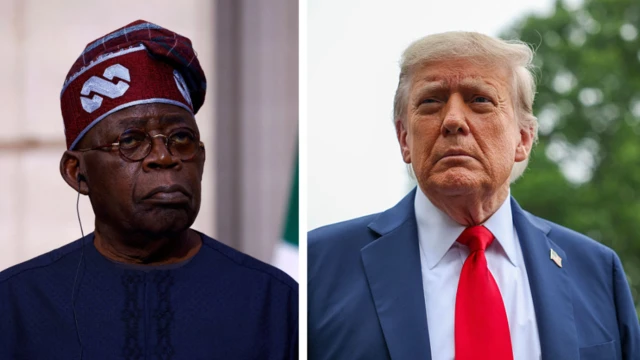
Nigeria’s exporters are facing a fresh trade challenge after the United States imposed a 12.5 percent tariff on most Nigerian imports, citing concerns over the country’s alleged failure to adequately prevent goods linked to forced labour from entering international supply chains.
The decision, announced by theUnited States Trade Representative forms part of a sweeping trade action targeting 60 economies that Washington says have not effectively implemented or enforced bans on imports produced through forced labour.
The move represents one of the most significant trade measures affecting Nigerian exports in recent years and could have wide-ranging implications for businesses shipping products to the United States.
According to the USTR, the tariffs followed a Section 301 investigation launched in March 2026 to examine whether major U.S. trading partners had failed to prohibit the importation of goods produced with forced labour.
The agency said the investigation involved an extensive review process that included:
- More than 1,600 written submissions
- Public hearings featuring over 100 witnesses
- Consultations with more than 45 governments
Following the investigation, the U.S. concluded that countries without effective forced-labour import bans should face higher tariffs.
As a result, Nigeria was placed in the category attracting a 12.5 percent tariff, while countries that have already implemented or committed to introducing forced-labour import prohibitions will face a lower 10 percent tariff.
Nations including India, Indonesia, Malaysia, Mexico, Pakistan, Bangladesh, Canada, Argentina, the United Kingdom, Jordan, Ecuador, Guatemala, Honduras, Sri Lanka, Trinidad and Tobago, among others, qualified for the lower tariff after adopting or committing to stronger measures against forced labour in supply chains.
The USTR also indicated that certain products from the European Union, Japan, South Korea, Switzerland and Taiwan would attract tariffs ranging between 10 and 12.5 percent depending on product classification.
A Federal Register notice issued by the USTR confirmed that Nigeria would be subject to a 12.5 percent tariff on most exports to the United States, except for products listed under specific exemptions.
According to the notice, the decision was reached after considering evidence gathered during the investigation, submissions from stakeholders, recommendations from the Section 301 Committee, advisory committees and directives from President Donald Trump.
The agency stated that the tariff structure and available exemptions were carefully designed to encourage countries to eliminate trade practices considered inconsistent with U.S. trade policy.
The latest measure follows President Donald Trump’s decision to invoke Section 122 of the Trade Act of 1974 after the U.S. Supreme Court blocked an earlier proposal for broader tariffs under emergency economic powers.
The Trump administration argues that the new policy is aimed at protecting American businesses while encouraging global trading partners to strengthen labour standards.
U.S. Trade Representative Jamieson Greer defended the decision, saying the United States has maintained a ban on forced-labour imports for nearly a century and expects its trading partners to adopt similar standards.
The United States has had a forced labour import ban for nearly a century. It’s well past time for our trading partners to do the same, Greer said.
He added that decades of diplomatic persuasion had failed to eliminate forced labour from global supply chains, making stronger trade measures necessary.
Despite the new tariffs, the USTR announced that several categories of products will remain exempt.
These include:
- Raw materials that could create supply shortages in the United States.
- Goods not available in sufficient quantities from U.S. producers or alternative suppliers.
- Products whose tariffs could significantly disrupt the U.S. economy.
- Selected goods from countries implementing forced-labour import bans.
- Products for which tariffs are considered unlikely to influence the targeted trade practices.
The tariff is expected to increase costs for Nigerian exporters seeking access to the lucrative U.S. market.
Sectors that rely heavily on exports to America—including agriculture, manufacturing, processed goods and certain industrial products—could experience reduced competitiveness if the additional duties significantly increase prices for American buyers.
Trade analysts say the full impact will depend largely on the list of exempted products and whether Nigeria takes steps to strengthen enforcement of its labour laws.
Although Nigeria already has constitutional provisions prohibiting forced and compulsory labour, alongside anti-human trafficking legislation, international observers have repeatedly expressed concerns over enforcement and implementation.
The latest U.S. action is likely to place additional pressure on Nigeria to strengthen labour inspections, improve supply chain monitoring and demonstrate compliance with internationally recognized labour standards.
Economic experts believe Nigerian authorities may engage Washington diplomatically in an effort to clarify the country’s labour policies, seek exemptions for additional export categories and protect bilateral trade relations.
With the United States remaining one of Nigeria’s major trading partners outside the oil sector, the new tariff could become a key issue in future trade negotiations between both countries.
As exporters assess the potential impact, businesses are expected to closely monitor the implementation guidelines and exemption lists to determine how the policy will affect their operations in the months ahead.