


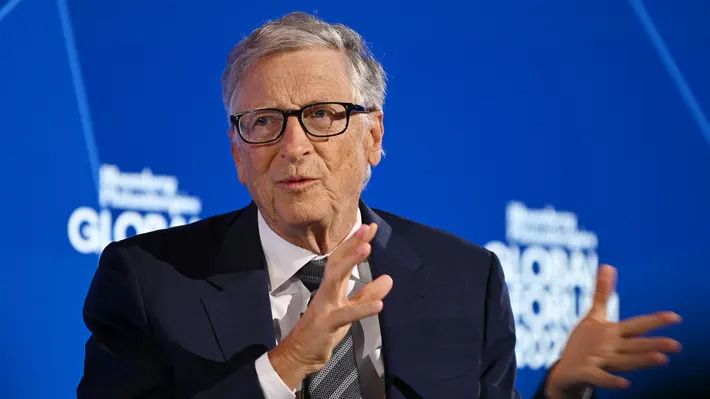
Microsoft co-founder and philanthropist Bill Gates has warned that artificial intelligence could potentially contribute to the deaths of up to one billion people if increasingly powerful AI technologies fall into the hands of malicious actors.
Gates made the remarks during an interview with NBC’s Meet the Press, where he called for governments and law enforcement agencies to play a greater role in ensuring that advanced AI systems are developed with effective safeguards and monitoring mechanisms.
According to Gates, relying solely on voluntary measures by technology companies would not be sufficient to manage the potential risks associated with increasingly capable artificial intelligence.
Gates said governments and lawmakers should be directly involved in determining the safeguards required for advanced AI systems.
He acknowledged that additional regulation could create some costs for AI companies but argued that appropriate oversight would not necessarily bring technological development to a halt.
The billionaire philanthropist has increasingly called for stronger safeguards as AI systems become more capable and widely accessible.
Gates’ most serious warning focused on the possibility of advanced AI tools being used by people with malicious intentions.
He argued that the combination of individuals with harmful intentions and powerful AI technology could create risks on a scale not previously seen.
Gates said AI could become powerful enough to contribute to events resulting in catastrophic loss of life, potentially reaching a figure of one billion deaths.
His comments were framed as a warning about the possible consequences of misuse of advanced AI rather than a prediction that such an event will occur.
During the interview, Gates was also asked whether a “kill switch” could be used to shut down AI systems if they became too powerful.
He said simply having the ability to turn off an AI system would not necessarily solve the broader risks associated with advanced artificial intelligence.
Gates noted that today’s AI systems have not reached a stage where they can independently take control of computers and prevent themselves from being shut down.
Gates’ comments come amid a wider international debate about how governments and technology companies should manage the development of increasingly sophisticated AI systems.
Other prominent technology figures, including OpenAI CEO Sam Altman and Tesla CEO Elon Musk, have also publicly discussed potential risks associated with advanced AI and the need for appropriate oversight.
Gates has generally maintained an optimistic view of technology’s potential to improve people’s lives. At the same time, he has repeatedly argued that the rapid development of AI should be accompanied by safeguards designed to reduce the possibility of serious misuse.
The debate is likely to continue as governments, researchers and technology companies consider how to balance AI innovation with safety and security.