


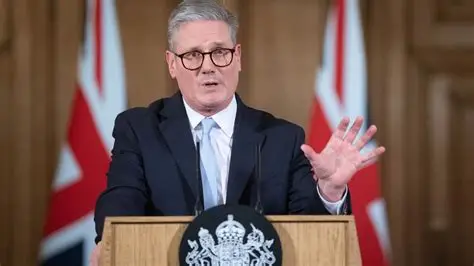
LONDON: British Prime Minister Keir Starmer is under intense political pressure after mounting allegations that his government mishandled the controversial appointment of former U.S. ambassador Peter Mandelson, triggering renewed calls for his resignation in Parliament.
Speaking before lawmakers on Monday, Starmer firmly rejected accusations that he deliberately misled the House of Commons regarding Mandelson’s security vetting process.
“No, I did not mislead the House of Commons,” he said, while acknowledging that key information “should have been before the House.”
However, his defence did little to calm critics, as opposition parties and some members of his own Labour Party accused him of failing to exercise proper oversight.
The crisis centres on revelations that Mandelson—appointed ambassador to the United States in early 2025—had initially failed security vetting in January 2025, but was still approved for the post after an override by Foreign Office officials.
A senior civil servant, Olly Robbins, has since been dismissed in connection with the handling of the process.
Starmer insisted he was not informed of the failed vetting at the time and only learned of the override later.
If I had known… I would not have gone ahead with the appointment,” he told Parliament.
Peter Mandelson’s appointment had already sparked controversy due to his long and contentious political history, including prior resignations from government posts and earlier associations that drew public scrutiny.
The situation escalated further after leaked correspondence reportedly linked him to Jeffrey Epstein, leading to his dismissal in September 2025.
Subsequent document releases and allegations of misconduct have intensified pressure on both Mandelson and the government that appointed him.
Opposition leaders have seized on the crisis:
- Conservative Party leader Kemi Badenoch accused Starmer of failing transparency obligations and questioned whether he misled Parliament.
- Liberal Democrats leader Ed Davey said the Prime Minister appeared to be “in office, but not in power.”
- Labour peer Lord Maurice Glasman went further, stating: He cannot conceivably continue as a credible Prime Minister any longer.
Some within Labour have also criticised Starmer’s handling of the situation, arguing that he has not taken responsibility for procedural failures.
The scandal has deepened concerns about leadership accountability, internal communication failures, and ministerial oversight within the UK government.
While Starmer remains in office, political pressure is intensifying, with opposition figures questioning whether he can survive the fallout from what is rapidly becoming one of the most serious crises of his premiership.