


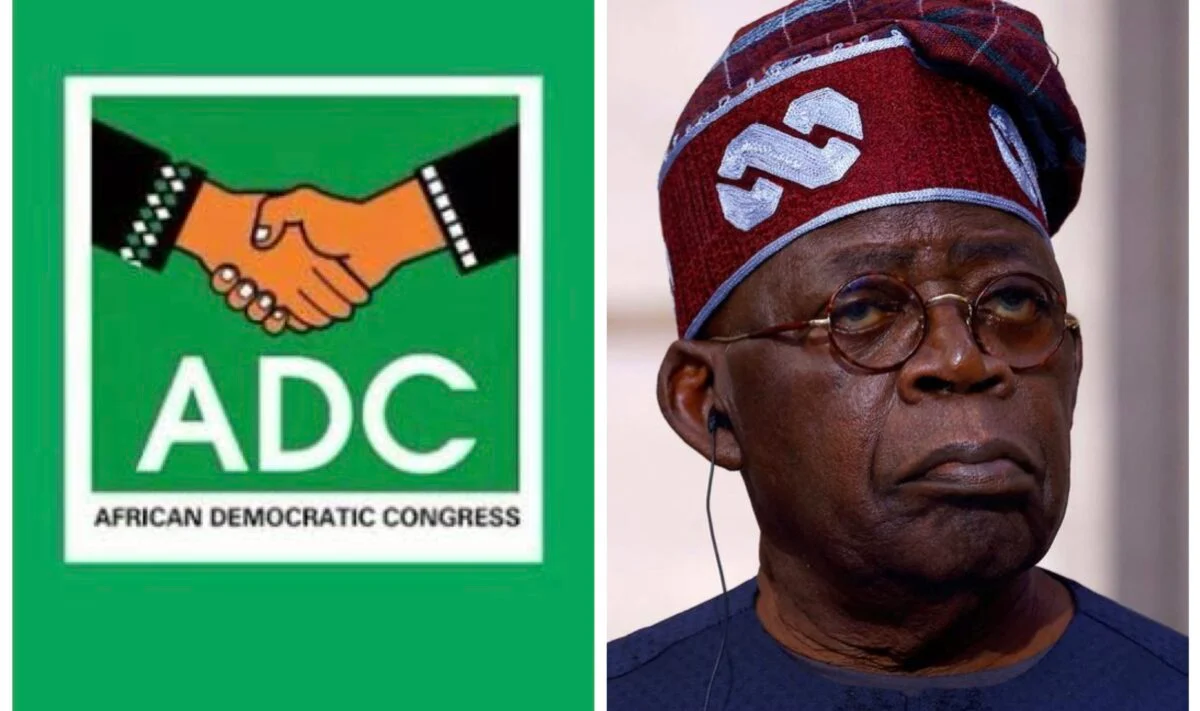
The African Democratic Congress (ADC) has questioned the constitutional arrangements surrounding the simultaneous absence of President Bola Tinubu and Vice President Kashim Shettima from Nigeria, asking who is currently exercising presidential authority in the country.
The party’s National Publicity Secretary, Bolaji Abdullahi, raised the issue during an appearance on Channels Television’s Politics Today, where he questioned the Federal Government’s explanation that Secretary to the Government of the Federation (SGF), George Akume, would continue to represent the President at official engagements while Tinubu and Shettima are abroad.
Abdullahi specifically questioned whether the SGF has any constitutional authority to exercise powers vested in the President and Commander-in-Chief of the Armed Forces.
The ADC spokesman asked who would exercise the constitutional authority of the Commander-in-Chief in the event of a national emergency requiring immediate presidential direction.
His comments followed the Presidency’s announcement that Tinubu had extended his working vacation by a few days and was expected to return to Nigeria at the weekend.
Tinubu left Nigeria on August 30 for what the Presidency initially described as a three-week annual vacation in Europe. Shettima subsequently travelled to New York to represent Nigeria at the 81st United Nations General Assembly.
READ RELATED NEWS:
- Shettima Urges Africa to Stop Exporting Raw Minerals, Push for Local Processing
- Shettima to Lead Nigeria’s Delegation to 81st UN General Assembly in New York
- Tinubu Retains Shettima as Running Mate, O
The simultaneous absence of the two highest-ranking elected officials has generated renewed debate over the constitutional procedure governing presidential absence.
Abdullahi based the ADC’s concerns largely on Section 145 of the 1999 Constitution, which deals with the temporary absence of a President.
The provision states that when the President proceeds on vacation or is otherwise unable to discharge the functions of his office, he is to transmit a written declaration to the President of the Senate and the Speaker of the House of Representatives.
The Constitution further provides that the Vice President performs the functions of President as Acting President following the transmission of the declaration. Where the President fails or is unable to transmit the declaration within 21 days, Section 145(2) provides for the National Assembly to mandate the Vice President to perform the functions of President as Acting President.
The constitutional provision has become central to the current debate because Tinubu’s original three-week vacation period has elapsed, while the Presidency has announced an extension of his stay abroad.
Abdullahi questioned whether the Constitution recognises a situation in which a President can remain abroad for an extended period while continuing to describe the trip as a “working vacation.”
He argued that the constitutional issue should not be determined by the President’s ability to communicate with officials or issue directives from abroad, but by whether the procedure established under Section 145 has been followed.
The ADC spokesman also questioned why the National Assembly had not publicly addressed the matter, urging lawmakers to consider reconvening to examine the constitutional implications.
The party’s position is a political and legal challenge to the current arrangement; it does not by itself constitute a judicial finding that the President has violated the Constitution.
The ADC’s concerns came shortly after the party’s presidential candidate, Atiku Abubakar, separately questioned who was exercising presidential authority during Tinubu’s extended absence.
Atiku said Section 145 requires a written declaration to the Senate President and Speaker of the House when the President proceeds on vacation. He argued that Nigerians had not been shown such a document transferring presidential functions to Shettima.
He also called on the Presidency and National Assembly to clarify whether the constitutional procedure had been followed.
The two interventions have placed renewed attention on the legal status of presidential functions during Tinubu’s current stay outside Nigeria.
The Presidency has maintained that there is no leadership vacuum and that Tinubu continues to direct the affairs of government while abroad.
The government has also defended Shettima’s role at the United Nations, saying the Vice President is in New York on official assignment to represent Nigeria and the President.
The Presidency announced that Tinubu had extended his working vacation by a few days and was expected to return to Nigeria at the weekend.
Earlier reporting on the issue noted that the Presidency had described Tinubu’s trip as a working vacation, while constitutional experts and political actors have debated whether Section 145 requires a formal transfer of functions during such an absence.
Abdullahi said the ADC was examining possible legal options in response to what the party considers a constitutional issue.
He also referred to the possibility of impeachment proceedings if, in the party’s view, there had been a constitutional violation.
However, no court determination establishing a constitutional breach or grounds for impeachment was cited in the report.
The ADC spokesman said his comments were based on publicly available information concerning the President’s absence, Shettima’s official trip to New York and the Presidency’s explanation of the SGF’s role.
The controversy has therefore centred on two related questions: whether Tinubu has formally triggered the procedure under Section 145 and what constitutional mechanism applies if the 21-day period expires without the required declaration.
The constitutional text itself provides a mechanism for temporary presidential absence, but the present dispute concerns whether that mechanism has been activated in this case and what obligations arise from the President’s continued absence.
For now, the ADC is demanding clarification, while the Presidency maintains that Tinubu remains engaged in government affairs and that Shettima is carrying out his assigned duties at the United Nations.
The debate is expected to continue as Tinubu’s extended stay abroad coincides with Shettima’s UNGA assignment and renewed calls from opposition figures for greater clarity over the exercise of presidential authority.