


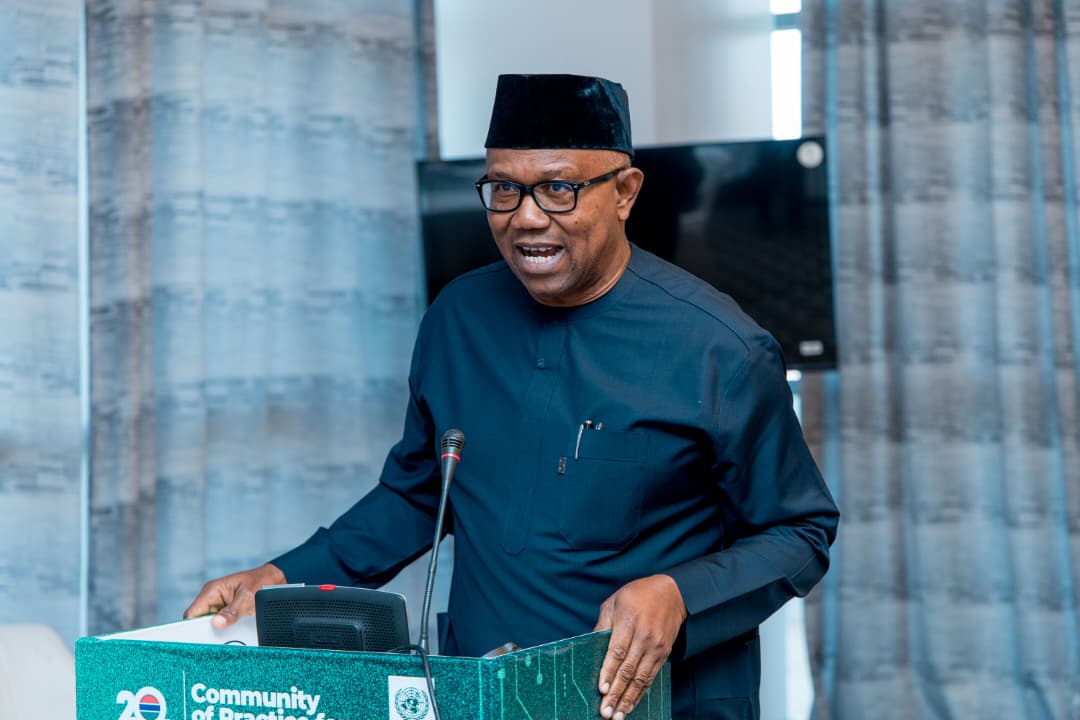
Former presidential candidate and ex-governor of Anambra State, Peter Obi, has formally announced his resignation from the African Democratic Congress (ADC), citing persistent internal disputes, political instability, and what he described as Nigeria’s increasingly toxic political environment.
Obi made the announcement on Sunday through a statement posted on his verified X handle, bringing an abrupt end to months of speculation surrounding his continued stay in the opposition coalition platform ahead of the 2027 general elections.
The former Labour Party standard-bearer said his decision followed deep personal reflection and prolonged silent struggles as he sought to remain committed to political reform and nation-building despite mounting challenges.
In his statement, Obi painted a grim picture of Nigeria’s current political atmosphere, lamenting what he called a system that increasingly suppresses genuine efforts aimed at public service and national development.
According to him, Nigeria has become a difficult environment for sincere political actors who seek meaningful reforms, noting that intimidation, insecurity, suspicion, and institutional discouragement now define the nation’s political landscape.
We now live in an environment that has become increasingly toxic, where the system that should protect and create opportunities often works against the people, Obi stated.
He added that his experiences within Nigeria’s political space had repeatedly exposed him to internal resistance, betrayal, and criticism, even from individuals and groups who publicly profess alignment with his political ideals.
Some who publicly identify with you privately distance themselves or join in unfair criticism,” he said, adding that humility and restraint are too often mistaken for weakness in Nigeria’s political culture.
Despite his departure, Obi was quick to dismiss speculations that his resignation stemmed from any personal disagreement with key leaders of the party.
He specifically expressed appreciation for former Senate President David Mark, who currently chairs the ADC, as well as former Vice President Atiku Abubakar, whom he described as a respected elder and political associate.
Obi stressed that both leaders treated him with respect and fairness throughout his time in the party.
Let me state clearly: my decision to leave the ADC is not because our highly respected Chairman, Senator David Mark, treated me badly, nor because my leader and elder brother, Alhaji Atiku Abubakar, or any other respected leaders did anything personally wrong to me. I will continue to respect them, he said.
The former Anambra governor, however, accused unnamed state actors of fueling crises within opposition political parties.
He alleged that the same forces that contributed to the prolonged internal crisis within the Labour Party ultimately leading to his exit, were now infiltrating the ADC and creating similar divisions.
According to him, endless court cases, factional battles, distrust, and internal suspicion have diverted the party’s attention from pressing national issues.
He argued that rather than focusing on governance alternatives and policy-driven opposition, Nigerian political parties are increasingly consumed by struggles for control and exclusion.
“However, the same Nigerian state and its agents that created unnecessary crises and hostility within the Labour Party that forced me to leave now appear to be finding their way into the ADC, with endless court cases, internal battles, suspicion, and division, instead of focusing on deeper national problems, Obi stated.
Addressing growing political permutations ahead of the 2027 election, Obi maintained that he is not driven by personal ambition or a desperate quest for political office.
He insisted that his political involvement has always been rooted in a desire to improve the living conditions of ordinary Nigerians rather than personal advancement.
I am not desperate to be President, Vice President or Senate President. I am desperate to see a Nigeria where people can live in dignity, without hunger, fear, or displacement,” he said.
The statement appears aimed at countering narratives suggesting his political moves are solely motivated by presidential ambition.
Despite his resignation and criticism of the political system, Obi reaffirmed his optimism about Nigeria’s future.
He maintained that with competent, compassionate, and visionary leadership, the country can still overcome its present challenges.
Ending his statement with his now-famous political refrain, Obi declared: A new Nigeria is possible.
Obi’s departure from the ADC is expected to significantly reshape opposition realignments ahead of the 2027 presidential election.
Political analysts believe the move could trigger fresh coalition negotiations among opposition blocs, particularly amid ongoing efforts to build a united front capable of challenging President Bola Tinubu and the ruling All Progressives Congress.
The resignation also raises fresh questions about Obi’s next political destination and whether he may revive his independent reform movement or align with another platform.
For now, his exit marks yet another dramatic twist in Nigeria’s evolving opposition politics.


