


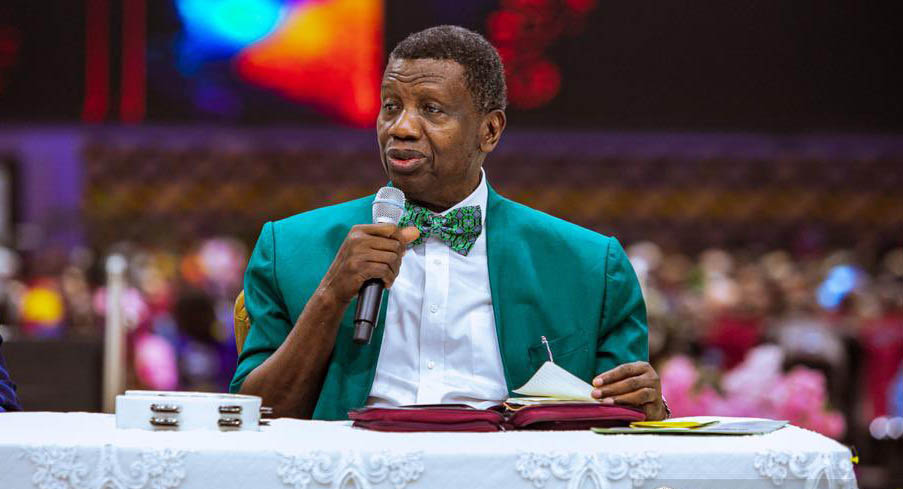
LAGOS: A coalition of senior Christian clerics has disagreed with the General Overseer of the Redeemed Christian Church of God, Enoch Adeboye, over his recent advice urging men not to marry women who cannot cook.
The clerics, operating under the Ecumenical Synods of Bishops, Archbishops, Apostles and Senior Clergy, described Adeboye’s position as a personal opinion rather than a doctrinal requirement grounded in scripture.
Adeboye had delivered the advice during the May edition of the RCCG Holy Ghost Service, where he offered relationship guidance to young men preparing for marriage.
In his message, the respected cleric cautioned against choosing a life partner based solely on physical beauty, warning that such decisions could lead to long-term regret.
He stressed the importance of practical life skills and spiritual discernment, famously stating that men should avoid marrying women who lack cooking ability, which he linked to biblical examples of hospitality such as Sarah and the Shunamite woman.
Adeboye also warned against excessive focus on outward appearance, including heavy use of cosmetics and artificial enhancements, urging men to look beyond “the mask” and prioritize substance over style.
Reacting to the statement, the International Secretary of the Synods, Osazee William, said the advice should not be elevated to a standard for marriage.
Speaking in an interview, William emphasized that cooking skills are not a scriptural benchmark for choosing a spouse and argued that such abilities can be learned over time.
“Is it scriptural for a man not to marry a woman who cannot cook? Even men can cook. This is not directly opposing a revered man of God, but it remains an opinion,” he said.
He maintained that the true foundation for marriage should be rooted in character, godliness, and industriousness rather than domestic skills alone.
William further challenged the practicality of Adeboye’s stance, noting that being a good cook does not necessarily equate to possessing strong moral character.
“What about a good cook who lacks integrity? Or someone who cooks well but is not hygienic or disciplined?” he queried.
According to him, marriage decisions should be holistic, taking into account values, emotional intelligence, spirituality, and compatibility rather than a single domestic trait.
He also pointed out that in today’s economic climate, traditional gender roles have evolved significantly, with many women serving as primary breadwinners and having limited time for household duties.
“In many homes, women are the breadwinners. Such individuals may not have the time to cook regularly, and that does not diminish their value as partners. They can always employ help or learn when necessary, he added.
Beyond the cooking debate, Adeboye had also advised men to reconsider relationships where wedding plans could lead to financial strain or debt.
He warned against entering marriages burdened by extravagant ceremonies, stressing that financial prudence should guide such decisions.
Additionally, he cautioned men about excessive use of artificial beauty enhancements, referencing biblical narratives such as Jezebel to underline the dangers of deception through appearance.
The disagreement highlights an ongoing conversation within religious and social circles about evolving expectations in marriage, gender roles, and cultural values in Nigeria.
While some adherents view Adeboye’s guidance as practical wisdom rooted in traditional family structures, others see it as outdated in the context of modern realities where roles are increasingly flexible and shared.
Despite the divergence in views, both sides agree on one point: the importance of intentional, value-driven decisions in choosing a life partner.
As debates continue, the discussion underscores the broader tension between tradition and modernity in shaping relationships in contemporary Nigerian society.