


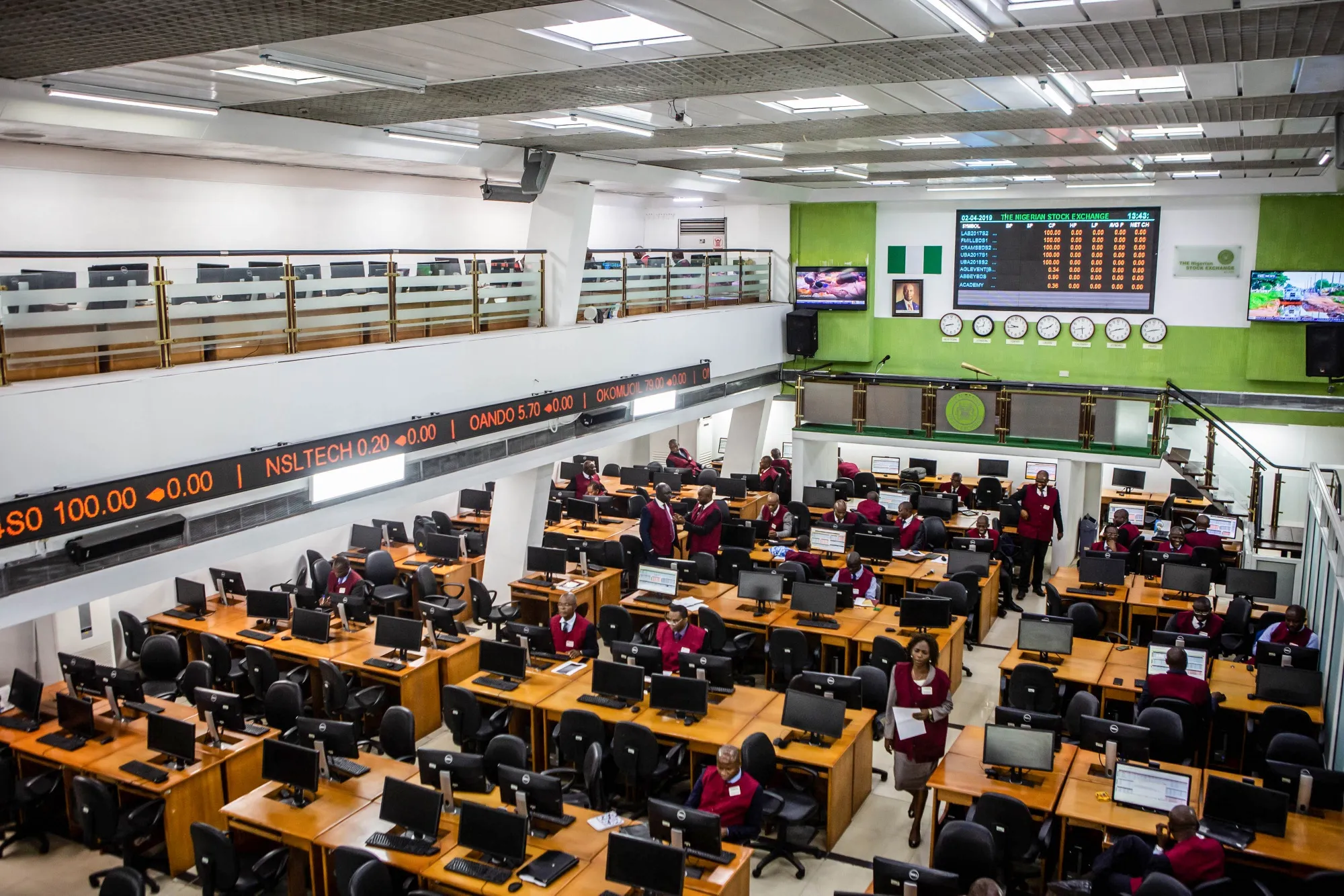
LAGOS: Nigeria’s stock market has cemented its position among Africa’s top-performing exchanges, with the Nigerian Exchange (NGX) delivering a remarkable 47.43% return in the first half of 2026 to rank as the continent’s second-best performing stock market, according to an analysis of six major African exchanges.
The impressive performance places the NGX behind only the Ghana Securities Exchange, which recorded a 67.90% return during the same period, while outperforming larger markets including South Africa, Egypt, Kenya and Morocco.
The ranking is based on benchmark index performances between December 31, 2025, and June 30, 2026, using official market data from the Ghana Securities Exchange, Nigerian Exchange, Egyptian Exchange, Nairobi Securities Exchange, Casablanca Stock Exchange and Johannesburg Stock Exchange.
The six African stock markets posted an average year-to-date return of 24.68%, meaning Nigeria’s 47.43% gain was almost double the continental average.
The NGX All-Share Index climbed from 155,613.03 points at the end of 2025 to 229,419.18 points by June 30, 2026, adding more than 73,800 points in just six months.
The rally was largely driven by:
- Strong corporate earnings
- Improved investor confidence
- Banking sector recapitalisation
- Better foreign exchange liquidity
- Sustained demand for banking, industrial, oil and gas, and telecommunications stocks
Among the six exchanges reviewed, Ghana emerged as Africa’s best-performing equity market.
The Ghana Securities Exchange recorded a 67.90% gain after its benchmark index rose from 8,772.25 points to 14,729 points.
The rally was supported by improving macroeconomic conditions, declining inflation and stronger investor confidence, with the International Monetary Fund (IMF) recently noting that Ghana had achieved significant economic stabilization.
Kenya’s Nairobi Securities Exchange recorded a 20.14% return, benefiting from easing inflation, expectations of lower interest rates and strong banking sector performance.
Similarly, Egypt’s benchmark index advanced 20.70%, supported by ongoing economic reforms, stronger corporate earnings and improving investor confidence, particularly in banking and real estate stocks.
Unlike most African markets, South Africa and Morocco closed the first half of the year in negative territory.
The Johannesburg Stock Exchange (JSE) posted the weakest performance among the markets reviewed, declining 4.76% amid slower economic growth and cautious investor sentiment.
Morocco’s Casablanca Stock Exchange also fell 3.34%, ending a multi-year rally as domestic liquidity challenges and global market uncertainties weighed on investor confidenc
Although Ghana delivered the strongest percentage return, Nigeria ended the first half with the highest benchmark index level among the six exchanges reviewed.
By June 30, 2026, the NGX All-Share Index stood at 229,419.18 points, ahead of:
- Johannesburg Stock Exchange – 110,313.85
- Egyptian Exchange – 50,487.96
- Casablanca Stock Exchange – 18,217.27
- Ghana Securities Exchange – 14,729.00
- Nairobi Securities Exchange – 224.15
Analysts, however, note that benchmark index values cannot be directly compared because each exchange uses different base years and calculation methodologies.
Nigeria’s strong market performance extends beyond Africa.
According to Bloomberg market data cited by Nairametrics, the Nigerian stock market became the world’s best-performing equity market in dollar terms in early July 2026 after recording a 67% year-to-date dollar return, overtaking South Korea.
The gains were driven by the appreciation of the naira, stronger foreign exchange liquidity, ongoing economic reforms and renewed investor confidence.
Nigeria’s growing market strength has also attracted global attention.
S&P Dow Jones Indices has placed Nigeria on its 2027 watchlist for a possible upgrade from a Standalone Market to a Frontier Market.
If approved, the reclassification is expected to improve Nigeria’s visibility among international institutional investors, potentially attracting fresh foreign portfolio investments into the country’s capital market.
The latest rankings reinforce Nigeria’s position as one of Africa’s fastest-growing investment destinations, highlighting the resilience of its equities market despite high interest rates and global economic uncertainties.