


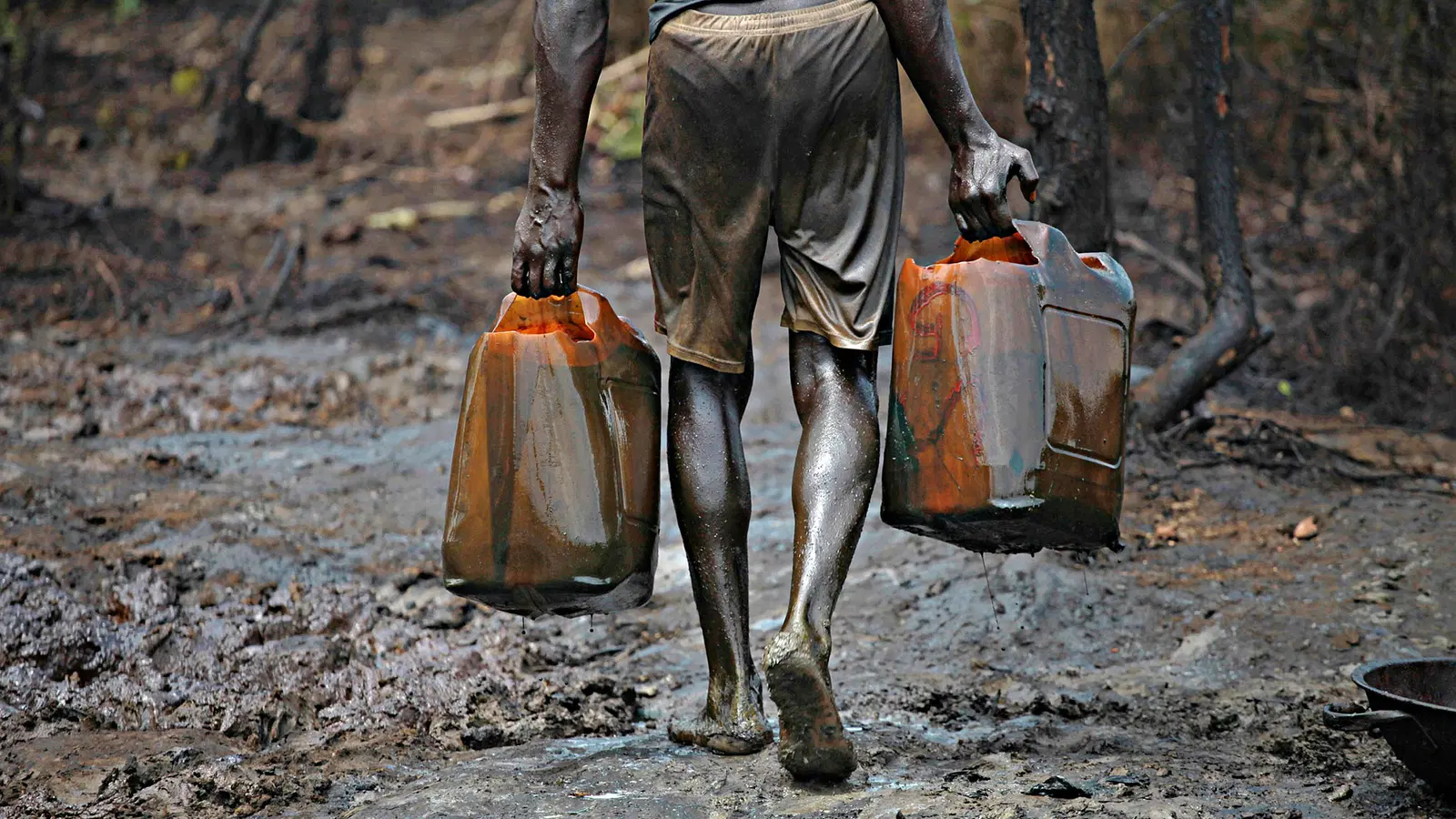
A fresh crude oil discovery in Okpe-Isoko community, Delta State, has triggered a dispute over land ownership and representation, with the Adhakpor family rejecting a purported lease agreement allegedly entered into with Sterling Global Limited without its authorization.
The dispute has raised questions about who has the authority to negotiate on behalf of the family and how the benefits of the newly discovered oil resources should be shared among its members.
In a statement, the Adhakpor family insisted that it neither authorised nor mandated any individual or group to negotiate, sign or execute a lease agreement, Memorandum of Understanding (MoU) or any related document with Sterling Global Limited concerning its land.
The family described the purported transaction as unauthorised and unacceptable, stressing that no one could legally or legitimately commit it to an agreement without a specific mandate from the appropriate representatives.
According to the family, its duly constituted and elected executives, alongside other authorised representatives, were empowered to protect its interests and handle negotiations and documentation relating to the land.
The family said the representatives were selected following a resolution reached at its general meeting on October 4, 2026.
It consequently directed that all negotiations, agreements and transactions involving the land must be conducted exclusively through the representatives it had formally recognised.
The family also warned prospective investors and other stakeholders against dealing with individuals who lacked its express authorisation, insisting that any agreement entered into outside the approved process should not be regarded as binding on it.
The family said its position was intended to promote transparency, accountability, unity and peace while safeguarding its land rights and economic interests.
Family Head Alleges Arrest Over Oil Lease Dispute
The disagreement has also taken a more serious turn, with the head of the Adhakpor family, Chief Ide Abade, alleging that he was arrested by the community leadership over his opposition to the purported lease agreement.
Speaking to Sunday Vanguard, Abade said the family was preparing to seek legal redress, arguing that people who were not authorised members or representatives of the family had no right to negotiate agreements concerning its land.
The family also alleged that a community leader, working with some community members, introduced individuals who were not members of the Adhakpor family into the negotiation committee.
It strongly objected to the development, maintaining that only duly recognised family members should participate in deliberations and negotiations concerning its interests.
The allegations have not been independently established, and the report did not include a response from those accused by the family.
Community Leader Explains Why the Dispute Started
However, the President-General of Okpe-Isoko community, Chief Fred Efeh, offered a different account of the controversy.
Efeh said that the Adhakpor family was represented on the committee established to negotiate the lease agreement.
He explained that the dispute stemmed from disagreements between two branches, or “gates,” of the family over ownership of the land where the oil well was discovered.
According to him, one branch maintained that its forefather had divided the land and that the portion containing the oil well belonged exclusively to it.
The other branch, he said, argued that proceeds from the land, including palm trees and other natural resources, should benefit the entire Adhakpor family rather than one section alone.
Efeh said that after the oil exploration company approached the traditional institution and the community, consultations were held and a negotiation committee comprising representatives of both branches was established.
He maintained that the process followed the community’s established procedures.
However, he said some representatives later withdrew from the negotiations, contributing to the disagreement over the committee’s composition and authority.
His account contrasts with the position of the Adhakpor family, which insists that the purported lease agreement was not authorised by its recognised representatives.
Sterling Oil Company Yet to Respond Fully
Efforts to obtain a response from Mr Rotimi Bakari, Community Relations Manager of Sterling Oil Exploration and Energy Production Company (SEEPCO), were unsuccessful.
Bakari reportedly declined to respond to questions over the telephone and requested an in-person visit to his office in Warri, Delta State, for further discussion.
Attempts to obtain comments from the traditional ruler of Okpe-Isoko, the Ovie of Okpe-Isoko, were also unsuccessful as calls and messages reportedly went unanswered.
The dispute now centres on the authority to negotiate over the oil-bearing land, the competing claims of the two family branches and the process through which any agreement should be reached.
With the Adhakpor family considering court action and the community leadership maintaining that both branches were represented during negotiations, the outcome could have significant implications for the management of the land and the distribution of benefits arising from the crude oil discovery.
By RapidoSpace News
SEO focus keyword: Adhakpor family oil dispute in Delta State
Alternative curious headlines:
– Who Owns the Oil? Delta Family Challenges Alleged Land Deal With Sterling Global
– Oil Discovery Turns Controversial in Delta as Adhakpor Family Threatens Court Action
– Crude Oil Find Triggers Family Feud in Delta: Two Branches Clash Over Land Rights
Story 2: Oborevwori Orders Overhaul of Dilapidated Schools Across Delta State
Delta Schools Under Scrutiny: Oborevwori Orders Overhaul of Dilapidated Classrooms Across State
Delta State Governor Sheriff Oborevwori has directed a comprehensive overhaul of dilapidated public primary and secondary schools across the state, amid growing debate over the condition of public education infrastructure.
The directive was announced during the commissioning of the Model Technical College in Oghareki, Ethiope West Local Government Area, on Friday.
The move is expected to strengthen ongoing efforts to improve school infrastructure and provide more conducive environments for teaching and learning.
However, the state of public schools across Delta has become a subject of debate following negative reports about some facilities, including Otor-Edo Primary School in Ughelli South Local Government Area.
In a response published by Kennedy Mbele, the condition of that school was described as insufficient grounds for making sweeping conclusions about all public schools in the state.
The report acknowledged that some schools still face serious challenges, including ageing classroom blocks, inadequate furniture, damaged facilities and vandalism.
It nevertheless argued that several schools have benefited from government interventions aimed at improving learning conditions.
New Classrooms Bring Relief to Delta Pupils
At Okutu Primary School in Otokutu, the headteacher, Mrs Joy Ebireri, commended the state government for constructing a new three-classroom block and providing desks for pupils.
Ebireri said the intervention had improved the learning environment and generated excitement among pupils, who now had access to the newly constructed classrooms.
“We are happy with the intervention. The new classrooms have made a positive difference, and you can see how happy the children are to use them, she said.
Despite the improvement, she raised concerns about vandalism at the school, revealing that her former office had been damaged after its roof was removed.
She said the damage had forced her to operate temporarily from a classroom because the former office could no longer accommodate her.
The situation highlights the challenges facing school administrators as they seek to maintain existing facilities while making use of newly provided infrastructure.
Government Rebuilds School Damaged by Flood
At Makpa Primary School in Oginibo, Assistant Headteacher Mrs Rita Akata also praised the government for constructing a new classroom block following damage caused by the devastating 2022 floods.
According to Akata, the flooding damaged part of the school and disrupted learning, making government intervention necessary.
“We are grateful to the government for coming to our aid. The flood destroyed part of the school, but the new building has helped to improve the learning environment for the pupils, she said.
The intervention at Makpa Primary School illustrates the need for sustained investment in educational facilities, particularly in communities where flooding and other environmental challenges have damaged school infrastructure.
The report also cited these projects as examples of improvements being made in some public schools across the state.
Oborevwori’s New Directive Raises Expectations
The governor’s directive to overhaul dilapidated public schools is expected to expand efforts to address infrastructure gaps across Delta State.
If implemented effectively, the exercise could improve classroom conditions, provide better facilities for pupils and teachers, and support more effective teaching and learning.
However, the challenges identified in the report suggest that school development requires more than constructing new buildings.
Adequate furniture, regular maintenance, protection against vandalism and rehabilitation of damaged facilities also remain important.
The reported improvements at Okutu and Makpa primary schools demonstrate the difference that infrastructure projects can make, while the concerns raised by their school administrators highlight the need to protect and maintain public assets.
As the state government moves towards implementing the governor’s latest directive, attention will be on the scope of the proposed overhaul, the schools to be prioritised and the extent to which the programme addresses the needs of communities across Delta.
Ultimately, the impact of the initiative will be measured not only by the number of renovated buildings but also by whether pupils and teachers experience safer, better-equipped and more conducive learning environments.