


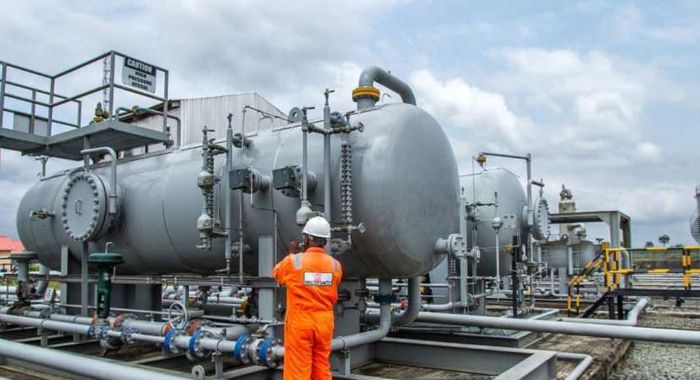
Nigeria’s domestic refining industry is expected to record significant expansion in 2027, with seven additional modular refineries projected to commence operations and contribute a combined capacity of 83,000 barrels per day.
The development is expected to strengthen local petroleum production, improve the availability of refined products and potentially reduce the country’s dependence on imported fuel as Nigeria continues to expand its domestic refining capacity.
George Maher-Bonnett of Argus Media disclosed the projections while speaking at the OTL Africa Downstream conference in Lagos, where he examined developments in Nigeria’s petroleum products market and the country’s changing energy landscape.
In his presentation titled African Energy Outlook, Maher-Bonnett reported that Nigeria had four operational modular refineries as of September 2026, with a combined installed capacity of 32,000 barrels per day.
The seven proposed additions would represent a substantial increase in the contribution of modular facilities to the country’s refining industry.
However, the extent to which the projects will improve domestic fuel supply will depend on their completion timelines, access to investment and ability to operate at their projected production capacities.
The anticipated expansion comes amid efforts to strengthen Nigeria’s energy security, increase local refining and reduce exposure to fluctuations in international petroleum markets.
Modular refineries are smaller-scale petroleum processing facilities designed to refine crude oil into usable products, including petrol, diesel and kerosene.
Their expansion is expected to complement larger refining facilities in Nigeria by increasing domestic processing capacity and creating additional opportunities for investment in the downstream petroleum sector.
If the seven proposed projects become operational as projected, their combined 83,000-barrel-per-day capacity could significantly increase the contribution of modular refineries to Nigeria’s domestic petroleum supply.
Nevertheless, installed capacity does not automatically translate into actual production, as operational performance will depend on crude oil availability, financing, infrastructure, maintenance and market conditions.
Meanwhile, Nigeria is making progress towards simplifying its taxation system, with 21 states having passed the model harmonised taxes and levies law.
Olusegun Adesokan, Executive Secretary of the Joint Revenue Board (JRB), disclosed the development in Abuja, explaining that the initiative was designed to address multiple taxation and improve the country’s business environment.
The framework was developed in collaboration with the Presidential Committee on Fiscal Policy and Tax Reforms to streamline tax administration across state and local government authorities.
According to Adesokan, the model legislation consolidates more than 100 subnational taxes, levies and charges into nine categories.
The approved categories include road tax, harmonised levy, economic development levy, daily ticket charges and user fees, alongside other recognised payments.
The initiative is intended to reduce overlapping tax obligations, improve transparency and make tax payments more predictable for businesses operating across different states.
The harmonised tax initiative is expected to ease the burden on businesses, particularly small and medium-sized enterprises that often face multiple revenue demands from different government authorities.
By simplifying the collection process and reducing overlapping charges, the government hopes to create a more predictable environment for investment, business expansion and economic activities.
Together, the expected expansion of modular refineries and ongoing tax reforms highlight two important areas of Nigeria’s economic development strategy: strengthening domestic energy production and improving the regulatory environment for businesses.
However, the success of both initiatives will ultimately depend on effective implementation, sustained investment and cooperation between federal, state and local government authorities.


