

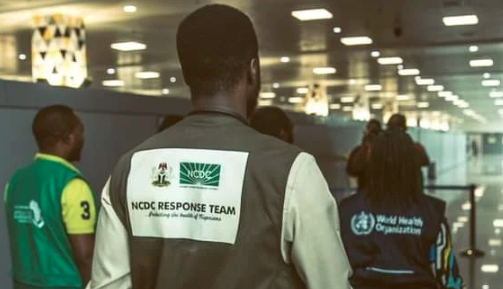
The development was disclosed on Thursday by the Chief of Staff to the President, Femi Gbajabiamila, after a high-level emergency meeting held in Victoria Island, Lagos, to review Nigeria’s Ebola preparedness and response strategy.
According to Gbajabiamila, the Federal Government is exploring stricter travel protocols, including possible flight restrictions and the isolation of passengers showing symptoms associated with the deadly Ebola virus disease.
Speaking after the meeting, Gbajabiamila said Nigeria cannot afford to take chances with public health, especially considering the devastating impact of Ebola during previous outbreaks.
We have a health scare, which is Ebola, and we all know what happened the last time. The cases are getting worse internationally and worldwide, and we don’t want to leave anything to chance,” he said.
The presidential aide explained that discussions during the meeting focused on preventive measures that could help Nigeria avoid recording any Ebola case.
There were three or four areas we looked at. We looked at the issue of possibility, as of now, of restricting flights from countries of interest, Gbajabiamila stated.
He added that the government was also considering isolating travellers who exhibit Ebola-related symptoms at airports and other entry points.
Gbajabiamila disclosed that President Bola Ahmed Tinubu had already been briefed about the Ebola situation in Uganda and the Democratic Republic of Congo.
He assured Nigerians that the Federal Government would take every necessary step to strengthen surveillance systems, improve inter-agency collaboration and protect public health across the country.
The meeting was attended by top government officials and health authorities, including the Director-General of the Nigeria Centre for Disease Control and Prevention (NCDC), Dr. Jide Idris; Minister of Interior, Olubunmi Tunji-Ojo; and Lagos State Commissioner for Health, Prof. Akin Abayomi.
The Chief of Staff revealed that authorities are considering using cargo terminals and designated isolation facilities to screen or isolate passengers arriving from affected countries.
He stressed that prevention remains the best strategy against Ebola, given the severity of the disease.
We believe prevention is better than cure, and where some passengers slip through the cracks, then we must have ways of dealing with situations such as that,” he added.
Speaking at the meeting, NCDC Director-General, Dr. Jide Idris, warned that Ebola remains one of the world’s most dangerous viral diseases, with no known cure or approved vaccine universally available.
He stressed the need for increased vigilance, especially among healthcare workers who are usually at high risk during outbreaks. This particular virus has no treatment, no vaccines. So it’s the public health measures that need to be done isolation, quick detection, public enlightenment, infection prevention and control, Idris said.
He added that the NCDC has already activated preparedness plans across all 36 states and intensified public awareness campaigns to educate Nigerians on Ebola prevention and response protocols.
Minister of Interior, Olubunmi Tunji-Ojo, also revealed that all entry points into Nigeria would be placed under stricter monitoring to prevent any possible spread of the disease.
According to him, the Nigeria Immigration Service will collaborate closely with the NCDC to improve early detection and emergency response measures.
The Federal Government’s renewed Ebola alert comes amid rising concerns over reported cases in parts of East and Central Africa, with health authorities urging Nigerians to remain calm but vigilant.
Health experts have advised citizens to maintain proper hygiene, avoid unnecessary contact with suspected infected persons and promptly report symptoms such as fever, vomiting, weakness and unexplained bleeding to health authorities.