

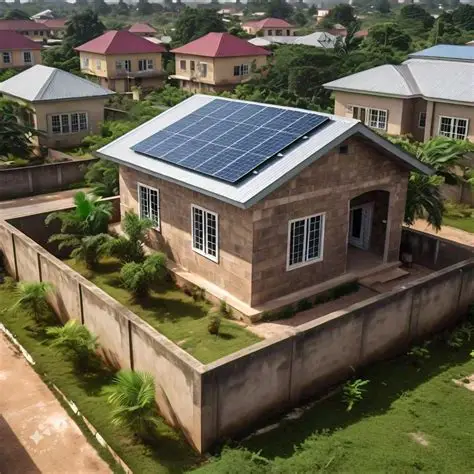
LAGOS: Nigeria has emerged as Africa’s leading market for small-scale solar energy investment after attracting an estimated $2.4 billion into distributed solar projects in 2025, underscoring the country’s growing shift toward renewable energy as businesses and households seek reliable alternatives to the national electricity grid.
The development is highlighted in a recent BloombergNEF (BNEF) market assessment, which shows that Nigeria now leads the continent in investments targeted at decentralised solar systems, ahead of several other African economies.
The report reflects increasing confidence in off-grid and rooftop solar solutions as millions of consumers continue to grapple with unreliable electricity supply and rising energy costs.Solar Powers Nigeria’s Energy Transition
The report indicates that solar energy remains the dominant source of renewable energy investment across Sub-Saharan Africa, accounting for the overwhelming share of funding committed to clean energy projects in 2025.
Nigeria’s impressive performance was largely driven by investments in small-scale solar systems, including rooftop installations, mini-grids and battery storage solutions used by households, commercial enterprises and small businesses.
Industry experts say many Nigerians are increasingly embracing solar technology as an alternative to diesel and petrol generators, whose operating costs have risen significantly in recent years.
For businesses, stable electricity has become critical for maintaining productivity, reducing operating expenses and improving competitiveness, while households are turning to solar systems to guarantee uninterrupted power for daily activities.
Why Investors Are Choosing Small-Scale Solar
Analysts attribute Nigeria’s success in attracting renewable energy investment to the rapid expansion of decentralised energy solutions that require less capital and can be deployed faster than conventional utility-scale power projects.
Unlike large electricity generation projects that often face financing, regulatory and infrastructure challenges, distributed solar installations can be implemented directly for homes, offices, schools, hospitals and manufacturing facilities.
This flexibility has made the sector increasingly attractive to both local and international investors.
Energy experts also note that advances in battery technology and falling solar equipment costs have accelerated adoption across Nigeria, particularly among businesses seeking to reduce dependence on the national grid.
Financing Challenges Persist
Despite the positive outlook for distributed solar energy, experts caution that financing remains one of the biggest obstacles to expanding utility-scale renewable energy projects.
High domestic borrowing costs, limited access to affordable long-term financing and broader investment risks continue to slow the development of large grid-connected renewable energy facilities.
These constraints have encouraged investors to focus on smaller, decentralised projects that offer quicker deployment and lower financial risks.
Industry stakeholders believe reforms aimed at improving access to finance and strengthening investor confidence could unlock significantly higher levels of investment in Nigeria’s renewable energy sector.
Renewables Expected to Play Bigger Role
Market projections suggest Nigeria’s electricity generation capacity could increase substantially over the coming years, with renewable energy expected to account for a growing share of the country’s energy mix.
The expansion of solar infrastructure is also expected to support national efforts to improve electricity access, reduce dependence on fossil fuels and lower carbon emissions.
Energy analysts argue that wider adoption of clean energy technologies will not only improve power supply but also stimulate job creation, encourage local manufacturing and enhance economic productivity.
Experts See Strong Growth Ahead
The outlook for Nigeria’s distributed solar market remains positive as demand for affordable and reliable electricity continues to grow across residential, commercial and industrial sectors.
Stakeholders say supportive government policies, private sector participation and continued investment in renewable energy infrastructure could position Nigeria as one of Africa’s leading clean energy destinations over the next decade.
However, they stress that achieving long-term success will require sustained reforms in the electricity sector, improved transmission infrastructure, stable regulatory policies and expanded access to affordable financing.
RapidoSpace News Insight
Nigeria’s emergence as Africa’s largest small-scale solar market reflects a significant transformation in the country’s energy landscape. As millions of Nigerians seek alternatives to unreliable public electricity and rising fuel costs, decentralised solar power is increasingly becoming a practical solution for homes and businesses alike.
If current investment momentum is sustained, experts believe the renewable energy sector could play a vital role in improving electricity access, supporting economic growth, creating employment opportunities and accelerating Nigeria’s transition to a cleaner and more sustainable energy future.