


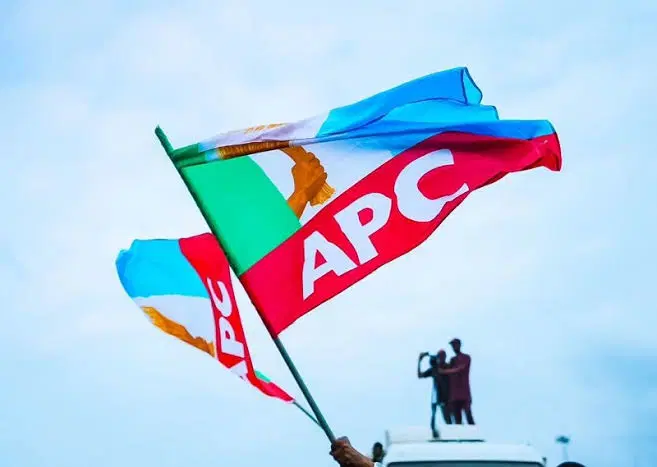
ABUJA: The All-Progressives Congress (APC) Presidential Campaign Council (PCC) has criticised the presidential candidate of the Nigeria Democratic Congress (NDC), Peter Obi, accusing him of displaying what it described as a troubling lack of character, candour and dignity.
The council’s position was contained in a statement issued by its spokesperson, Dele Alake, in Abuja on Saturday, October 10, 2026.
The statement followed comments attributed to Obi during a recent interview with the BBC, in which he maintained that he won the 2023 presidential election despite acknowledging that he had no evidence to support the claim.
According to the APC campaign council, Obi’s remarks raised questions about his approach to facts and public accountability, particularly as he seeks to remain a prominent figure in Nigeria’s political landscape ahead of the 2027 general election.
Nothing is more annoying than Obi’s recent claim that he won the 2023 presidential election, while simultaneously admitting he lacks the evidence to support it,” the statement said.
The council quoted Obi as saying during the BBC interview: “I don’t like going back to the past. I won the last election. There’s no evidence, but I won the election. Everything is not based on evidence.”
Reacting to the statement, the APC PCC accused the former Anambra State governor of making an assertion that it said was inconsistent with the officially declared outcome of the 2023 presidential election.
The council argued that public figures seeking the presidency should substantiate their claims, adding that allegations about electoral outcomes should be supported by verifiable facts.
It also questioned the basis for Obi’s assertion and accused him of repeatedly making claims that, in its view, lacked sufficient evidence.
The council’s statement used strong language to challenge Obi’s credibility, describing his remarks as a troubling departure from what it considered responsible political conduct.
The APC PCC maintained that President Bola Tinubu won the 2023 presidential election, citing the declaration by the Independent National Electoral Commission (INEC) and subsequent decisions by the presidential election tribunal and the Supreme Court.
“At the pain of restating the factually obvious, President Tinubu won the 2023 election decisively. There can be no doubt about it. The Independent National Electoral Commission confirmed his victory. The election tribunal and the country’s highest court affirmed it,” the statement said.
The council also defended Tinubu’s administration, claiming that the President’s policies had helped stabilise the economy, expand infrastructure, support businesses and young people, improve education and healthcare, and create employment opportunities.
These assertions formed part of the council’s broader defence of the President’s record as political attention increasingly shifts towards the 2027 general election.
The council also renewed its call for Obi to honour an earlier pledge concerning his possible participation in the 2027 presidential election.
According to the statement, Obi had previously indicated that he would withdraw from the race if it could be established that his administration left liabilities in Anambra State.
The APC PCC claimed that the state’s financial records had established the existence of such liabilities and urged Obi to act in accordance with the pledge.
However, the statement did not provide a detailed breakdown of the alleged liabilities or the specific financial records on which the claim was based.
The exchange highlights continuing political tensions between the APC and Obi, who has remained a prominent opposition figure since the 2023 presidential election.
The dispute over the election outcome continues to feature in Nigeria’s political debate, with parties and their supporters offering competing interpretations of the election and its implications.
While the APC campaign council has used Obi’s latest remarks to question his credibility, the statement represents the ruling party’s political position on the matter.
The controversy is likely to remain part of the broader political contest as parties and prospective candidates prepare for the 2027 presidential election.


