


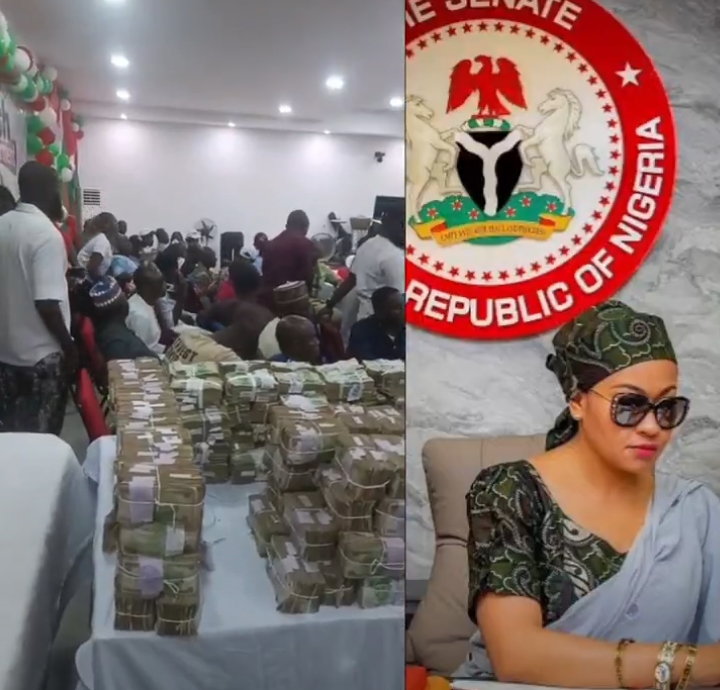
Senator Natasha Akpoti-Uduaghan has distributed cash grants to selected small-scale entrepreneurs in Kogi Central Senatorial District, with the initiative generating debate over its timing ahead of the 2027 general elections.
The Peoples Democratic Party (PDP) senator reportedly announced the financial support during a town hall meeting with small-scale business owners, where selected beneficiaries received ₦2 million each to support their businesses.
A video showing the senator distributing the money emerged on Tuesday, November 3, 2026, attracting reactions from Nigerians on social media.
According to reports, the senator explained that the decision to provide cash rather than physical equipment was informed by experiences from previous empowerment programmes.
She reportedly disclosed that she had previously distributed sewing machines to beneficiaries, but some recipients later sold the equipment instead of using them for their intended purposes.
Akpoti-Uduaghan explained that cash assistance would give beneficiaries greater flexibility to establish businesses, purchase goods and invest in existing commercial activities.
The distribution has generated mixed reactions, particularly because it comes months before the February 2027 general elections, in which Akpoti-Uduaghan is seeking re-election.
Some social media users questioned why the financial empowerment programme was taking place so close to the election period, raising concerns about the possibility of political considerations behind the initiative.
Others criticised the distribution of cash to individuals, arguing that government-backed empowerment programmes should prioritise sustainable infrastructure, business development and long-term economic opportunities.
However, supporters of the senator have defended the initiative, describing it as part of her previous efforts to provide financial assistance to constituents and support small businesses.
The controversy has also revived discussions about the relationship between political empowerment programmes and electoral activities in Nigeria.
The latest cash distribution is not the first empowerment initiative associated with the senator.
According to reports, Akpoti-Uduaghan distributed cash to market women in Ihima, Okene, Adavi and Ajaokuta in August 2024 as part of efforts to support traders facing economic difficulties.
She has also reportedly distributed food items during Ramadan and Lent, alongside sewing machines, grinding machines and deep freezers to beneficiaries.
During an earlier food distribution exercise, the senator reportedly maintained that assistance was provided to constituents irrespective of their political affiliations.
Nevertheless, some of her previous empowerment activities also attracted criticism, including a rice distribution programme in March 2025, which some commentators interpreted as an attempt to improve her public standing amid a recall campaign against her.
The latest development has renewed broader questions about the effectiveness of cash distributions as a strategy for supporting small businesses and improving the economic conditions of constituents.
While direct financial assistance can provide immediate capital for traders, artisans and aspiring entrepreneurs, critics argue that such interventions should be complemented by sustainable programmes capable of creating lasting economic opportunities.
For beneficiaries, the grants could provide an opportunity to purchase business inventory, expand existing operations or establish new enterprises.
However, concerns about the timing and political implications of such programmes are likely to remain part of the public discussion as political activities ahead of the 2027 elections intensify.
As of November 3, 2026, the reports reviewed did not establish any official finding of electoral wrongdoing in connection with the grants. The senator’s direct response to the criticism over the timing was also not included in the report.
Ultimately, the initiative has brought renewed attention to the role of constituency empowerment programmes, the accountability of elected representatives and the expectations of voters ahead of the next general elections.


