


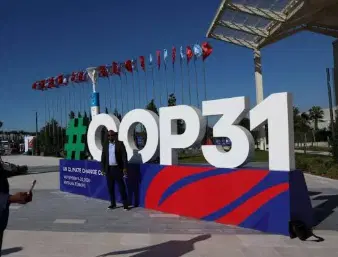
The Federal Government has expressed disappointment over the failure of the 31st United Nations Climate Change Conference (COP31) to reach consensus on an overarching political agreement, describing the outcome as a setback for international climate cooperation.
However, Nigeria has reaffirmed its commitment to tackling climate change, insisting that the absence of a comprehensive agreement will not derail its domestic climate action plans.
The Director-General of the National Council on Climate Change (NCCC), Dr Omotenioye Majekodunmi, disclosed this in a statement published on the council’s X account following the conclusion of the conference in Antalya, Turkey.
Majekodunmi acknowledged that although progress was recorded on some negotiating issues, the failure to reach a comprehensive political agreement was a major disappointment for countries seeking stronger international cooperation on climate action.
COP31’s failure to reach consensus on an overarching political outcome is deeply disappointing and represents a setback for international climate cooperation,” she said.
Despite the outcome of the conference, the NCCC director-general maintained that Nigeria would continue implementing its climate policies and pursuing measures to address the effects of climate change.
She identified the country’s Nationally Determined Contribution 3.0 (NDC 3.0), stronger climate governance, investment mobilisation and a just energy transition as key priorities.
“For Nigeria, our focus remains firmly on implementation. We will continue advancing our NDC 3.0, strengthening climate governance, mobilising investment and pursuing an orderly, just and nationally determined energy transition,” Majekodunmi stated.
She explained that the outcome of COP31 had further highlighted the importance of backing international climate commitments with credible financing, practical implementation strategies and recognition of the different economic and developmental circumstances of participating countries.
Majekodunmi reaffirmed Nigeria’s readiness to work with African partners and the international community to build consensus and accelerate global climate action.
She also stressed that the country’s climate progress should not be measured exclusively by reductions in greenhouse gas emissions.
According to her, climate policies must also deliver measurable economic and social benefits, including job creation, business development, improved energy access and better living conditions for Nigerians.
The Federal Government’s position underscores its intention to balance environmental sustainability with economic development and the country’s energy needs.
Although the failure to reach an overarching political agreement at COP31 has raised concerns about international climate cooperation, Nigeria says it will continue pursuing its climate commitments through domestic policies, investment and collaboration with other countries.