


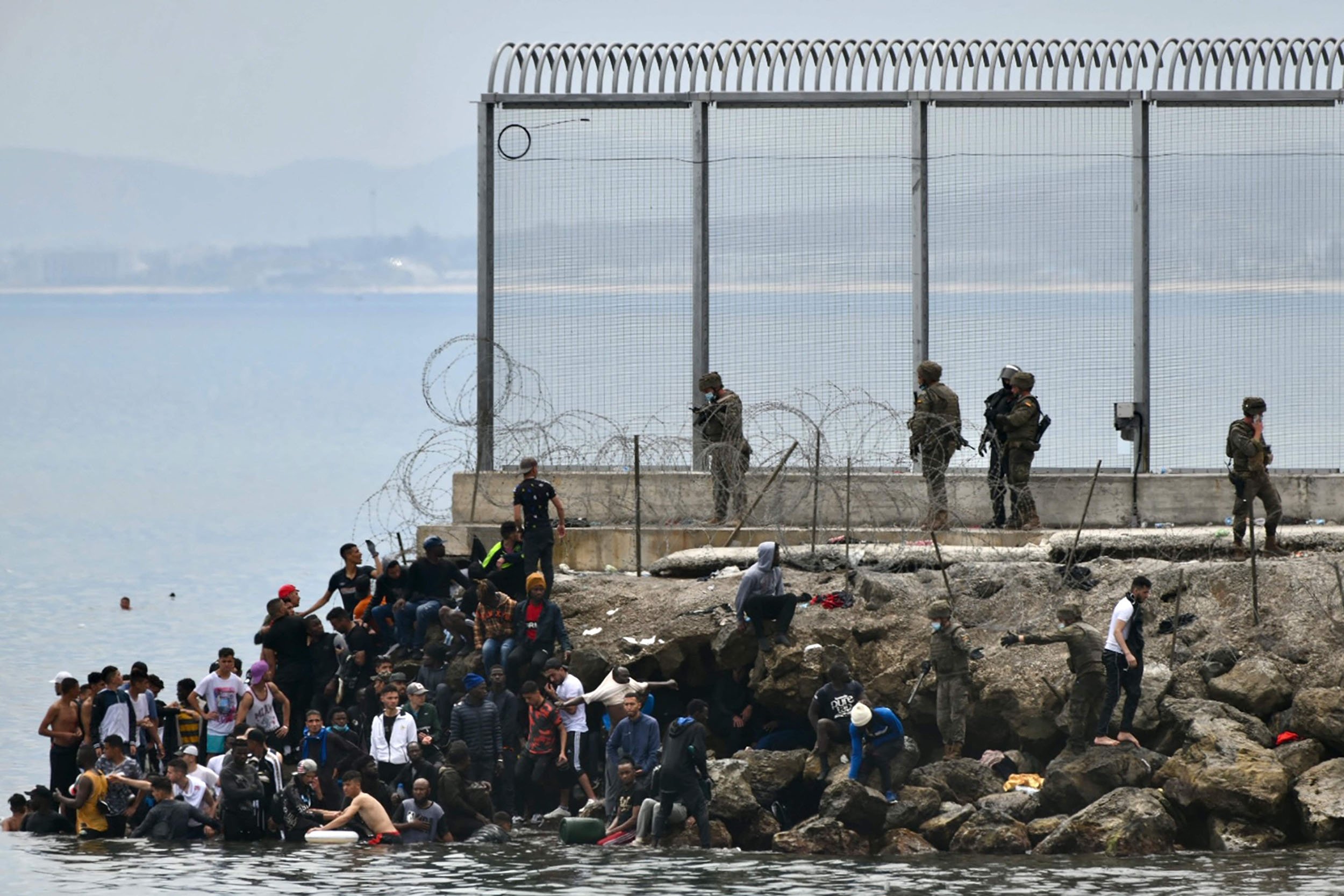
Hundreds of migrants have crossed from Morocco into Spain’s North African enclave of Ceuta over the past week, with many risking their lives by swimming across the sea or using makeshift flotation devices in a renewed wave of irregular migration that has strained local authorities.
The surge has prompted urgent calls for assistance from the Spanish government, with Ceuta’s regional president, Juan Jesús Vivas, warning that the territory is facing both a humanitarian and security emergency as reception facilities struggle to cope with the growing number of arrivals.
Video footage circulating on Thursday showed migrants swimming through coastal waters with inflatable rings, while others were seen running through an opening in the border fence separating Morocco from the Spanish enclave.
Authorities Struggle to Manage Growing Influx
Ceuta, located on Morocco’s northern coast, has long served as one of the main gateways for migrants seeking entry into Europe. Together with the nearby Spanish enclave of Melilla, it represents the European Union’s only land border with Africa.
Although officials agree that migrant arrivals have increased significantly, estimates of the latest crossing vary considerably.
Spanish media reported that between 2,000 and 3,000 migrants may have entered Ceuta on Thursday alone, although Spain’s Guardia Civil has yet to officially verify those figures.
Spain’s public broadcaster, RTVE, reported that hundreds of migrants crossed into the enclave during the day and estimated that more than 1,500 people, most of them young Moroccans, had arrived in Ceuta over the past two weeks.
Regional leader Juan Jesús Vivas expressed deep concern over the growing pressure on public services, particularly facilities caring for unaccompanied migrant children.
According to local authorities, reception centres are currently operating well beyond their intended capacity, creating significant challenges for accommodation, healthcare and social services.
Vivas also revealed that the bodies of 60 people had been recovered from the surrounding waters in recent months, highlighting the deadly risks many migrants continue to face while attempting the dangerous journey across the sea.
He urged Spain’s central government to provide immediate assistance to help the territory manage the influx and protect vulnerable migrants.
Spain’s Interior Minister, Fernando Grande-Marlaska, is expected to visit Ceuta to assess the situation and coordinate the government’s response as authorities seek to restore order and strengthen border management.
Spanish security agencies have continued to patrol both the coastline and the land border in an effort to manage arrivals while providing emergency assistance to migrants rescued at sea.
The latest influx has drawn comparisons with the migration crisis of May 2021, when approximately 8,000 migrants entered Ceuta within a matter of days after border controls briefly weakened.
That incident triggered diplomatic tensions between Spain and Morocco and prompted both countries to strengthen cooperation on border security.
Since then, Spain has invested heavily in reinforcing border infrastructure, increasing surveillance and expanding cooperation with Moroccan authorities to curb irregular migration.
Despite those measures, migrants continue to attempt the perilous journey in search of safety, employment and better living conditions in Europe.
Ceuta and Melilla remain strategic entry points for migrants attempting to reach European territory from Africa.
Their unique geographical location has made them focal points in the European Union’s broader efforts to manage migration flows, combat human trafficking and improve border security while ensuring humanitarian protection for vulnerable people.
As migration pressures continue to mount across the Mediterranean and North African routes, European and Moroccan authorities are expected to intensify discussions on joint border management and measures aimed at addressing the root causes driving irregular migration.


