


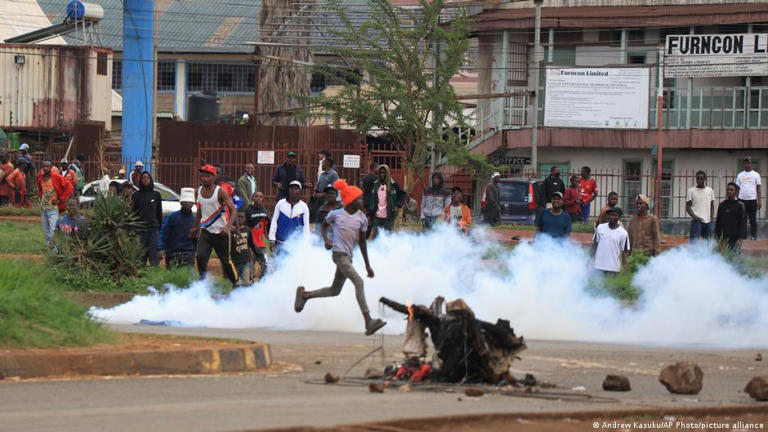
NAIROBI: At least four people have been killed and more than 30 others injured in violent protests that erupted across Kenya following a sharp increase in fuel prices blamed on disruptions caused by the ongoing Iran conflict and the closure of the Strait of Hormuz.
The demonstrations, which spread across several major towns and cities on Monday, were accompanied by a crippling public transport strike that paralysed movement and commercial activities in parts of the country.
Kenya’s Interior Minister, Kipchumba Murkomen, confirmed the fatalities during a televised national briefing, saying dozens of people were also injured during clashes between protesters and security operatives.
According to him, the unrest led to widespread destruction, confrontations on major highways and disruptions to businesses and transportation networks.
We lost four Kenyans in today’s violence, which also saw more than 30 people injured,” Murkomen said.
Police authorities disclosed that at least 348 persons were arrested in connection with the demonstrations as security agencies moved to contain the escalating unrest.
The protests were triggered by a 23.5 per cent increase in fuel prices announced last week by Kenya’s Energy and Petroleum Regulatory Authority.
The latest adjustment came only weeks after another 24.2 per cent rise in petroleum prices, worsening economic hardship for millions of Kenyans already battling high inflation and rising living costs.
The increase has significantly affected transportation costs, food prices and electricity expenses, prompting outrage among workers, transport unions and ordinary citizens.
Public transport operators, particularly the country’s popular matatu operators, staged a strike in protest against the rising fuel costs, leaving thousands stranded and forcing many businesses and schools to shut down temporarily.
Roads in parts of Nairobi and other urban centres witnessed burning tyres, barricades and running battles between protesters and police officers.
Several vehicles and commercial properties were reportedly vandalised during the unrest.
The fuel crisis in Kenya has been linked to the continuing instability in the Middle East, especially disruptions to oil shipments through the Strait of Hormuz, one of the world’s most important oil transit routes.
The waterway has remained partially shut following military tensions involving Iran, the United States and Israel.
Analysts say the disruption has severely affected oil supplies to many import-dependent African countries, including Kenya.
The Strait of Hormuz normally handles nearly one-fifth of global oil shipments during peacetime, making any disruption capable of triggering sharp increases in international fuel prices.
Kenya, which relies heavily on imported petroleum products from Gulf nations, has been among the countries most exposed to the resulting supply shock.
The latest fuel increase has intensified economic pressure on households and businesses across Kenya.
Transport fares have surged in many cities, while food and commodity prices continue to rise due to increased logistics costs.
Many protesters accused the government of failing to cushion citizens against the impact of the global oil crisis.
Some labour groups and civil society organisations also criticised authorities over what they described as poor economic management and inadequate intervention measures.
The unrest comes at a difficult time for President William Ruto, whose administration has faced mounting criticism over the rising cost of living and unpopular economic reforms.
Security agencies were deployed heavily across affected areas to restore order and prevent further violence.
Police used tear gas and anti-riot measures to disperse crowds in several locations as tensions escalated throughout the day.
Government officials warned against further destruction of public infrastructure and urged citizens to remain calm while discussions continue with transport unions and stakeholders.
Despite the security clampdown, concerns remain that more protests could erupt if fuel prices continue to rise and the global oil supply crisis persists.
Economic analysts warn that unless international crude supply routes stabilise soon, many African economies dependent on imported fuel may continue facing inflationary pressure, social unrest and worsening transportation challenges.