


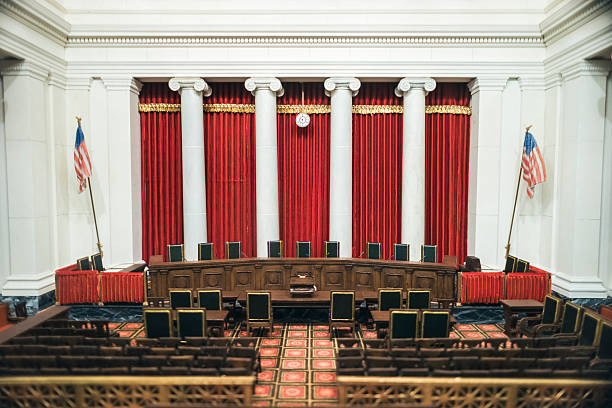
The United States Supreme Court is preparing to deliver a series of high-stakes decisions that could reshape the country’s legal landscape on contentious issues ranging from gun ownership and transgender athletes to immigration and religious freedoms.
The rulings, expected before the end of the court’s current term later this month, come amid growing political divisions and renewed debates over cultural and constitutional rights under President Donald Trump’s administration.
At the centre of the court’s docket are cases challenging gun laws, state bans on transgender athletes competing in female sports, immigration policies and religious rights. Legal observers say the decisions could further cement the influence of the court’s conservative 6-3 majority, which has steadily pushed American jurisprudence in a more conservative direction in recent years.
One of the major cases before the justices involves a Hawaii law requiring gun owners to obtain explicit permission before carrying handguns onto private property that is open to the public, including most businesses. During oral arguments in January, conservative justices appeared sceptical of the law, signalling that they may strike it down.
The case follows the Supreme Court’s landmark 2022 ruling in New York State Rifle & Pistol Association v. Bruen, which established that firearm regulations must align with America’s historical traditions of gun control.
Another closely watched case concerns a federal law that bars illegal drug users from possessing firearms or ammunition. The case was brought by a Texas man who admitted using marijuana several times a week and was charged under the Gun Control Act of 1968.
Legal experts believe the justices are wary of weakening broader federal restrictions that prevent convicted felons and other prohibited individuals from owning guns.
The Supreme Court is also expected to decide whether laws in Idaho and West Virginia banning transgender athletes from competing on female sports teams are constitutional.
The cases come as the Trump administration continues to support measures limiting transgender rights. During arguments earlier this year, conservative justices signalled support for the state laws, suggesting they may uphold the restrictions.
The administration has already pursued several policies affecting transgender Americans, including a ban on transgender individuals serving in the military and restrictions on gender identification in passports and federal workplaces.
However, advocates representing transgender athletes remain hopeful that the court could rule in favour of equal participation rights.
Immigration-related cases are also awaiting decisions. Among them are challenges to President Trump’s efforts to restrict birthright citizenship and plans to revoke Temporary Protected Status (TPS) for hundreds of thousands of immigrants from countries including Haiti and Syria.
Legal analysts say the administration may face difficulties defending its stance on birthright citizenship, while it could secure a victory regarding TPS protections.
The court is also considering a case involving a Rastafarian inmate who accused Louisiana prison officials of violating his religious rights after prison guards shaved his hair against his beliefs.
In another notable case, the Supreme Court recently spared an Alabama death-row inmate from execution after upholding a lower court’s finding that he was intellectually disabled, making him ineligible for the death penalty under existing precedents.
Earlier this year, the court ruled 8-1 against a Colorado law that prohibited therapists from engaging in so-called conversion therapy aimed at changing the sexual orientation or gender identity of LGBT minors, with the justices finding that the ban violated free speech protections.
With decisions expected in the coming weeks, legal experts believe the outcomes could have far-reaching consequences for civil rights, immigration policy and the balance between individual freedoms and government authority in the United States.