


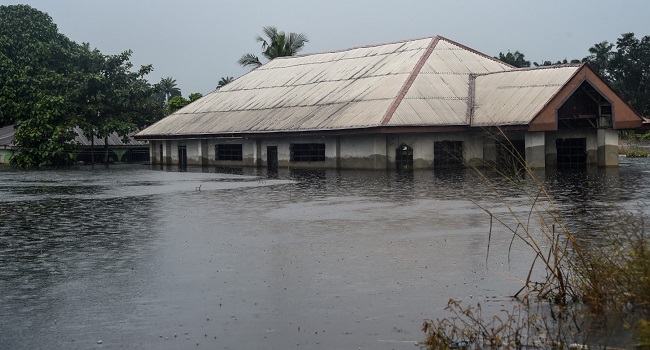
The National Economic Council (NEC) has approved the release of ₦83.2 billion from the Anticipatory Action Trust Fund (AATF) to tackle the perennial flooding crisis and strengthen disaster preparedness across Nigeria.
The approval was granted during the NEC meeting presided over by Vice President Kashim Shettima at the Council Chamber of the Presidential Villa, Abuja, on Thursday.
Governor Bassey Otu of Cross River State, who briefed journalists after the meeting, disclosed that although over ₦166 billion had initially been proposed for the fund, the Council approved ₦83.2 billion for immediate intervention.
According to him, the fund will finance proactive measures such as early warning systems, emergency preparedness and flood mitigation projects aimed at reducing the devastating impact of seasonal flooding on lives and property.
The Council stressed the need to move away from reactive responses to disasters and instead adopt preventive mechanisms capable of mitigating emergencies before they escalate.
The AATF, NEC noted, will serve as a strategic tool for responding to disasters and emergencies nationwide while protecting vulnerable communities from recurring floods.
Nigeria has witnessed devastating floods in recent years, with thousands displaced and billions of naira lost to damaged infrastructure, farms and businesses.
Addressing members of the Council, Vice President Shettima said President Bola Tinubu’s reform agenda must now translate into measurable improvements in the lives of ordinary Nigerians.
He emphasized that the success of government policies should be judged by their impact on farmers, manufacturers, unemployed youths, vulnerable citizens and future generations.
When this Council last met, I called our economy a workshop—a place of measurement and correction, where plans are turned into systems and systems into institutions before prosperity emerges.
“A workshop is judged not by the plans pinned to its walls, but by what comes off the bench. We must ask ourselves whether the work is taking shape,” Shettima stated.
According to a statement issued by the Senior Special Assistant to the President on Media and Communications, Stanley Nkwocha, the Vice President said Nigeria was gradually moving from economic stabilisation to production and from isolated interventions to coordinated national growth.
“The assignment has not changed. We remain a federation moving from stabilisation to production, from aspiration to implementation and from isolated interventions to coordinated national growth. What has changed, I hope, is our proximity to delivery,” he said.
Shettima stressed that prosperity must be inclusive and that the administration is committed to protecting the most vulnerable citizens.
“A federation does not earn its prosperity by leaving its most vulnerable behind and hoping they catch up. The dignity of the citizen with the least is the floor beneath which we have resolved that no Nigerian shall fall,” he said.
He described the social protection agenda as an opportunity to institutionalise systems that protect citizens while strengthening human capital development.
On economic diversification and trade, Shettima said Nigeria must end its dependence on exporting raw materials while importing finished products.
According to him, economic transformation requires building a complete value chain that connects agriculture, manufacturing, standards, ports and global markets.
We cannot continue to export raw materials and import finished products,” he declared.
The Vice President pledged that the Federal Government would address bottlenecks affecting agricultural exports, improve port operations and ensure compliance with international standards to boost Nigeria’s competitiveness.
A nation that cannot move its goods has imprisoned its own farmers. Meeting international standards is not submission to foreign demands; it is the price of accessing markets that will reward our labour,” Shettima added.
The approval of the ₦83.2 billion flood intervention fund comes amid growing concerns over predictions of heavy rainfall and flash floods in several states across the country.
The move is expected to strengthen disaster management efforts and help protect communities vulnerable to flooding, while supporting the Tinubu administration’s broader goal of building a resilient economy and safeguarding livelihoods.