


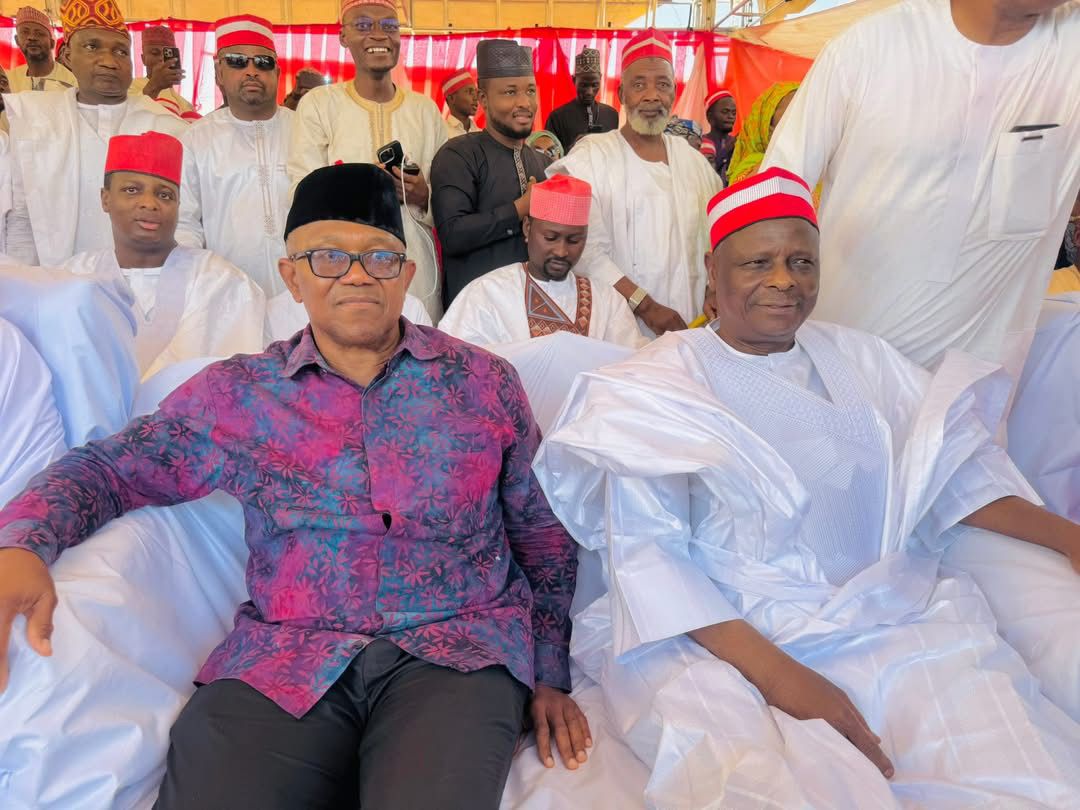
Loyalists of Peter Obi and Rabiu Musa Kwankwaso are intensifying pressure on opposition leaders to adopt a southern presidential candidate, exposing early cracks in coalition talks ahead of the 2027 general elections.
The debate follows a high-level political meeting in Ibadan involving key figures such as former Vice President Atiku Abubakar, Obi, Kwankwaso, and ex-Rivers State Governor Rotimi Amaechi. The gathering explored the possibility of forming a united opposition front to challenge President Bola Ahmed Tinubu.
Supporters of Obi argue that retaining the presidency in the South aligns with Nigeria’s informal zoning tradition, which rotates power between regions to maintain balance.
Dr. Yunusa Tanko of the Obidient Movement stressed that fairness demands continuity in the South, especially as the current administration is led by a southern president. He also noted Obi’s reported willingness to serve a single four-year term as a compromise position.
Similarly, Justin Ijeh of the Obi–Kwankwaso Movement described zoning as a practical tool for managing Nigeria’s diversity, warning that abandoning it could fuel political tension.
However, opposition parties remain split:
- The African Democratic Congress (ADC) rejected zoning as a binding principle, saying electability should come first.
- The New Nigeria People’s Party (NNPP) maintained that zoning can coexist with a consensus candidate.
- The Social Democratic Party (SDP) acknowledged zoning as legitimate but said final decisions would depend on broader political strategy.
While talks of a united opposition ticket have gained traction, analysts warn that disagreements over zoning, candidate selection, and party interests could derail the process.
The renewed coalition push is largely seen as a response to the fragmented opposition outing in the 2023 Nigerian presidential election, where multiple candidates split votes against the ruling party.
For now, consultations continue—but whether opposition leaders can agree on a single candidate, and from which region, remains uncertain.


