


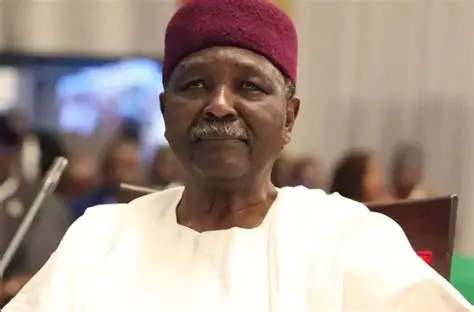
Former Nigerian Head of State, Yakubu Gowon, has reignited debate over the events that led to the Nigerian Civil War, accusing late Biafran leader Chukwuemeka Odumegwu Ojukwu of frustrating repeated efforts to prevent the country’s descent into war.
Gowon made the claims in his autobiography, My Life of Service and Allegiance, where he reflected on the political tensions, failed negotiations, and mistrust that defined Nigeria’s most turbulent period between 1966 and 1970.
The former military ruler said the Federal Military Government made several attempts to preserve national unity after the violent coups of January and July 1966 triggered ethnic tensions, killings, and separatist agitations across the country.
According to Gowon, the massacre of Igbos in parts of Northern Nigeria created fear and anger within the Eastern Region, increasing pressure on Ojukwu and Eastern leaders to seek greater autonomy and protection for their people.
Despite the growing crisis, Gowon insisted that his administration remained committed to dialogue and national reconciliation.
We went to Aburi with open minds and with the sincere hope of finding a basis for national reconciliation,” Gowon wrote in the memoir.
The historic Aburi meeting, held in Ghana in January 1967, was brokered by former Ghanaian leader Joseph Arthur Ankrah. The talks brought together top Nigerian military officers in an attempt to prevent the collapse of the federation amid escalating political instability.
However, Gowon claimed the negotiations eventually collapsed because both sides returned from Ghana with conflicting interpretations of what had been agreed during the discussions.
According to him, Ojukwu’s understanding of the Aburi Accord would have significantly weakened the authority of the Federal Government and effectively transformed Nigeria into a loose confederation incapable of surviving as a united country.
“What was presented by Ojukwu as the Aburi Accord was, in reality, his own interpretation of our discussions,” Gowon stated.
The former Head of State argued that accepting Ojukwu’s demands at the time could have accelerated Nigeria’s disintegration, especially as regional mistrust and ethnic divisions were already worsening.
He maintained that his government explored every possible avenue to avoid military confrontation before the eventual outbreak of war in July 1967.
At every stage, we tried to preserve Nigeria without resorting to war,” Gowon wrote.
The memoir revisits one of the most controversial debates in Nigerian history — whether the Aburi Accord represented the country’s last genuine opportunity for peace or whether the nation had already moved too close to conflict for any agreement to succeed.
Gowon rejected longstanding allegations that the Federal Military Government negotiated in bad faith, describing the period as one dominated by fear, uncertainty, and deepening suspicion among military leaders.
Ojukwu’s actions made peaceful settlement increasingly difficult,” he said.
The former leader also acknowledged the pain and trauma experienced by many Eastern Nigerians following the 1966 killings, admitting that the massacres deeply affected national unity and trust.
“I understood the fears of the Easterners. But the breakup of Nigeria was never an option I could accept,” Gowon wrote.
He explained that communication between the Federal Government and Eastern leaders steadily deteriorated in the months leading to the declaration of the Republic of Biafra on May 30, 1967.
According to him, compromise became increasingly difficult as both sides hardened their positions amid rising tension and political uncertainty.
We were confronted with a situation in which compromise was becoming almost impossible, he stated.
Gowon also defended the creation of 12 states by the Federal Military Government shortly before Biafra’s declaration, insisting that the decision was intended to address fears of domination among minority ethnic groups across the regions.
He said many minority communities in the former Eastern Region sought direct representation and protection from the central government, fearing political marginalisation within the regional structure.
The creation of states was intended to give all groups a sense of belonging within Nigeria,” Gowon explained.
The former military ruler further dismissed claims that the Federal Government was eager for war, insisting that armed conflict became inevitable only after Ojukwu declared Biafra’s independence.
Ojukwu’s declaration of Biafra left the federal government with no choice, he wrote.
Gowon also defended the famous No Victor, No Vanquished policy announced after the war ended in January 1970, saying reconciliation and reintegration were necessary to heal the nation after years of violence and humanitarian suffering.
According to him, the war was fought to preserve Nigeria’s unity rather than to target any ethnic group.
We fought to keep Nigeria one, not to destroy a people,” Gowon stated.
The Nigerian Civil War remains one of Africa’s deadliest conflicts, with millions of lives lost and countless families displaced during the 30-month conflict.
Reflecting on the devastating humanitarian consequences, Gowon said the post-war government deliberately focused on reconstruction, forgiveness, and national unity to prevent long-term division.
We had to think about the future of the country beyond the bitterness of war,” he wrote.
Until his death in 2011, Ojukwu maintained that the declaration of Biafra became necessary because the Nigerian state failed to protect Eastern Nigerians from violence and political persecution.
However, Gowon’s autobiography presents a sharply different narrative, placing responsibility for the collapse of peace talks largely on the late Biafran leader.
We exhausted every peaceful avenue available to us. But Nigeria had to survive, Gowon concluded.


