

The decision by the West African Examinations Council (WAEC) to seek legal intervention against the Non-Academic Staff Union of Educational and Associated Institutions (NASU) has drawn national attention, especially as the dispute threatens the smooth operation of one of West Africa’s most important examination bodies.
Many Nigerians have been asking why WAEC chose the courtroom instead of the negotiation table. The answer lies in a prolonged disagreement over workers’ welfare, salary implementation, disciplinary measures and industrial relations that has been brewing for months.
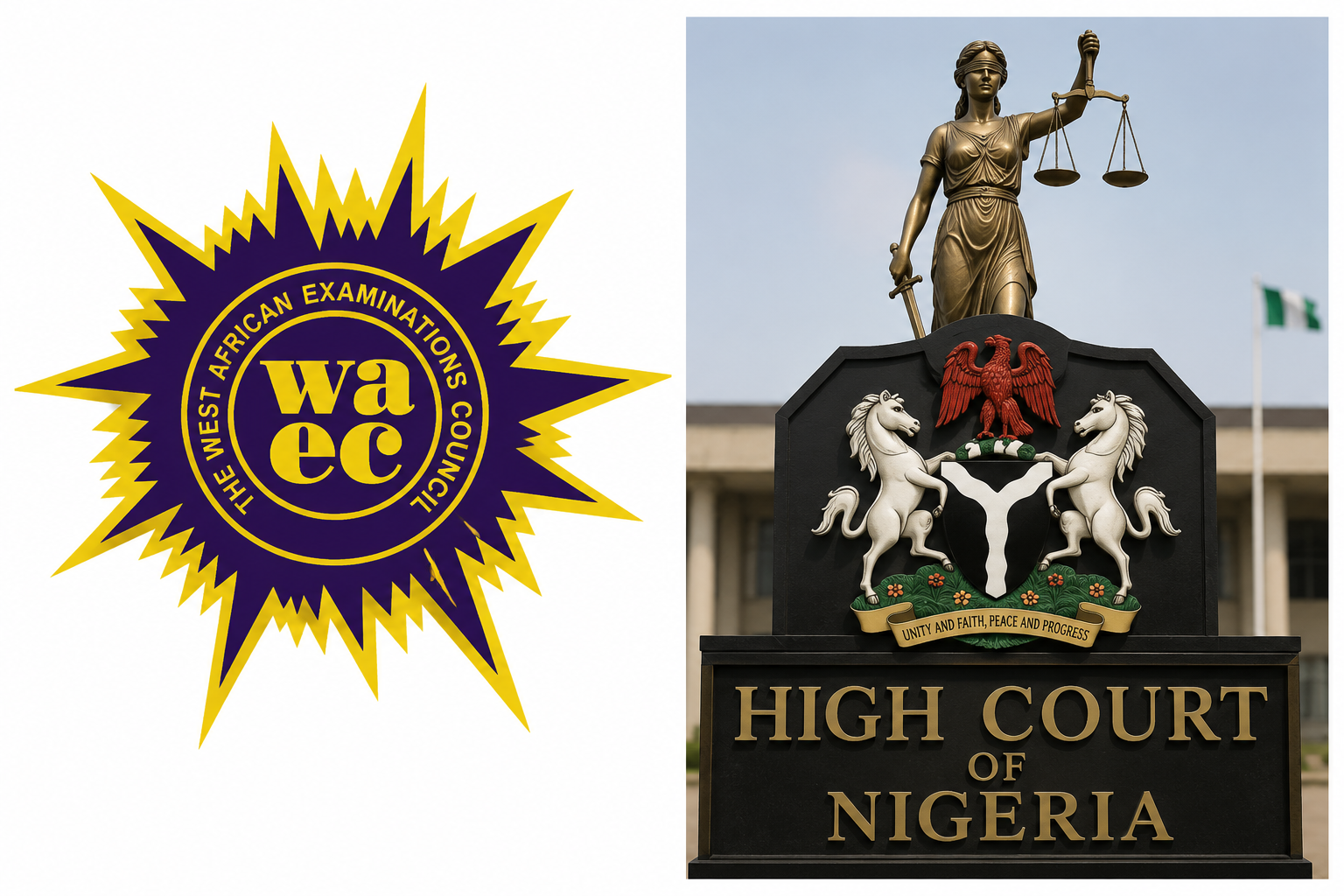
WAEC approached the National Industrial Court after NASU issued a 14-day ultimatum, signalling its intention to embark on an indefinite strike over unresolved welfare issues. The ultimatum, which was issued on July 7, expired without an agreement between both parties, prompting WAEC to obtain an ex parte court order restraining the union from proceeding with the industrial action.
The examination body believes the court’s intervention is necessary to prevent disruptions that could affect examination activities and other critical operations.
According to NASU, the dispute dates back to December 2024 during negotiations over the implementation of the new minimum wage.
The union said workers demanded a 30 per cent salary increase, but management allegedly secured approval for only a 25 per cent adjustment. Although an additional two per cent was later added following a four-day strike, NASU insists the agreement reached with workers was not fully implemented.
Union leaders argue that relations between management and employees deteriorated after the industrial action.
NASU accused WAEC management of victimising union members after the strike ended.
The union alleged that management weakened labour activities by preventing the Senior Staff Association from operating freely, stopping the automatic deduction of union dues and altering disciplinary procedures in ways that placed workers at a disadvantage.
It also claimed that repeated appeals for improved staff welfare were ignored despite concerns raised over difficult working conditions experienced by employees during recent examinations.
Despite its readiness to begin an indefinite strike immediately after the ultimatum expired, NASU suspended the action after the National Industrial Court granted WAEC’s application.
The union said it chose to obey the court order while awaiting further directives from its national leadership, stressing that it remains committed to pursuing its demands through lawful means.
Ethnic Allegations Rejected
The industrial dispute took another dimension after the Northern Youth Council of Nigeria (NYCN) alleged that sectional bias and recruitment imbalance contributed to the crisis within WAEC.
However, NASU strongly rejected the allegation, insisting that its disagreement with management has nothing to do with ethnicity or the regional origin of WAEC’s Head of National Office, Professor Amos Dangut.
According to the union, the dispute is strictly about workers’ welfare, fairness, transparency and labour rights, adding that members across all regions of the country are united in pursuing better working conditions.
When contacted, WAEC declined to comment on the allegations, explaining that the matter is already before the National Industrial Court and that officials are not authorised to make public statements while the case is pending.
With the matter now before the court, both WAEC and NASU are expected to await judicial proceedings while continuing discussions that could eventually resolve the dispute.
For now, examination activities continue as workers comply with the court order. However, unless both parties reach a lasting agreement on staff welfare and labour issues, the legal battle could prolong tensions within the examination body and potentially affect future operations.
The outcome of the case will be closely watched by education stakeholders, labour unions and millions of candidates who rely on WAEC examinations every year.