


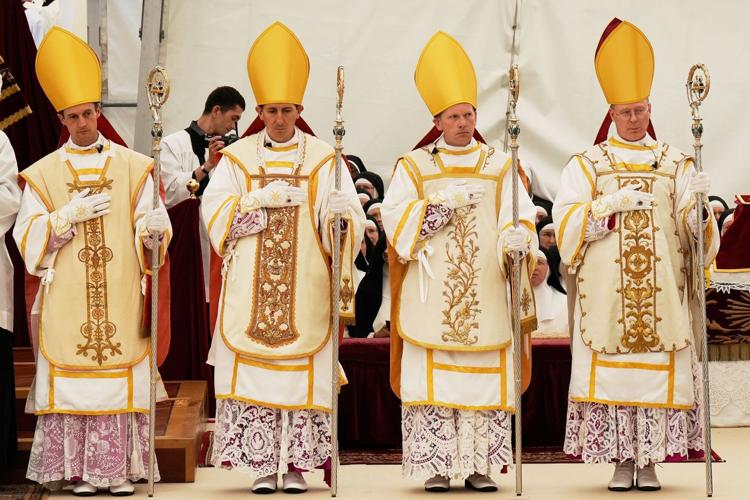
The Vatican has formally excommunicated members of the breakaway Society of Saint Pius X (SSPX) after the traditionalist Catholic group proceeded with the ordination of four bishops without the approval of Pope Leo XIV, escalating a long-running conflict within the Roman Catholic Church.
The Holy See announced the decision on Thursday, stating that the unauthorized ordinations carried out a day earlier constituted a schismatic act that broke communion with the Catholic Church. The decree, issued by the Vatican’s doctrinal office, declared the four newly ordained bishops and the two bishops who performed the ceremony automatically excommunicated.
According to the Vatican, the penalty also extends to priests and lay members who formally align themselves with the SSPX, warning that anyone who knowingly joins or supports the schismatic movement risks automatic excommunication.
Excommunication bars those affected from receiving or administering the sacraments and excludes them from full participation in the life of the Catholic Church.
Before the ordinations took place, Pope Leo XIV had made a final appeal to the group, urging its leaders to abandon their plans. He warned that proceeding with the ceremony would amount to a grave act of disobedience and a serious violation of Church unity.
Despite the papal warning, the ordinations went ahead, prompting the Vatican to issue one of its strongest disciplinary measures in decades against the traditionalist movement.
Later on Thursday, Vatican officials outlined the conditions under which affected priests could be reconciled with the Church. These include writing personally to the Pope to request that the excommunication be lifted, signing a profession of faith, and pledging not to publicly oppose the Pope or official Church teachings.
The Vatican’s Secretary of State, Pietro Parolin, expressed sadness over the development, describing the ordinations as a direct assault on the unity of the Catholic Church and noting that they carried clear canonical consequences.
The Society of Saint Pius X was founded in 1970 in Switzerland by French Archbishop Marcel Lefebvre as a traditionalist movement opposed to reforms introduced by the Second Vatican Council.
Five years after its creation, the group was officially suppressed by Church authorities. In 1988, Archbishop Lefebvre also ordained four bishops without papal approval, an action that resulted in excommunication at the time.
The latest sanctions go beyond those imposed in 1988 by extending penalties to priests and lay followers who formally adhere to the movement.
Under Pope Francis, members of the SSPX had been permitted to administer the sacraments of confession and marriage under certain conditions. However, the Vatican has now declared that any marriages or confessions conducted by the group will no longer be considered valid.
Despite the disciplinary action, the Vatican emphasized that it remains willing to welcome members of the SSPX back into full communion should they choose to reconcile with the Church.
The disagreement between the Holy See and the SSPX centers on the group’s rejection of several teachings and reforms introduced during the Second Vatican Council, including religious freedom, ecumenism, liturgical changes such as celebrating Mass in local languages instead of Latin, and the Council’s condemnation of antisemitism.
Church unity has emerged as a defining priority of Pope Leo XIV’s pontificate. Speaking before the ordinations, the Pope lamented the SSPX’s refusal to accept fundamental teachings of the Catholic Church, saying that while he regretted the group’s decision, the Church must continue moving forward.
The SSPX maintains a significant presence in the United States, where it operates its headquarters in Missouri and a seminary in Virginia. One of the newly ordained bishops, Father Michael Goldade, leads the Virginia seminary and defended the group’s actions after the ceremony, criticizing what he described as the “modernist” direction of the contemporary Church