


WASHINGTON: Democrats have secured control of both chambers of the United States Congress in the November 3, 2026, midterm elections, delivering a major political setback to President Donald Trump and the Republican Party.
The results mark a significant shift in the balance of political power in Washington, as voters handed Democrats control of the House of Representatives and the Senate, giving the opposition party greater influence over legislation, government oversight and the direction of American politics.
According to election results reported by the Associated Press and Reuters on Wednesday, November 4, Democrats made substantial gains in traditionally Republican strongholds, winning several closely contested races and overturning Republican majorities in both chambers.
The outcome represents a major challenge for Trump, who will face a Congress controlled by his political opponents during the remaining two years of his current presidential term.
Reports attributed the Democratic gains partly to voter dissatisfaction over the cost of living, inflation, economic concerns, the administration’s handling of the war with Iran and broader questions surrounding Trump’s leadership.
With Democrats taking control of both chambers, Trump’s ability to advance his legislative agenda is expected to face greater opposition.
The US Congress consists of two chambers: the House of Representatives and the Senate. Both play important roles in passing legislation, approving government spending, conducting investigations and exercising oversight over the executive branch.
Democratic control means lawmakers from the opposition party will have greater authority to scrutinise the Trump administration, summon government officials to congressional hearings, investigate federal policies and challenge decisions made by the president’s administration.
The new majority could also block or reshape parts of Trump’s legislative agenda, particularly proposals requiring congressional approval.
However, the election does not automatically remove Trump from office or bring his presidency to an end.
The president remains in office, and the newly elected Congress is expected to assume its responsibilities when the new congressional session begins in January 2027.
The election outcome could also revive discussions about impeachment.
Under the US Constitution, the House of Representatives has the authority to initiate impeachment proceedings against a sitting president through a simple majority vote.
However, removing a president from office requires conviction by a two-thirds majority of senators present during the impeachment trial.
Consequently, although Democratic control of Congress could make investigations and impeachment proceedings politically more feasible, Trump’s removal is not automatic.
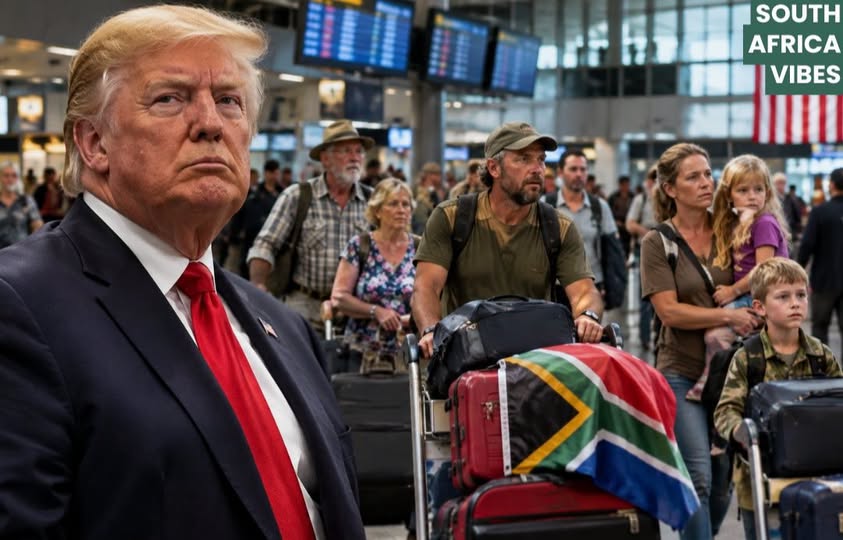
One of the issues attracting international attention following the American political development is the future of Afrikaners and the Trump administration’s refugee resettlement policy involving South Africa.
Trump has made Afrikaner-related issues a prominent part of his administration’s engagement with the South African government, particularly concerning allegations of racial discrimination, property rights and land reform policies.
On February 7, 2025, Trump signed an executive order directing the United States government to prioritise the resettlement of Afrikaners who claim to be victims of unjust racial discrimination in South Africa.
The executive order also directed American government agencies to halt or restrict assistance to South Africa, subject to specified exceptions.
The policy generated diplomatic tensions between Washington and Pretoria, with the South African government disputing the allegations of state-sponsored racial discrimination against Afrikaners.
The refugee resettlement initiative subsequently became an important aspect of Trump’s approach towards South Africa.
In a further development, a presidential determination issued in May 2026 provided for an increase in the refugee admission ceiling for the 2026 fiscal year to 17,500, with the additional admissions allocated among Afrikaners from South Africa under the administration’s policy.
Democratic control of Congress could now bring increased scrutiny of the programme, including questions about its implementation, eligibility requirements, funding and the broader political considerations behind the policy.
Democratic lawmakers could demand explanations from relevant government agencies and examine how refugee admissions are being administered.
They could also question whether the administration’s approach towards South Africa reflects established American foreign policy priorities and humanitarian considerations.
However, it would be premature to conclude that Democrats will automatically terminate the Afrikaner refugee resettlement programme or reverse Trump’s executive order.
Immigration and refugee policy involve both presidential authority and congressional oversight. While Congress can influence funding, legislation and administrative accountability, the president retains significant executive powers in foreign affairs and immigration administration.
For South Africa, the Democratic victory could introduce another dimension to its diplomatic and economic relationship with the United States.
Relations between Washington and Pretoria have experienced tensions under Trump’s administration, particularly over South Africa’s domestic policies, land reform, international diplomatic positions and allegations of discrimination.
A Democratic-controlled Congress could provide additional platforms for lawmakers seeking a different approach to relations with South Africa.
It could also increase congressional scrutiny of Trump’s decisions on foreign assistance, trade relations and diplomatic engagement with the South African government.
Trade remains particularly important because the United States is one of South Africa’s significant international trading partners.
Any changes in American trade policy, tariffs, investment arrangements or diplomatic engagement could have implications for South African businesses, exporters and the wider economy.
Nevertheless, a change in congressional control does not automatically translate into an immediate change in America’s foreign policy.
The president continues to exercise substantial authority over diplomatic relations, while Congress retains important constitutional powers over legislation, appropriations, trade regulation and oversight.
The 2026 midterm elections have fundamentally changed the political environment confronting Trump.
For the remainder of his presidency, he will have to navigate a Congress in which Democrats control both legislative chambers, creating a more challenging environment for passing major legislation and securing support for government priorities.
The Democratic victories also give the party an opportunity to investigate administration policies and position itself ahead of the next presidential election in 2028.
For Afrikaners following the refugee resettlement debate, the political development raises questions about whether the programme will continue under congressional scrutiny.
For South Africa, attention will turn to whether the changing balance of power in Washington will influence diplomatic relations, trade discussions and the future direction of bilateral cooperation.
Although Trump remains President of the United States, the Democratic takeover of Congress could significantly reshape the political and legislative environment in which his administration operates.
The central question now is whether Democrats will use their newly acquired congressional influence to review, challenge or maintain aspects of Trump’s policies towards South Africa.
Will the Afrikaner refugee resettlement programme continue under increased congressional scrutiny? Could Washington reconsider its diplomatic and economic approach towards Pretoria? And will the change in congressional leadership create opportunities for a fresh chapter in South Africa-US relations?
These questions are likely to remain central to discussions about America’s domestic politics, immigration policy and its relationship with South Africa in the months ahead.


