


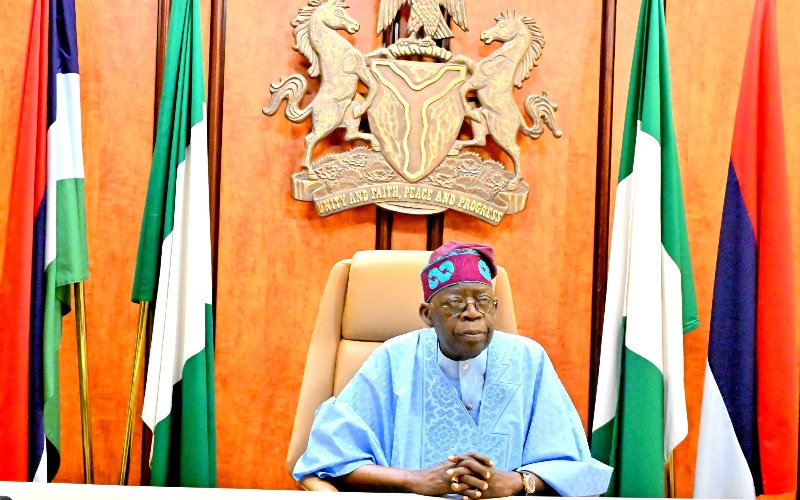
ABUJA: President Bola Ahmed Tinubu has delivered a nationwide Democracy Day address in which he reflected on Nigeria’s democratic journey, ongoing reforms, and national security challenges, while urging unity and resilience among citizens.
Speaking on Friday, June 12, 2026, the President described Nigeria’s 27 years of uninterrupted civilian rule as a milestone in the country’s political history, noting that democracy, though imperfect, remains a system that must be protected and strengthened.
The President said Nigeria has witnessed peaceful transitions of power since 1999, stressing that disputes are now resolved through legal and institutional means rather than violence.
He urged key democratic institutions—including the National Assembly, judiciary, media, and civil society—to continue acting as safeguards of the republic, encouraging constructive criticism and civic engagement.
Tinubu called on the Independent National Electoral Commission (INEC), security agencies, and political stakeholders to ensure peaceful and credible elections in Ekiti and Osun States.
He also urged Nigerians, especially young people, to actively participate in nation-building by staying in the country, working, innovating, and voting.
Addressing security concerns, the President acknowledged ongoing challenges such as kidnappings and insurgency, while assuring citizens of government action.
He revealed that the administration has:
- Declared a security emergency
- Approved recruitment of over 50,000 police officers and thousands of soldiers
- Allocated ₦5.41 trillion to defence and security in the 2026 budget
He further stated that security operations have significantly weakened terrorist networks, including operations in Borno State, and claimed a substantial reduction in terror-related deaths since 2015.
According to him, over 124,000 former fighters and dependents have surrendered under rehabilitation programmes since 2023.
The President issued a strong warning to bandits, kidnappers, and sponsors of violence, calling on them to surrender or face decisive military action.
He emphasized that criminality has no ethnic or religious identity and urged Nigerians to remain united against insecurity.
Tinubu paid tribute to the heroes of Nigeria’s democracy struggle, including Chief M.K.O. Abiola, Kudirat Abiola, Gani Fawehinmi, Bola Ige, Alfred Rewane, and several others who fought for democratic governance.
He described June 12 as a defining moment in Nigeria’s history that secured political freedom and strengthened national identity.
The President also defended his administration’s economic reforms, stating that they were necessary to stabilize public finances and attract investment.
He said reforms have led to:
- Improved government revenue allocation
- Increased investor confidence
- Growth in agriculture, energy, technology, and manufacturing sectors
He also noted progress in domestic refining and reduced dependence on imported petroleum products.
Tinubu acknowledged long-standing challenges in Nigeria’s electricity sector, including poor generation capacity and transmission losses.
He explained that the government has:
- Signed the Electricity Act allowing state participation in power generation
- Initiated a Presidential Power Sector Task Force
- Approved measures to address legacy debts and metering deficits
- Expanded rural electrification projects supported by international partners
He described electricity as a democratic dividend” that must reach all Nigerians.
The President highlighted ongoing infrastructure and agricultural initiatives, including:
- Deployment of 10,000 tractors through the National Agricultural Development Fund
- Export certification for over 1,000 SMEs
- A 21% growth in non-oil exports
However, he admitted that many Nigerians still face economic hardship and promised continued efforts to reduce inflation, improve food production, and create jobs.
Tinubu emphasized the importance of local government autonomy, stating that grassroots governance is essential for development and security.
He linked insecurity partly to weak local administration and reaffirmed the Renewed Hope Agenda as a framework for inclusive governance.
The President concluded by calling on Nigerians to remain united despite challenges, stressing that diversity remains a strength rather than a weakness.
He urged citizens to reject division, embrace hope, and work collectively toward national prosperity.
President Bola Ahmed Tinubu has delivered a nationwide Democracy Day address in which he reflected on Nigeria’s democratic journey, ongoing reforms, and national security challenges, while urging unity and resilience among citizens.
Speaking on Friday, June 12, 2026, the President described Nigeria’s 27 years of uninterrupted civilian rule as a milestone in the country’s political history, noting that democracy, though imperfect, remains a system that must be protected and strengthened.
The President said Nigeria has witnessed peaceful transitions of power since 1999, stressing that disputes are now resolved through legal and institutional means rather than violence.
He urged key democratic institutions—including the National Assembly, judiciary, media, and civil society to continue acting as safeguards of the republic, encouraging constructive criticism and civic engagement.
Tinubu called on the Independent National Electoral Commission (INEC), security agencies, and political stakeholders to ensure peaceful and credible elections in Ekiti and Osun States.
He also urged Nigerians, especially young people, to actively participate in nation-building by staying in the country, working, innovating, and voting.
Addressing security concerns, the President acknowledged ongoing challenges such as kidnappings and insurgency, while assuring citizens of government action.
He revealed that the administration has:
- Declared a security emergency
- Approved recruitment of over 50,000 police officers and thousands of soldiers
- Allocated ₦5.41 trillion to defence and security in the 2026 budget
He further stated that security operations have significantly weakened terrorist networks, including operations in Borno State, and claimed a substantial reduction in terror-related deaths since 2015.
According to him, over 124,000 former fighters and dependents have surrendered under rehabilitation programmes since 2023.
The President issued a strong warning to bandits, kidnappers, and sponsors of violence, calling on them to surrender or face decisive military action.
He emphasized that criminality has no ethnic or religious identity and urged Nigerians to remain united against insecurity.
Tinubu paid tribute to the heroes of Nigeria’s democracy struggle, including Chief M.K.O. Abiola, Kudirat Abiola, Gani Fawehinmi, Bola Ige, Alfred Rewane, and several others who fought for democratic governance.
He described June 12 as a defining moment in Nigeria’s history that secured political freedom and strengthened national identity.
The President also defended his administration’s economic reforms, stating that they were necessary to stabilize public finances and attract investment.
He said reforms have led to:
- Improved government revenue allocation
- Increased investor confidence
- Growth in agriculture, energy, technology, and manufacturing sectors
He also noted progress in domestic refining and reduced dependence on imported petroleum products.
Tinubu acknowledged long-standing challenges in Nigeria’s electricity sector, including poor generation capacity and transmission losses.
He explained that the government has:
- Signed the Electricity Act allowing state participation in power generation
- Initiated a Presidential Power Sector Task Force
- Approved measures to address legacy debts and metering deficits
- Expanded rural electrification projects supported by international partners
He described electricity as a “democratic dividend that must reach all Nigerians.
The President highlighted ongoing infrastructure and agricultural initiatives, including:
- Deployment of 10,000 tractors through the National Agricultural Development Fund
- Export certification for over 1,000 SMEs
- A 21% growth in non-oil exports
However, he admitted that many Nigerians still face economic hardship and promised continued efforts to reduce inflation, improve food production, and create jobs.
Tinubu emphasized the importance of local government autonomy, stating that grassroots governance is essential for development and security.
He linked insecurity partly to weak local administration and reaffirmed the Renewed Hope Agenda as a framework for inclusive governance.
The President concluded by calling on Nigerians to remain united despite challenges, stressing that diversity remains a strength rather than a weakness.
He urged citizens to reject division, embrace hope, and work collectively toward national prosperity.
President Bola Ahmed Tinubu has delivered a nationwide Democracy Day address in which he reflected on Nigeria’s democratic journey, ongoing reforms, and national security challenges, while urging unity and resilience among citizens.
Speaking on Friday, June 12, 2026, the President described Nigeria’s 27 years of uninterrupted civilian rule as a milestone in the country’s political history, noting that democracy, though imperfect, remains a system that must be protected and strengthened.
The President said Nigeria has witnessed peaceful transitions of power since 1999, stressing that disputes are now resolved through legal and institutional means rather than violence.
He urged key democratic institutions—including the National Assembly, judiciary, media, and civil society—to continue acting as safeguards of the republic, encouraging constructive criticism and civic engagement.
Tinubu called on the Independent National Electoral Commission (INEC), security agencies, and political stakeholders to ensure peaceful and credible elections in Ekiti and Osun States.
He also urged Nigerians, especially young people, to actively participate in nation-building by staying in the country, working, innovating, and voting.
Addressing security concerns, the President acknowledged ongoing challenges such as kidnappings and insurgency, while assuring citizens of government action.
He revealed that the administration has:
- Declared a security emergency
- Approved recruitment of over 50,000 police officers and thousands of soldiers
- Allocated ₦5.41 trillion to defence and security in the 2026 budget
He further stated that security operations have significantly weakened terrorist networks, including operations in Borno State, and claimed a substantial reduction in terror-related deaths since 2015.
According to him, over 124,000 former fighters and dependents have surrendered under rehabilitation programmes since 2023.
The President issued a strong warning to bandits, kidnappers, and sponsors of violence, calling on them to surrender or face decisive military action.
He emphasized that criminality has no ethnic or religious identity and urged Nigerians to remain united against insecurity.
Tinubu paid tribute to the heroes of Nigeria’s democracy struggle, including Chief M.K.O. Abiola, Kudirat Abiola, Gani Fawehinmi, Bola Ige, Alfred Rewane, and several others who fought for democratic governance.
He described June 12 as a defining moment in Nigeria’s history that secured political freedom and strengthened national identity.
The President also defended his administration’s economic reforms, stating that they were necessary to stabilize public finances and attract investment.
He said reforms have led to:
- Improved government revenue allocation
- Increased investor confidence
- Growth in agriculture, energy, technology, and manufacturing sectors
He also noted progress in domestic refining and reduced dependence on imported petroleum products.
Tinubu acknowledged long-standing challenges in Nigeria’s electricity sector, including poor generation capacity and transmission losses.
He explained that the government has:
- Signed the Electricity Act allowing state participation in power generation
- Initiated a Presidential Power Sector Task Force
- Approved measures to address legacy debts and metering deficits
- Expanded rural electrification projects supported by international partners
He described electricity as a democratic dividend that must reach all Nigerians.
The President highlighted ongoing infrastructure and agricultural initiatives, including:
- Deployment of 10,000 tractors through the National Agricultural Development Fund
- Export certification for over 1,000 SMEs
- A 21% growth in non-oil exports
However, he admitted that many Nigerians still face economic hardship and promised continued efforts to reduce inflation, improve food production, and create jobs.
Tinubu emphasized the importance of local government autonomy, stating that grassroots governance is essential for development and security.
He linked insecurity partly to weak local administration and reaffirmed the Renewed Hope Agenda as a framework for inclusive governance.
The President concluded by calling on Nigerians to remain united despite challenges, stressing that diversity remains a strength rather than a weakness.
He urged citizens to reject division, embrace hope, and work collectively toward national prosperity.


