


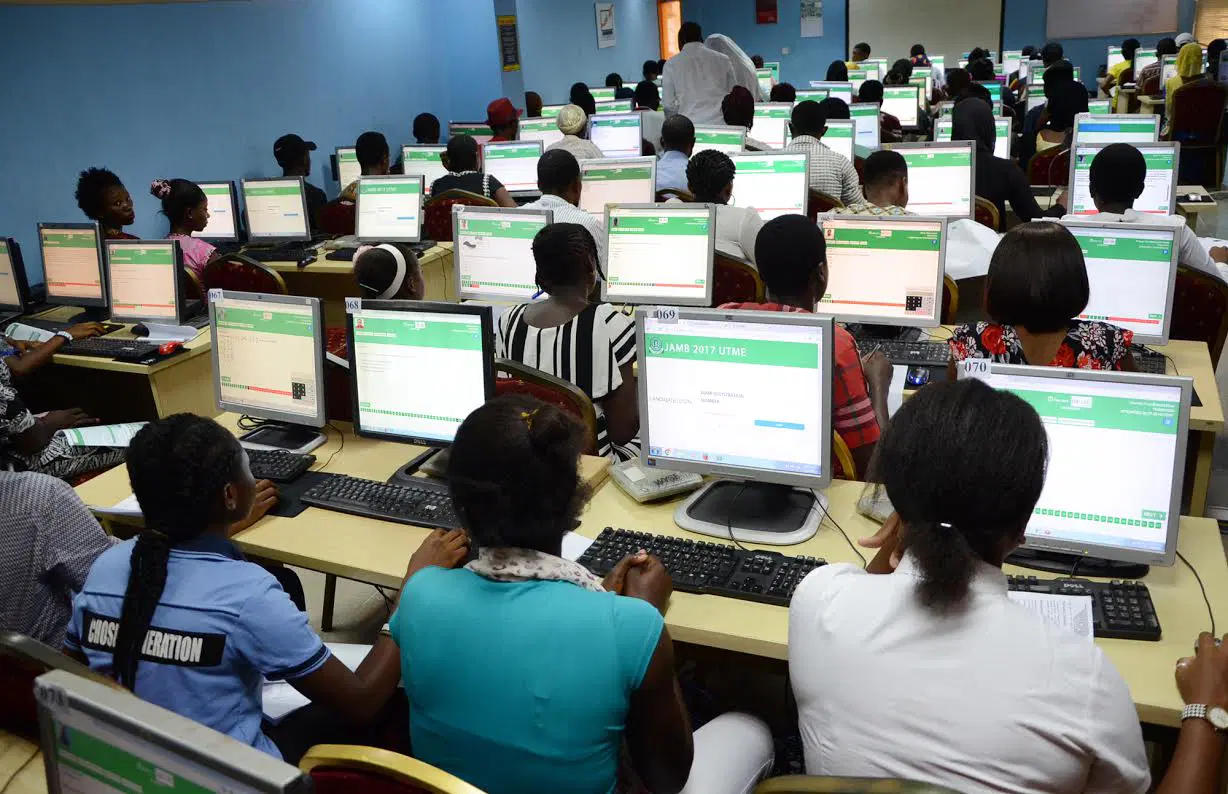
ABUJA: The Nigeria Union of Teachers has rejected the Federal Government’s recent decision to exempt candidates seeking admission into the Nigeria Certificate in Education programme from writing the Unified Tertiary Matriculation Examination, saying the move could worsen the declining standards in the country’s teaching profession.
The union described the policy as a dangerous step that may further lower the quality of teachers entering classrooms across Nigeria, at a time when the education sector is already grappling with multiple challenges.
Speaking in Abuja during a sensitisation workshop for teachers organised by 21st Century in partnership with the Teachers Registration Council of Nigeria, NUT President Audu Amba said the teaching profession should attract some of the best and brightest students in the country rather than becoming an option for those unable to secure admission into universities.
Amba lamented that many high-performing candidates now prefer universities and polytechnics, while colleges of education are increasingly seen as alternative institutions for students who did not meet the requirements for other tertiary programmes. According to him, this trend poses a serious threat to the future of basic education, as the quality of teachers produced from colleges of education directly affects learning outcomes at the primary and secondary school levels.
He argued that instead of removing the UTME requirement, the government should strengthen admission standards for colleges of education by ensuring that only candidates with strong academic performance are admitted. He maintained that the nation’s education system can only improve if teaching is repositioned as a prestigious career capable of attracting top students.
Also speaking at the event, the Registrar of the Teachers Registration Council of Nigeria, Ronke Soyombo, stressed the need for teachers to be equipped for the realities of a rapidly changing digital economy. She said modern educators must be innovative, technologically skilled and professionally competent to prepare students for future workplaces.
Representing the Minister of Education, Tunji Alausa, Dr Iyabo Ali called for regular capacity building for teachers, noting that continuous training in digital tools and innovative teaching methods is now essential for global competitiveness.
Other stakeholders at the event, including Speaker of the House of Representatives Tajudeen Abbas and Senate Minority Leader Abba Moro, also urged stronger collaboration among education stakeholders to improve the sector.
Senator Moro, however, expressed concern over the deteriorating state of schools nationwide, revealing that a large percentage of learning institutions still lack basic infrastructure and a conducive environment for teaching and learning. He warned that poor working conditions for teachers and inadequate facilities in schools remain major obstacles to improving Nigeria’s education system.