

The British government has declared that it will remain neutral in Nigeria’s 2027 general elections, insisting that it has no preferred presidential candidate or political party ahead of the polls.
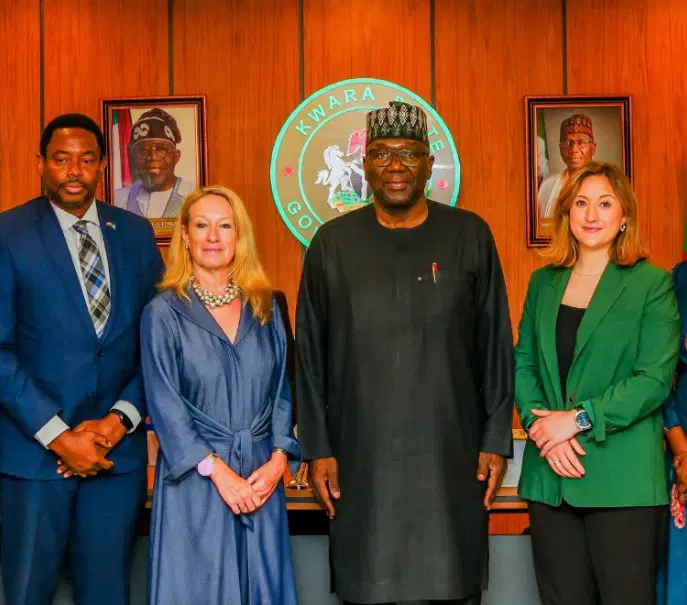
This position was made known by Gill Lever, the British Deputy High Commissioner in Nigeria, during a courtesy visit to AbdulRahman AbdulRazaq at the Government House in Ilorin. AbdulRazaq also serves as chairman of the Nigeria Governors’ Forum.
Lever said the United Kingdom’s interest lies solely in seeing a free, peaceful and credible electoral process in Nigeria, stressing that the British government would not interfere in the country’s democratic decisions or attempt to influence how Nigerians vote.
According to her, the UK has no intention of supporting any particular candidate or party in the next election cycle. She emphasized that the British government values democratic principles and wants to see elections that are inclusive, transparent and respectful of institutions.
The envoy noted that credible elections are not only essential for democracy but also important for economic stability, investor confidence and national development. She added that peaceful transitions of power strengthen governance and create a better environment for partnerships between countries.
During the visit, Lever also praised Governor AbdulRazaq’s administration for what she described as notable progress in gender inclusion and women’s participation in governance in Kwara State. She commended the governor for promoting female representation in public leadership and said the state had emerged as a strong example of gender equity in Nigeria.
She further disclosed that the British government is collaborating with several Nigerian states on programmes aimed at improving digital skills among young people, especially in the technology sector.
According to her, these initiatives are designed to equip Nigerian youths with relevant tools for the modern economy and to support innovation-driven growth.
Responding, Governor AbdulRazaq said his administration had transformed key sectors since assuming office in 2019. He listed improvements in education, healthcare, agriculture and road infrastructure, adding that his government inherited salary arrears, unpaid pensions and poor public facilities.
The governor said the state had cleared outstanding salary obligations, improved school infrastructure and expanded access to tertiary education through new campuses of Kwara State University.
He also revealed plans to increase the state’s minimum wage to N100,000 and said Kwara would have five teaching hospitals by 2027 to address manpower shortages in the health sector.