
LAGOS: For decades, many of Nigeria’s most influential political figures have occupied some of the highest offices in the country. They have served as governors, ministers, senators, lawmakers, and presidents, wielding enormous influence over policies, budgets, and the future of the nation’s education system.
Yet one uncomfortable question continues to resonate among many Nigerians: Why have so many of these leaders chosen to educate their own children abroad instead of in the public universities they supervised and funded?
This question has become even more relevant as the Federal Government promotes student loan programmes as a solution to the growing challenge of access to higher education. While financial assistance can help deserving students, many critics argue that loans alone cannot solve the deeper structural problems confronting Nigeria’s education sector.
The concern is not simply about paying tuition fees. It is about the quality of education, learning facilities, research opportunities, infrastructure, lecturers’ welfare, and the confidence public officials themselves have in Nigerian universities.
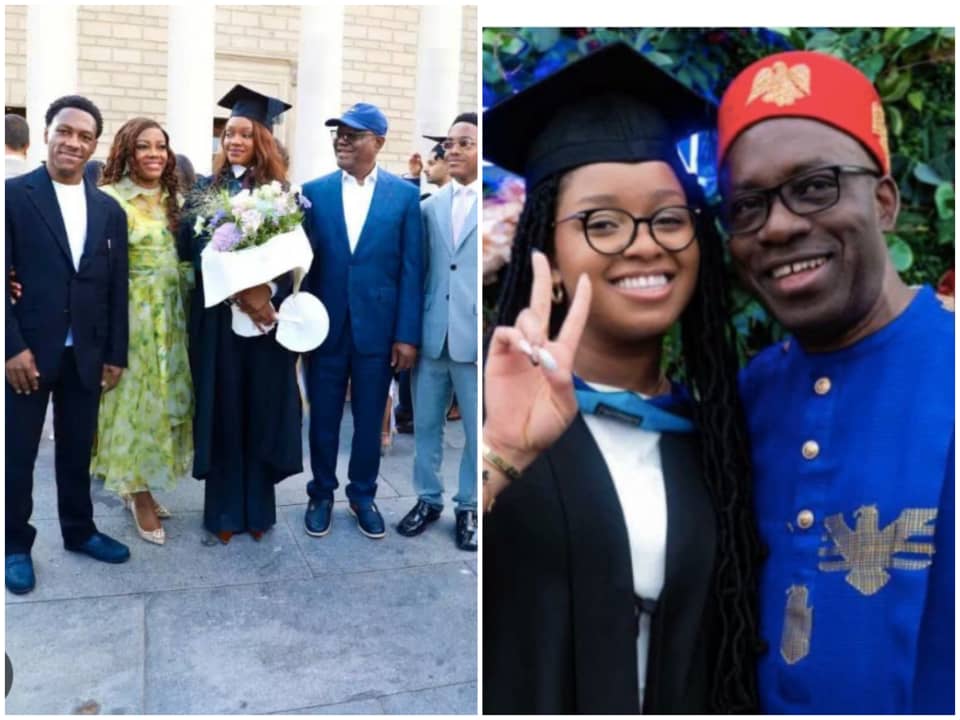
Many of the country’s leading politicians including President Bola Ahmed Tinubu, Federal Capital Territory Minister Nyesom Wike, Anambra State Governor Charles Soludo, Works Minister David Umahi, and several others have held positions that gave them opportunities to influence educational development. Yet, like many members of Nigeria’s political class, their children reportedly attended prestigious universities in the United Kingdom, the United States, and other foreign countries rather than public universities at home.
For many Nigerians, this presents a striking contradiction.
If those entrusted with managing the nation’s education system do not consider local public universities suitable for their own families, critics ask why ordinary citizens should be expected to believe that the system is working effectively.
Supporters of the student loan initiative argue that it will expand access to higher education for students from low-income backgrounds. However, opponents insist that affordable financing cannot compensate for years of underinvestment, recurring strikes, deteriorating infrastructure, overcrowded classrooms, outdated laboratories, inadequate research funding, and declining global competitiveness.
Across Nigeria, countless families continue to struggle under the weight of rising inflation, increasing living costs, unemployment, and shrinking household incomes. For many parents, taking on debt to finance an education within a struggling university system raises understandable concerns about long-term value and graduate employability.
Critics therefore argue that the country’s priority should not simply be lending money to students but rebuilding confidence in public education itself. They believe government should focus on modern classrooms, well-equipped laboratories, digital learning facilities, improved staff welfare, stronger research funding, campus security, and stable academic calendars.
Nigeria once produced universities that attracted students from across Africa. Institutions such as the University of Ibadan, Ahmadu Bello University, the University of Nigeria, Nsukka, and Obafemi Awolowo University earned international recognition for academic excellence. Many believe those standards can be restored through sustained investment, accountability, and political commitment.
The broader debate ultimately extends beyond student loans. It raises questions about governance, priorities, and equal opportunity. Public resources are expected to serve the collective interest by building institutions capable of providing quality education regardless of a citizen’s social or economic background. When political leaders rely on foreign educational systems for their own families while public institutions continue to struggle, many Nigerians perceive a widening gap between leadership and the realities faced by ordinary citizens.
As conversations about Nigeria’s future intensify ahead of the 2027 elections, education is likely to remain one of the defining issues. Many citizens are calling for leaders who will demonstrate confidence in public institutions by investing in them, strengthening them, and ensuring they are good enough for every Nigerian child not only those without alternatives.
For these critics, genuine educational reform will not be measured solely by the availability of student loans. It will be measured by the day when every Nigerian leader can proudly send their own children to public universities at home because those institutions have become globally competitive, properly funded, and worthy of the nation’s highest aspirations.