


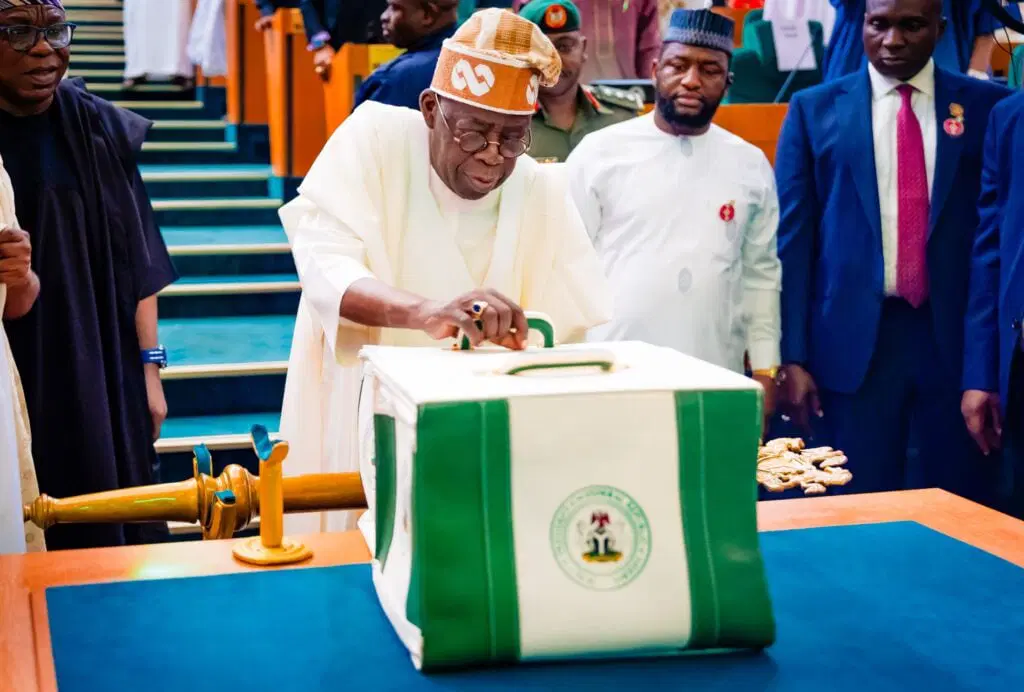
Nigeria has failed to meet the U.S. government’s minimum fiscal transparency standards for the second consecutive year, with the U.S. Department of State reporting that the country made no significant progress in improving the openness and reliability of its public finances in 2025.
The finding was contained in the 2026 Fiscal Transparency Report, which assessed 139 governments and the Palestinian Authority. Of the countries evaluated, 73 met the minimum requirements, while 67 failed. Only 14 of those that failed were judged to have made significant progress, leaving Nigeria among 53 countries where no significant progress was recorded.
The assessment comes amid continuing concerns over budget implementation in Nigeria, particularly as the Federal Government is operating the 2024, 2025 and 2026 budgets concurrently.
According to the State Department, the assessment was based on information obtained from the U.S. Embassy in Abuja, Nigerian federal agencies, international organisations and civil society groups between January 1 and December 31, 2025.
The report raised serious concerns about the quality and completeness of Nigeria’s budget documents, saying they failed to provide a substantially complete picture of government revenues and expenditures.
It noted that the budget documents did not sufficiently break down spending, including expenditure relating to executive offices. A transparent budget, according to the U.S. assessment, should clearly show government income and expenditure by ministry, identify revenue sources—including oil and non-oil revenue—and disclose allocations to state-owned enterprises and special accounts.
The State Department also identified a credibility problem in budget implementation, noting that actual government revenues and expenditures did not reasonably correspond with the figures contained in the enacted budget.
The latest assessment represents a deterioration from the previous year. In its 2025 report, the U.S. government had said Nigeria’s budget documents provided a substantially complete picture of planned government revenues and expenditures and were generally reliable.
Although Nigeria published its enacted budget and end-of-year report online, the U.S. government said the executive budget proposal was not published within the required timeframe.
Under the U.S. transparency benchmark, the executive budget proposal should be publicly available at least one month before the beginning of the fiscal year and before legislative approval, allowing citizens and lawmakers sufficient time to scrutinise the proposals.
The State Department also questioned the independence and effectiveness of Nigeria’s supreme audit institution, the Office of the Auditor-General for the Federation.
According to the report, the audit office did not meet international standards for institutional independence and had not published substantive audit reports as required.
The office is expected to examine the executed budget, verify annual financial statements and publish its findings within 12 months of the end-of-year report. However, the U.S. assessment said that although the Auditor-General had access to the entire executed budget, the required reports had not been published.
The report warned that without an independent audit institution and publicly available audit findings, citizens and lawmakers would lack an important mechanism for holding government accountable for the management of public funds.
Public procurement was another major area of concern.
The U.S. government said Nigeria did not provide sufficiently accessible information about public procurement contracts, limiting public scrutiny of how government contracts were awarded and implemented.
On natural resources, the report acknowledged that Nigeria had established legal criteria and procedures for awarding contracts and licences and generally followed the existing regulations.
However, it said basic information about concessions—including the geographical area involved, the resource concerned, duration of the concession and the company awarded the contract—was not made public after decisions were taken.
The report also introduced a stricter requirement concerning sovereign borrowing, stating that governments should publicly disclose the terms and conditions of sovereign loans, including liabilities and collateralised assets.
While Nigeria was recognised for making information on debt obligations, including debt held by major state-owned enterprises, publicly available, the State Department did not determine whether the terms of those loans met the new transparency standard.
The U.S. government said fiscal transparency goes beyond administrative compliance, arguing that it is essential to effective public financial management.
According to the report, transparent fiscal information enables citizens to understand how taxes and other public revenues are spent, strengthens market confidence, reduces corruption risks and supports fairer conditions for businesses.
The State Department, however, stressed that failing its fiscal transparency assessment did not automatically mean that a country had significant corruption.
It warned, nevertheless, that inadequate transparency could create an environment conducive to corruption, unfair business practices, financial crimes and predatory lending.
Despite the criticisms, the report identified areas where Nigeria met its basic transparency requirements.
The country was credited with making its enacted budget and end-of-year report widely accessible to the public, including online.
Nigeria also received credit for publishing information on debt obligations, including the liabilities of major state-owned enterprises.
In addition, the State Department noted that Nigeria’s sovereign wealth fund operates under a sound legal framework and discloses its funding sources and general approach to withdrawals.
However, the U.S. government said these achievements were insufficient to move Nigeria above the minimum transparency threshold.
The State Department recommended several measures to improve Nigeria’s fiscal transparency.
It called on the Federal Government to publish the executive budget proposal online early enough to allow meaningful public scrutiny and to provide comprehensive details of government revenues and expenditures by ministry and source.
Washington also urged Nigeria to clearly disclose spending on executive offices and ensure that actual government revenues and expenditures correspond with the approved budget, with explanations provided for significant deviations.
Other recommendations included strengthening the independence of the Auditor-General’s office, publishing audit reports and making details of public procurement contracts readily accessible.
Globally, 73 governments met the minimum requirements, while 67 failed to do so.
Among those that failed were major economies including China, Egypt, Saudi Arabia, Pakistan and Ukraine.
The 14 countries judged to have made significant progress included Bangladesh, Cameroon, the Central African Republic, Chad, the Dominican Republic, Ecuador, Ethiopia, Laos, Lebanon, Liberia, Libya, Niger, São Tomé and Príncipe, and Senegal.
Nigeria was placed alongside countries including Algeria, Angola, Uganda, Tanzania, The Gambia, Guinea, Guinea-Bissau, Mali, Sierra Leone and Togo, which were also assessed as having made no significant progress.
The assessment comes as debate continues over provisions in Nigeria’s 2026 budget, including allocations for religious infrastructure, constituency projects, projects appearing across multiple government agencies and large lump-sum provisions described as special presidential interventions or miscellaneous spending.
Responding to the report, Special Adviser to the President on Media and Public Communication, Sunday Dare, said fiscal transparency, accountability and effective public financial management remained priorities of the Federal Government.
Dare said the U.S. assessment should be properly contextualised, noting that it measured Nigeria against specific minimum requirements relating particularly to the disclosure of national budget information, government contracts and natural-resource licences.
He stressed that the assessment should not be interpreted as a comprehensive evaluation of all fiscal and public financial management reforms underway in Nigeria.
According to him, the government has introduced measures including the Open Treasury initiative, public budget documentation, debt disclosures and public procurement reforms. He added that digital procurement systems were also being strengthened to improve access to and the reliability of public financial information.
Dare said the report should instead be viewed as an external benchmark that could help the government strengthen existing reforms.
He reaffirmed the administration’s commitment to improving fiscal reporting, strengthening audit institutions, expanding access to procurement information and ensuring that citizens, investors and other stakeholders have greater visibility into how public resources are managed.
BudgIT’s Country Director, Vahyala Kwaga, also agreed with the findings, particularly the concerns over budget implementation and the independence of Nigeria’s audit institution.
Kwaga said the Federal Government’s budget was relatively clear in terms of revenue and expenditure composition, but argued that information on actual budget implementation had remained unclear for almost a year.
He also questioned the lack of consolidated reporting on government earnings and expenditure, particularly given Nigeria’s adoption of International Public Sector Accounting Standards.
Kwaga further argued that the Office of the Auditor-General for the Federation lacked sufficient independence and criticized the continued reliance on an old audit framework.
He also faulted the use of broad capital expenditure headings and raised concerns over projects introduced through repeal and re-enactment legislation without what he described as adequate legislative scrutiny.
On procurement, he said contract details were generally not publicly available and raised concerns about the lack of publicly accessible procurement journals, bid-opening information and evidence of competitive bidding.
He also said debt information was available but that necessary debt sustainability analyses had not been published since 2023.
The U.S. assessment therefore leaves the Federal Government facing renewed pressure to improve the openness, credibility and accountability of its fiscal operations as Nigeria approaches the 2027 budget cycle.


