


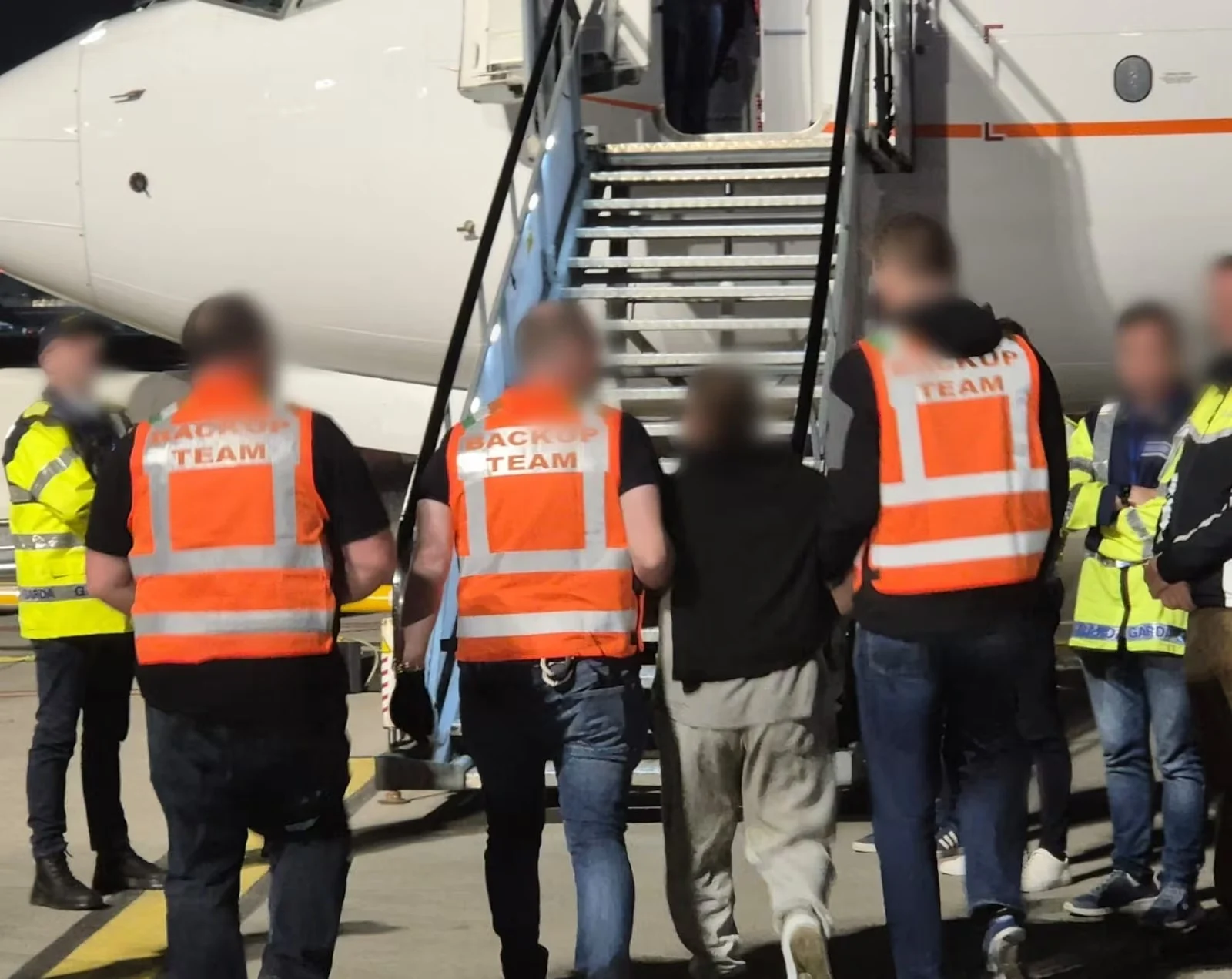
The Irish government has deported 42 South African nationals living illegally in the country, spending an initial €735,000 (about $845,000) on the operation.
According to The Irish Times, the group, made up of nine men, 18 women and 15 children travelling as family units, departed Dublin Airport aboard a chartered flight on Thursday and arrived in Johannesburg on Friday morning.
The operation marked Ireland’s fourth mass deportation flight of 2026.
The deportees were removed following orders issued by the Garda National Immigration Bureau. Such orders are enforced when individuals are found to be residing illegally in Ireland and decline the option of voluntary return to their home countries.
Irish authorities also disclosed that two of the deported individuals had previous criminal convictions in the country.
South Africa is classified by Ireland as a safe country of origin, meaning citizens seeking asylum must provide documentary evidence showing that they face direct threats to their safety before they can qualify for international protection.
Irish Minister for Justice, Jim O’Callaghan, stressed that while most South Africans residing in Ireland are legally present, strict enforcement of immigration laws remains necessary.
Our immigration system must be rules-based and robust, O’Callaghan said. The enforcement aspects of our laws, including deportation orders, are an essential requirement for the system to work effectively and to ensure there is public confidence in the application of our legislation in this area.
He noted that the €735,000 figure represents only the initial cost of Thursday’s operation, adding that the final expenses would become clear once the invoicing process is completed.
The latest deportation exercise brings the total number of people expelled through charter flights in 2026 to 172. Three earlier operations had resulted in the removal of 130 people, including 67 European Union citizens deported on grounds of criminality.
The development highlights the growing migration pressures confronting South Africa.
While its citizens are increasingly facing stricter immigration enforcement and forced returns from European countries such as Ireland, the country is simultaneously grappling with anti-immigrant sentiment and campaigns targeting undocumented migrants.
With unemployment exceeding 30 per cent, South Africa has witnessed rising anti-foreigner protests ahead of an unofficial June 30 deadline reportedly issued by local vigilante groups. The situation has forced thousands of undocumented African migrants to move toward border posts amid fears for their safety.
The crisis has also affected Nigerians living in South Africa. So far, 258 Nigerians have been evacuated, but more than 742 registered citizens remain stranded across different provinces, struggling with hunger and homelessness due to delays in arranging flights.
Nigeria’s Minister of Foreign Affairs, Ambassador Bianca Odumegwu-Ojukwu, recently warned that the Federal Government may be compelled to review the operations of more than 120 South African companies in Nigeria including MTN, MultiChoice and Stanbic if attacks and harassment against Nigerians in South Africa persist.
As international attention grows, South African authorities have begun expressing concerns about the economic consequences of the ongoing tensions.
South Africa’s Minister of Justice and Constitutional Development, Mmamoloko Kubayi, revealed during a recent briefing that South African entertainers are already losing concert bookings across the continent, while businesses owned by South Africans abroad are also suffering because of growing resentment over the treatment of migrants.
The remarks underscore the widening diplomatic and economic implications of migration disputes, with both South Africa and Ireland tightening immigration enforcement amid increasing public scrutiny