


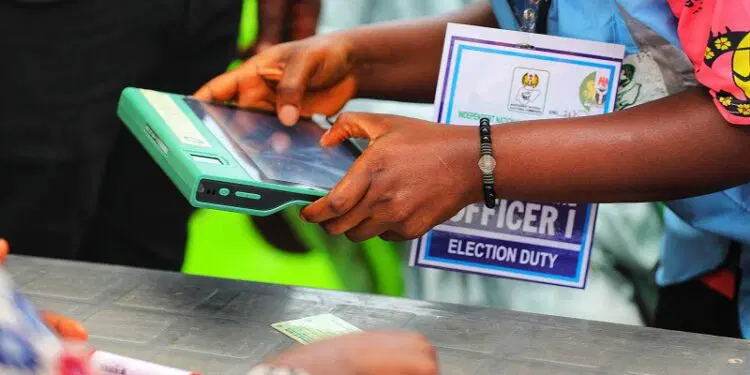
The Independent National Electoral Commission (INEC) is conducting a nationwide mock accreditation and result transmission exercise today, November 28, across the 36 states and the Federal Capital Territory (FCT), as part of preparations for the 2027 general elections.
The exercise is designed to test the commission’s upgraded Bimodal Voter Accreditation System (BVAS), the INEC Result Viewing Portal (IReV) and its election security arrangements ahead of the polls scheduled to begin in January.
INEC Chairman, Professor Joash Amupitan, announced the exercise on Thursday at the Strategic Election Security Conference organised by the commission in collaboration with the Office of the National Security Adviser (ONSA) in Abuja.
He explained that the exercise would allow the commission to assess the performance of its new technology under real-life election conditions, particularly its ability to detect accreditation and result-related irregularities.
According to Amupitan, the upgraded IReV platform includes stricter validation measures designed to automatically flag arithmetic inconsistencies and over-voting.
He added that the exercise would also test the readiness of security agencies and their ability to respond to challenges that could arise during the actual elections.
The INEC chairman disclosed that the commission had procured 57,000 new BVAS devices for the 2027 general elections and would deploy more than 1.41 million ad hoc personnel across the country.
He said the machines had been configured to accommodate a reduced threshold of 850 voters per device during the elections.
The commission is expected to deploy the equipment across the country’s 177,299 polling units for the presidential and National Assembly elections scheduled for January 16, 2027.
Governorship and State Houses of Assembly elections are scheduled to follow on February 6, 2027.
Amupitan stressed that the success of the elections would depend not only on the performance of technology but also on effective coordination among electoral officials, security agencies and other stakeholders.
He urged Resident Electoral Commissioners and state Commissioners of Police to participate fully in the November 28 exercise.
The INEC chairman specifically asked them to test communication channels, assess emergency response times around designated polling centres and identify logistical or security gaps that could affect election operations.
He described the exercise as an important opportunity to identify and address potential problems before election day.
INEC had earlier released the list of polling units selected for the nationwide mock accreditation and result upload exercise.
A total of 17,656 polling units across the 36 states and the FCT have been selected to participate in the exercise.
The published list contains details of the selected locations, including states, local government areas, wards, polling unit numbers and delimitation codes.
Abia State has 368 selected polling units, while Adamawa has 452.
In the Federal Capital Territory, 124 polling units have been selected across the six area councils. Abaji, Bwari, Gwagwalada, Kuje and Kwali each have 20 selected polling units, while the Abuja Municipal Area Council has 24.
According to the commission, the exercise will simulate the presidential election, with participating polling units expected to open at 8:30 a.m. and accreditation continuing until 2:30 p.m.
The commission has maintained that the purpose of the mock exercise is to identify technical, operational and security problems early enough for corrective measures to be taken.
It explained that any fault discovered during the exercise should be regarded as part of the testing process rather than a failure, provided it is properly documented and addressed before the actual elections.
With the 2027 general elections approaching, the performance of the BVAS and IReV platforms remains an important issue for voters and political stakeholders, particularly regarding accreditation, transparency and the electronic transmission and viewing of election results.
The outcome of the nationwide exercise is expected to provide INEC with useful information on the readiness of its equipment, personnel and security arrangements ahead of the polls.