


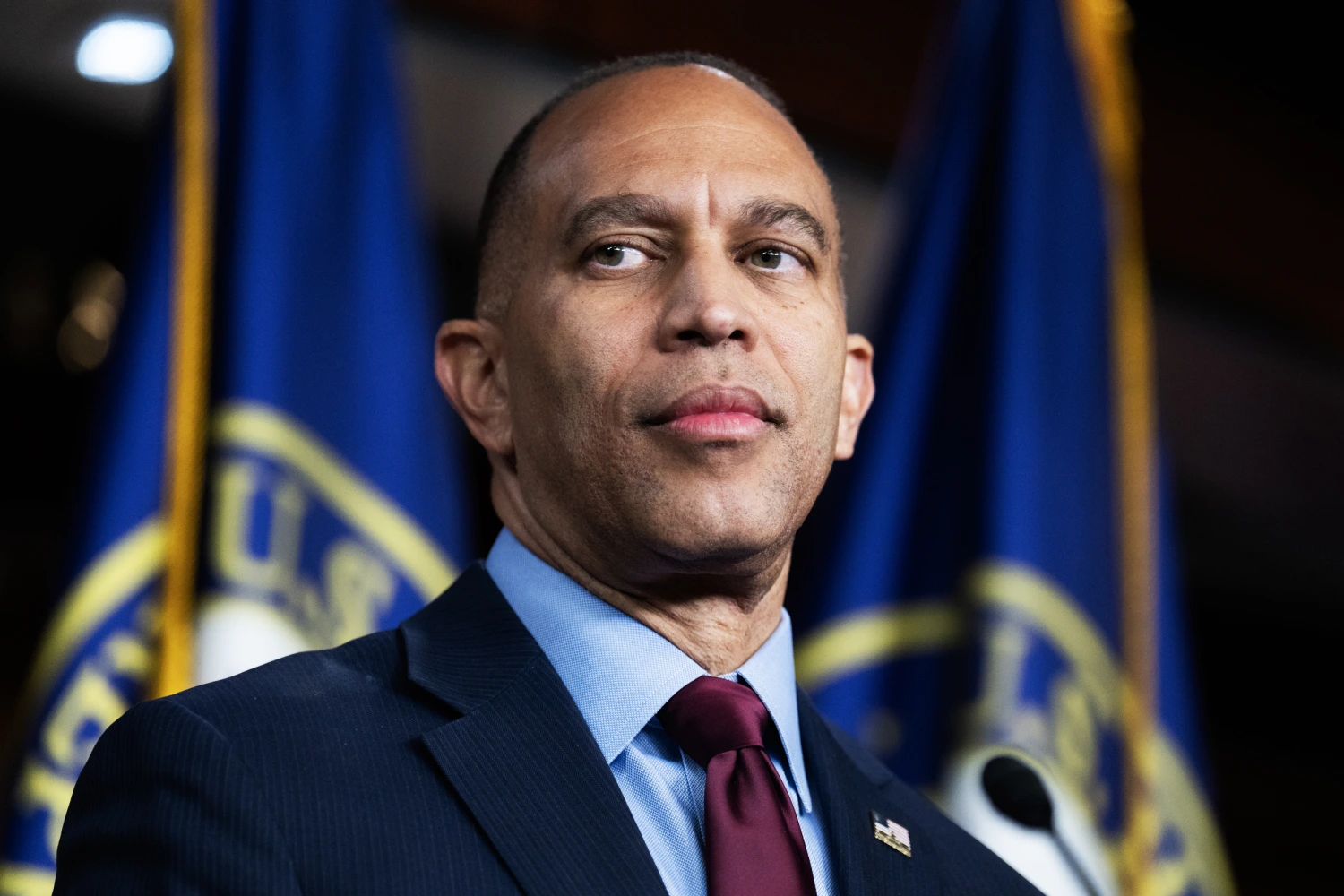
United States Representative Hakeem Jeffries has secured the Democratic nomination for Speaker of the House after winning an overwhelming 251–11 vote in the party’s caucus, placing him in a strong position ahead of the formal leadership election scheduled for January 3, 2027.
The vote took place on Wednesday, November 18, 2026, following the Democrats’ victory in the midterm elections, which is projected to give the party 259 seats in the House of Representatives.
Jeffries, a Democrat from New York, would become the first Black person to serve as Speaker of the US House if he secures the required votes when the new Congress convenes in January.
However, Wednesday’s outcome was an internal Democratic Party nomination and not the final election of the Speaker. The full House must still vote on the position.
According to reports on the caucus proceedings, 262 lawmakers participated in the secret ballot, with 251 supporting Jeffries and 11 voting against him. The identities of those who opposed his nomination have not been disclosed.
Jeffries reportedly requested a recorded tally rather than allowing the nomination to proceed through an uncontested voice vote or acclamation.
The decision gave Democratic lawmakers an opportunity to register their positions through a secret ballot, while providing a clear indication of the level of support for his leadership.
Although some progressive members and activists had called for a change in the party’s leadership, no rival emerged to challenge Jeffries for the nomination.
His victory follows his emergence as the party’s House leader in 2023, when he succeeded former Speaker Nancy Pelosi in the leadership position.
At 56, Jeffries represents a generational transition within the Democratic leadership and has spent recent months campaigning across the country as his party sought to regain control of the House.
Before the nomination, he reportedly held separate discussions with leaders of the Congressional Progressive Caucus, the New Democrat Coalition and the Blue Dog Democrats, groups representing different ideological and policy interests within the party.
The projected Democratic majority is expected to give Jeffries a significant advantage ahead of the January election.
Under the reported projections, Democrats are set to control 259 seats, while Jeffries would need 218 votes to become Speaker.
The size of the projected majority could provide him with room to accommodate disagreements among party members, although securing support from lawmakers with different political and policy priorities may still require negotiations.
His position contrasts with the difficulties encountered by former Republican Speaker Kevin McCarthy during the 2023 leadership election. McCarthy needed 15 rounds of voting before securing the position after Republicans won a narrow House majority.
Jeffries has placed affordability at the centre of his political message, focusing on the financial pressures facing American households and the rising cost of everyday living.
His nomination now raises expectations that Democrats will seek to translate their campaign promises into legislative proposals when the new Congress begins.
A larger majority could make it easier for the party to advance its legislative priorities, but disagreements between progressive and moderate Democrats could influence negotiations over specific bills.
If elected Speaker, Jeffries would also become second in the US presidential line of succession, after Vice President JD Vance.
While Democrats prepare for a change in House leadership, Republicans have selected Ohio Representative Jim Jordan as their next House minority leader.
Outgoing Republican Speaker Mike Johnson is leaving the party’s leadership following the midterm defeat.
Other Democratic lawmakers are also expected to take up key leadership positions. Katherine Clark is expected to become majority leader, Pete Aguilar majority whip, while Joe Neguse is expected to serve as assistant speaker.
Ted Lieu has already been unanimously elected chairman of the Democratic caucus.
Meanwhile, Democrats are expected to hold further leadership elections, including a contest between Sara Jacobs and Lauren Underwood for the position of caucus vice chair.
In the Senate, Maryland Senator Chris Van Hollen is challenging Chuck Schumer’s bid to return as Democratic majority leader, with that contest expected to take place next month.
The final decision on the speakership will come on January 3, 2027, when the new Congress convenes and members elect the next Speaker of the House.
Jeffries must secure the necessary votes on the House floor before he can formally succeed Johnson.
For now, his 251–11 victory has established his position as the Democratic Party’s nominee, but the January vote remains the decisive step towards making history as the first Black Speaker of the US House of Representatives.


