
ABUJA: The Federal Government has declared that the National Examinations Council (NECO) Computer-Based Test (CBT) for the 2026 Senior School Certificate Examination (SSCE) is significantly reducing examination malpractice, describing its successful rollout as a major step toward restoring credibility to Nigeria’s public examination system.
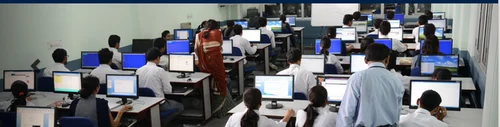
Minister of State for Education, Prof. Suwaiba Ahmad, made the remarks on Wednesday while monitoring the ongoing CBT examination at Redeemers Teap School and Anglican Girls’ Grammar School in Abuja.
According to the minister, reports from examination centres and direct interactions with candidates indicated that the exercise had been smooth, transparent and largely free of the challenges often associated with traditional paper-based examinations.
Prof. Ahmad said many candidates expressed satisfaction with the new examination format, describing it as easier to navigate, more efficient and fairer than the conventional system.
She noted that students confirmed the examinations commenced on schedule without technical disruptions and that the randomisation of questions ensured each candidate received a unique set of questions, making cheating and collusion extremely difficult.
I spoke with many of the students, and most of them said they preferred the CBT examination. They also confirmed that they had not seen the examination questions before the test and that each candidate answered a different set of questions randomly,” she said.
She added that the CBT model is one of the most effective measures introduced to combat examination malpractice. The CBT makes communication between candidates impossible and is one of the most effective ways of tackling examination malpractice, the minister stated.
Despite the positive outcome, Ahmad assured Nigerians that the Federal Government would not rush the nationwide transition to computer-based examinations until adequate infrastructure is available across the country.
She explained that government is collaborating with the National Assembly, state governments, private investors and other stakeholders to expand CBT facilities and ensure that every candidate has equal access to the new system.
We will not begin the full transition until everything is in place because we do not want to put any student at a disadvantage,” she said.
The minister stressed that the adoption of CBT would further strengthen the integrity of public examinations by ensuring that students succeed based solely on merit.
Also speaking during the monitoring exercise, NECO Registrar, Prof. Ibrahim Wushishi, disclosed that the council had experienced no technical issues since the commencement of the examination. He described the exercise as one of the smoothest in the council’s history.
They assured me that since the commencement of this year’s examination, there has been no technical glitch. The examinations started on time, with no network failures or operational challenges, Wushishi said.
The NECO Registrar revealed that 1,378,048 candidates registered for the 2026 Senior School Certificate Examination, with female candidates slightly outnumbering their male counterparts.
He attributed the growing female participation to sustained government investment in promoting girl-child education across the country.
Wushishi also disclosed that NECO currently operates about 10 CBT centres in the Federal Capital Territory and expressed optimism that the 2026 SSCE results would be released in the first week of September, allowing candidates to proceed with the admission process without delay.
He noted that the introduction of randomised questions had significantly reduced opportunities for examination malpractice while improving public confidence in NECO examinations.
Some candidates who participated in the examination also applauded the new system.
A candidate at Redeemers Teap School, Ambassador Alabi, described the CBT examination as seamless, efficient and more convenient than the traditional paper-based format.
Similarly, Isaac Abioro, who sat the examination at Anglican Girls’ Grammar School, said the exercise was smooth and free from technical difficulties.
The Principal of Anglican Girls’ Grammar School, Mrs. Nkiruka Nwafor, welcomed the transition to CBT, describing it as a necessary step in preparing students for a technology-driven future.
She explained that the school had already introduced computer-based testing for some internal examinations to familiarize students with digital assessment before participating in external examinations.
“The CBT experience is what we’ve all been waiting for. The future our girls are going into is dynamic and heavily ICT-driven.
We introduced CBT from the junior classes so that our students become familiar with the system early. It is long overdue, and we are delighted that it is finally happening, she said.
The successful implementation of the NECO CBT examination is widely seen as a significant milestone in Nigeria’s education reforms, with education stakeholders expressing optimism that the technology-driven system will enhance transparency, improve efficiency and drastically reduce examination malpractice nationwide.