


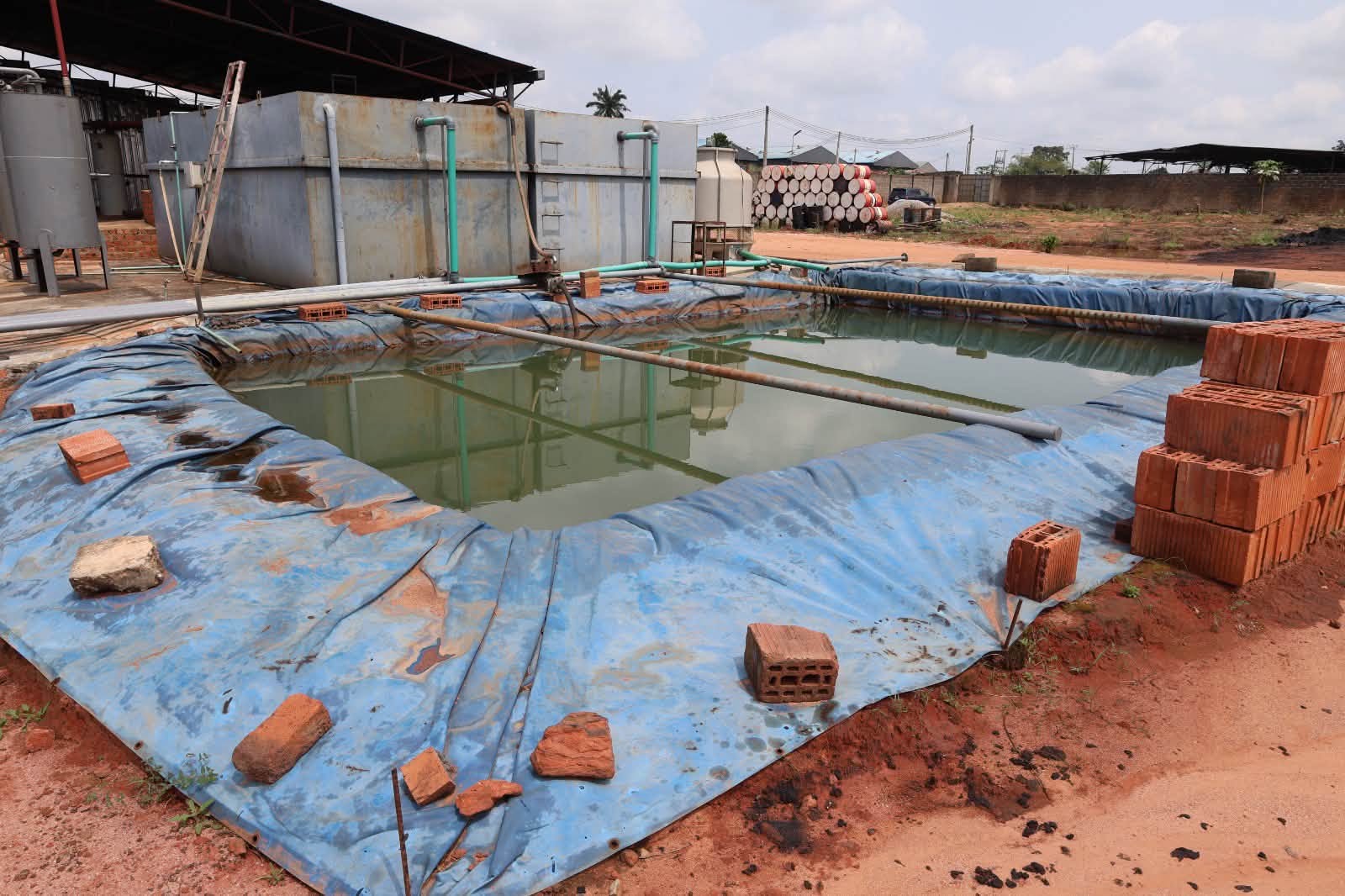
The Economic and Financial Crimes Commission (EFCC) has uncovered an illegal oil refinery allegedly operated by Chinese nationals in the Ogere area of Ogun State, with preliminary investigations tracing the sludge oil processed at the facility to Warri in Delta State and Port Harcourt in Rivers State.
The discovery was announced on Tuesday, November 3, 2026, in a statement issued by Dele Oyewale, the EFCC’s Head of Media and Publicity.
According to the commission, the operation was carried out on Saturday, October 31, by operatives of its Lagos Zonal Directorate 2 following intelligence reports and surveillance on suspected illegal sludge oil refining activities.
However, when the operatives stormed the premises, the facility had reportedly been deserted, although evidence of refining activities and waste products were discovered.
The EFCC said underground tanks allegedly used for heating and processing sludge oil were found at the location. Two of the tanks inspected reportedly contained substances suspected to be Automotive Gas Oil (AGO), commonly known as diesel.
The commission disclosed that preliminary investigations indicated that the operators sourced sludge oil, also known as black sludge, from Warri, Delta State, and Port Harcourt, Rivers State, before transporting the materials to the Ogere facility for processing.
According to the EFCC, the suspected operators subjected the sludge oil to intense heat, allowing lighter petroleum components to pass through different chambers and filtration systems.
The process was believed to be designed to produce Automotive Gas Oil (AGO), which could subsequently be sold in the Nigerian petroleum market.
The discovery has raised concerns about the movement of petroleum waste products across state boundaries and the activities of operators allegedly involved in unauthorised refining.
The EFCC said security personnel attached to the facility disclosed that the Chinese nationals allegedly operating the refinery had neither revealed their identities nor provided the name of the company behind the operation.
Following the discovery, operatives of the Lagos Zonal Directorate 2 took over the premises.
The commission said investigations were continuing to establish the identities of those behind the facility, determine its ownership and uncover the full extent of the suspected illegal refining activities.
It also pledged to investigate possible economic sabotage associated with the operation.
The latest discovery comes amid intensified efforts by Nigerian law enforcement agencies to tackle illegal mineral processing, unauthorised refining and other activities considered harmful to the country’s economy.
The development follows the recent arrest of 14 Chinese nationals and one Nigerian over alleged illegal lithium processing activities at four facilities in Ogun State.
In a related case in May 2025, the Federal High Court in Jos ordered the deportation of four Chinese nationals following their conviction for illegal dealings in solid minerals.
The court also ordered the forfeiture of approximately ₦134.9 million linked to the unlawful activities to the Federal Government.
Separately, the Nigerian Navy recently uncovered a suspected illegal refining site containing approximately 114,500 litres of petroleum products in Rivers State.
The discovery was made on Thursday, October 15, 2026, during intensified operations against crude oil theft and illegal refining in the Niger Delta.
The Director of Naval Information, Navy Captain Abiodun Folorunsho, disclosed the development in a statement detailing the Navy’s operations.
In another operation, the Navy arrested 10 suspected drug offenders during a joint operation with the National Drug Law Enforcement Agency (NDLEA) in Delta State between October 14 and 15.
The latest EFCC discovery highlights the continuing challenge of illegal petroleum processing and the need for stronger monitoring of petroleum-related activities across the Niger Delta and other parts of the country.
Investigations are expected to establish who financed and operated the Ogun facility, how the sludge oil was sourced and transported, and whether the suspected operators had links to other illegal refining networks.


