


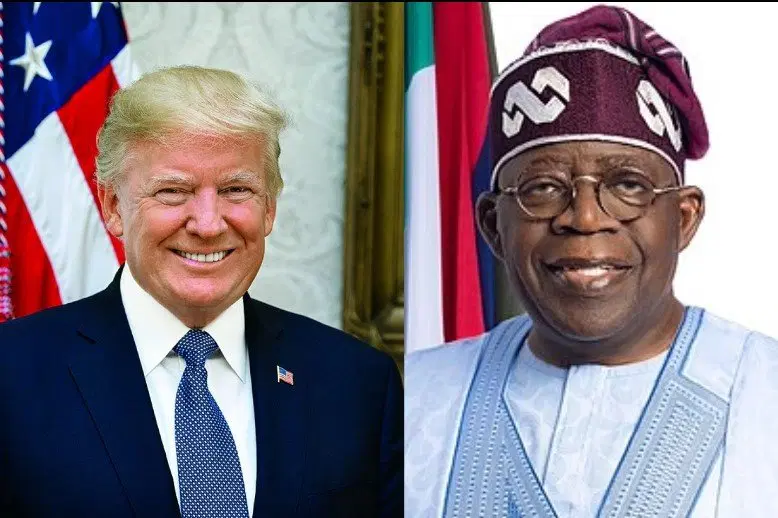
The United States government has raised concerns over human trafficking in Nigeria, citing alleged official complicity, corruption, inadequate protection for victims and the failure to report investigations or prosecutions involving government employees suspected of involvement in trafficking-related crimes.
The concerns were outlined in the 2026 Trafficking in Persons (TIP) Report released by the US Department of State, covering the period from April 1, 2025, to March 31, 2026.
The report also listed Nigeria among 14 countries identified under the US Child Soldiers Prevention Act (CSPA), citing the continued recruitment and use of children by Boko Haram and the Islamic State West Africa Province (ISWAP).
In addition, the report highlighted the activities of illegal baby factories, forced labour, sex trafficking, fraudulent overseas recruitment and the exploitation of vulnerable women and children.
Despite these concerns, the United States retained Nigeria on Tier 2 of its trafficking classification system, indicating that the country does not fully meet the minimum standards for eliminating human trafficking but is making significant efforts to meet them.
One of the major concerns raised in the report was the alleged involvement of public officials in trafficking-related crimes and the government’s failure to provide adequate information about accountability measures.
The US Department of State stated that corruption and official complicity remained significant concerns, noting that Nigerian authorities did not report investigations, prosecutions or convictions of government employees allegedly involved in trafficking during the reporting period.
The report also said the government did not provide details of actions taken against officials implicated in earlier cases.
The findings have drawn attention to the importance of accountability within public institutions, particularly where individuals entrusted with enforcing the law are suspected of facilitating or protecting criminal networks.
However, the report’s findings on the absence of reported investigations or prosecutions do not, by themselves, establish that specific Nigerian officials were guilty of trafficking offences.
Nigeria was included on the Child Soldiers Prevention Act list alongside Afghanistan, Myanmar, the Central African Republic, the Democratic Republic of the Congo, Ethiopia, Iran, Russia, Rwanda, Somalia, South Sudan, Sudan, Venezuela and Yemen.
According to the report, Boko Haram and ISWAP continued to recruit, abduct and use children, including those as young as 12, for various activities associated with their operations.
These activities reportedly include serving as cooks, domestic workers, spies, porters, messengers, guards and armed combatants. The report also identified the use of children in checkpoint duties, enforcement activities and suicide bombings.
The US legislation defines child soldiers broadly to include children under 18 who take direct part in hostilities, as well as those recruited or used by armed groups in support roles, including as porters, messengers, guards and other personnel.
The designation carries potential consequences for US security assistance. According to the report, restrictions were scheduled to apply to certain forms of international military education and training, foreign military financing, excess defence articles, peacekeeping operations and licences for direct commercial sales of military equipment from October 1, 2026, unless a presidential waiver applied.
The classification therefore raises questions about the potential implications for aspects of US-Nigeria security cooperation.
The report also expressed concern about the level of support available to trafficking survivors.
According to the US assessment, 675 trafficking victims received assistance in 2025, compared with 2,058 in the preceding year.
It noted that support services remained limited, particularly for adult male victims, and identified only one dedicated non-governmental organisation shelter for adult male survivors during the reporting period.
The report further criticised aspects of the government’s victim-protection arrangements, including restrictions on freedom of movement in shelters operated by the National Agency for the Prohibition of Trafficking in Persons (NAPTIP).
It also said some victims were required to cooperate with law enforcement proceedings to access certain protection services.
According to the assessment, victims who declined shelter accommodation did not receive government services, potentially increasing their vulnerability to further exploitation.
The report additionally raised concerns about the absence of a formal policy to prevent trafficking victims from being returned to countries where they could face hardship or retaliation.
It also alleged that some victims of forced marriage, including individuals rescued from Boko Haram, were coerced into returning to their husbands at demobilisation centres in Borno State.
The US report identified gaps in Nigeria’s labour protection framework, particularly in relation to recruitment practices and the prevention of forced labour.
It stated that the government did not prohibit worker-paid recruitment fees, report holding labour recruiters civilly or criminally liable for fraudulent recruitment, or provide specialised training on child labour and human trafficking to labour inspectors.
The report also noted that anti-trafficking training was not provided to Nigerian diplomatic personnel.
Such gaps, according to the assessment, could leave migrant workers and other vulnerable individuals exposed to deceptive recruitment arrangements and exploitation.
The findings highlight the importance of stronger oversight of employment agencies, improved protection for migrant workers and more effective monitoring of industries where forced labour may occur.
The report also highlighted illegal baby factories, describing them as facilities often disguised as orphanages, maternity homes or religious centres.
According to the assessment, traffickers allegedly confine women against their will, sexually abuse them and force them to carry pregnancies before selling the babies after delivery.
The report said Nigerian government sources and non-governmental organisations described the practice as a widespread criminal industry, particularly in southern Nigeria.
It further identified several forms of exploitation affecting children and adults, including sex trafficking, domestic servitude, forced begging, street vending, textile manufacturing, agricultural labour and work in granite quarries and artisanal mines.
Children working on cocoa farms were also identified as vulnerable to forced labour.
The report raised concerns about some Quranic school teachers allegedly exploiting boys from rural communities through forced begging and seasonal agricultural work.
It also cited the traditional practice known as money marriages, in which families in some states reportedly give women and girls into forced marriages with older men to settle family debts.
These findings underline the risks faced by vulnerable women and children where poverty, weak enforcement and harmful practices intersect.
The report identified emerging patterns of trafficking involving foreign criminal networks operating in Nigeria.
According to the US assessment, organised criminal syndicates fraudulently recruited foreign nationals for supposed employment opportunities, confined them in rented properties and forced them to participate in organised online scams.
The report also raised concerns about international recruitment schemes and potentially exploitative employment arrangements involving Nigerians and foreign nationals.
It stated that sources reported Nigeria’s Ministry of Education had helped promote Russia’s Alabuga Start programme despite what the sources described as warning signs.
The assessment further alleged that Russian authorities fraudulently recruited Nigerians to fight in the Russia-Ukraine war.
It also raised concerns about possible forced-labour conditions involving North Korean nationals working in Nigeria and alleged coercion affecting some Chinese nationals employed in the country.
These claims were presented in the report as concerns or allegations and require appropriate verification in individual cases.
Despite the criticisms, the US Department of State acknowledged that Nigeria had made progress in some areas of anti-trafficking enforcement.
The report said Nigerian authorities investigated 1,341 trafficking cases involving 1,367 suspects in 2025, compared with 744 investigations in 2024.
Authorities prosecuted 94 suspects and secured 97 convictions in 2025, up from 71 prosecutions and 49 convictions in the previous year.
The report also noted that most convicted traffickers received prison sentences of at least one year.
These figures indicate an increase in reported investigations, prosecutions and convictions, although the report’s broader concerns suggest that enforcement and victim protection remain important challenges.
The report also recorded increases in government funding for anti-trafficking programmes.
Nigeria allocated N233 million for victim services in 2025, compared with N128 million in 2024.
Funding for prevention programmes rose to N245 million from N58.8 million during the same period.
The government also established a police cybercrime unit to combat online scam operations and cooperated with other governments and INTERPOL on investigations involving West Africa and Southeast Asia.
According to the report, authorities identified 2,004 victims, coordinated the repatriation of 428 Nigerians exploited abroad and secured restitution for 14 victims as part of criminal sentences.
Other measures included continued implementation of the 2022–2026 National Action Plan, operation of an anti-trafficking hotline, public awareness campaigns and the maintenance of anti-trafficking task forces in 23 states.
The report also noted that Nigeria retained its standard operating procedures and National Referral Mechanism for identifying and referring trafficking victims.
The 2026 assessment presents a mixed picture of Nigeria’s response to human trafficking.
On one hand, the country recorded increases in investigations, prosecutions, convictions and funding for victim services. On the other, the United States identified persistent concerns involving alleged official complicity, inadequate victim support, child recruitment by armed groups, forced labour and the exploitation of women and children.
Nigeria’s continued placement on Tier 2 means the United States recognises efforts to address trafficking while maintaining that minimum standards have not been fully met.
The Child Soldiers Prevention Act listing also carries potential implications for certain categories of US military assistance, subject to applicable restrictions and any presidential waiver.
Ultimately, addressing the concerns identified in the report will require sustained law enforcement, accountability for proven wrongdoing, stronger protection for survivors, improved labour oversight and coordinated action against trafficking networks.
For Nigeria, the challenge is not only to increase the number of investigations and convictions but also to ensure that victims receive effective protection and that those responsible for trafficking crimes are held accountable through due process.


