


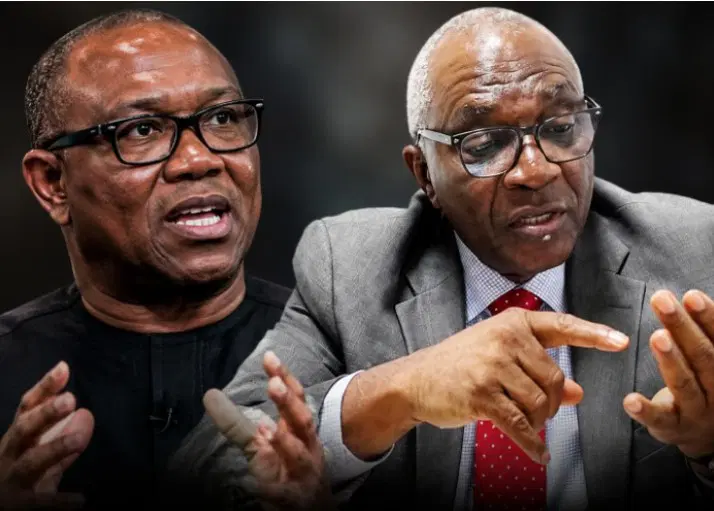
The Presidency has challenged the presidential candidate of the Nigeria Democratic Congress (NDC), Peter Obi, to honour his pledge to stop campaigning for the 2027 election if claims that his administration left financial liabilities in Anambra State are established.
The challenge came from Bayo Onanuga, Special Adviser to President Bola Tinubu on Information and Strategy, following an escalating dispute between Obi and the Anambra State Government over loans, arrears and other financial obligations allegedly inherited from previous administrations.
Onanuga, in a post on X on Wednesday, referred to Obi’s earlier statement that he would withdraw from the campaign if it could be established that he left the state with outstanding debt.
“Peter Obi claimed he left Anambra with a clean slate of debt and even threatened to quit the presidential race if his claims were proven otherwise,” Onanuga said, according to reports of his post.
He argued that the Anambra State Government had now presented what it described as records relating to outstanding loans and arrears involving workers, teachers, pensions and gratuities, and asked whether Obi would fulfil his pledge.
The controversy intensified after Anambra State Commissioner for Information and Value Reorientation, Law Mefor, disputed Obi’s claim that he handed over the state without outstanding financial liabilities.
Mefor said eight external loans connected to projects implemented during or inherited by Obi’s administration remained outstanding.
According to figures released by the state government, the combined outstanding balance on the eight facilities stood at $92.35 million, which the government valued at approximately ₦127.37 billion as of June 30, 2026.
The loans, according to the state, were associated with projects covering areas including malaria control, healthcare, education, erosion and watershed management, community development and agricultural development.
The state government has also disputed Obi’s position concerning salary, pension and gratuity arrears inherited by subsequent administrations.
Mefor said the administration of Governor Chukwuma Soludo had paid about ₦22 billion in inherited gratuity liabilities owed to retired state and local government workers and teachers.
He also cited outstanding obligations involving workers of the defunct Water Corporation and other legacy liabilities.
Obi Disputes Debt Claims
Obi has rejected the allegations, describing claims that he left Anambra with unpaid debts and other liabilities as false.
The former governor said his administration cleared more than ₦35 billion in historical gratuities and arrears accumulated over previous years.
He also maintained that, when he handed over power, the state had no outstanding obligations in salaries, pensions or gratuities and that contractors for projects that had been duly executed and certified had been paid.
Obi challenged the Anambra State Government and others to produce evidence to the contrary.
If anybody can establish anything to the contrary, I will stop campaigning,” he said.
Another major point of disagreement concerns an alleged ₦2.13 billion ecological fund.
Obi said the money remained untouched in a First Bank account and was intended for the Oko/Umuchiana erosion crisis. He argued that he deliberately left the funds for his successor because they were tied to the specific project.
The former governor also claimed his administration left more than ₦75 billion in savings.
The Anambra Government, however, disputes the existence of the claimed ecological fund balance in the account identified by Obi.
Commissioner Law Mefor said the state obtained a certified statement of the account and maintained that it was an Internally Generated Revenue Consolidated Revenue Account rather than an ecological fund account.
According to Mefor, the state’s records did not show the ₦2.13 billion balance claimed by Obi.
The latest intervention by the Presidency has shifted attention from the financial dispute itself to Obi’s earlier challenge that he would stop campaigning if evidence showed that he left Anambra with outstanding obligations.
Onanuga’s intervention does not itself establish the underlying debt claims. The figures and allegations currently being exchanged remain disputed between Obi and the Anambra State Government.
The central issue is therefore whether the loans and other liabilities cited by the state can be conclusively attributed to Obi’s administration, inherited from earlier governments, or otherwise remained outstanding when he left office.
The Anambra debt controversy has become a significant issue in the 2027 political conversation, with both sides presenting competing accounts of the state’s finances at the end of Obi’s tenure.
While the Anambra Government has pointed to outstanding loan balances and inherited arrears, Obi maintains that his administration cleared substantial historical obligations and handed over the state without outstanding salaries, pensions, gratuities or certified contractor debts.
For now, the competing claims remain part of an ongoing political and financial dispute, with the relevant records and accounting details likely to remain central to the debate.



[…] Anambra Debt Controversy: Presidency Challenges Peter Obi to Quit 2027 Race […]